


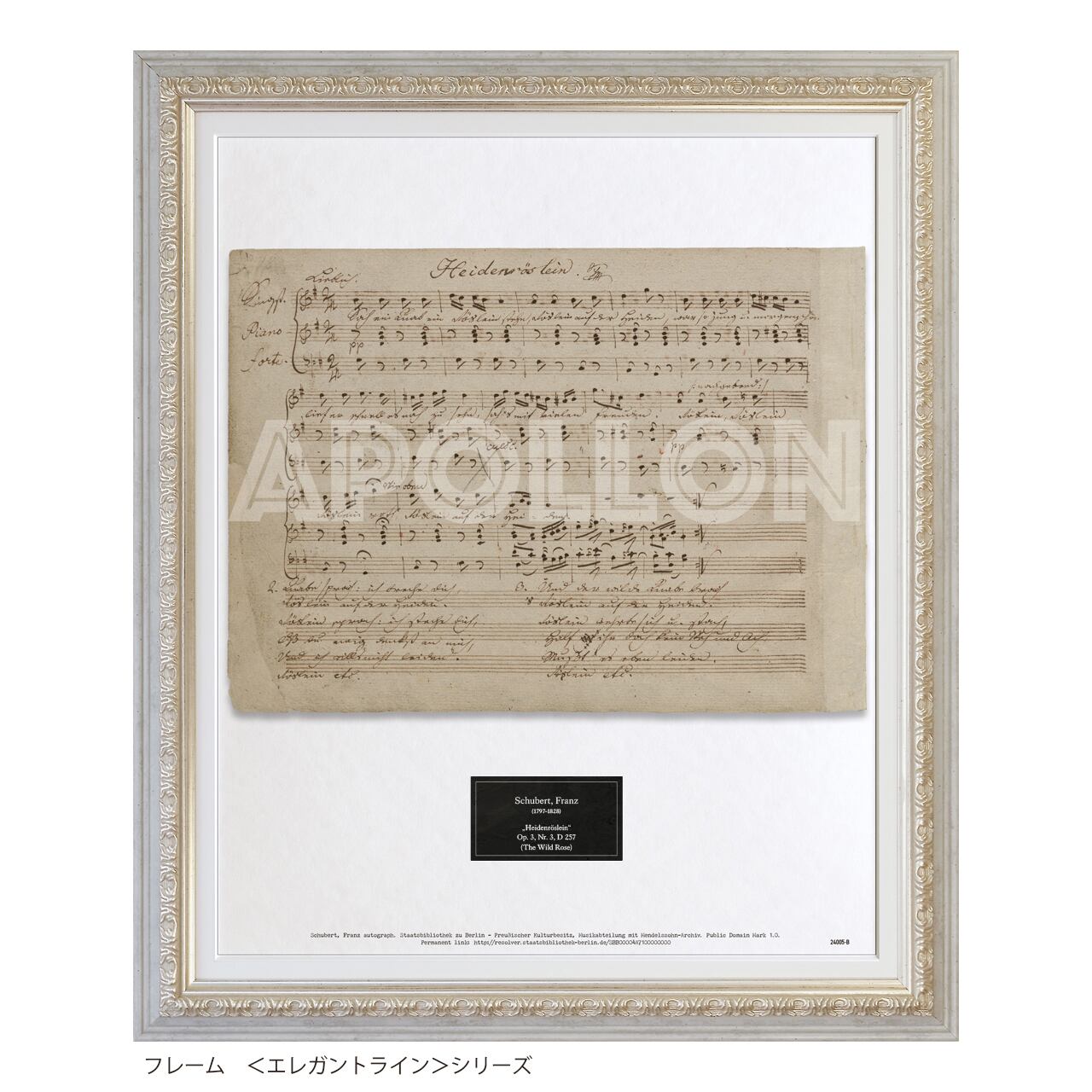
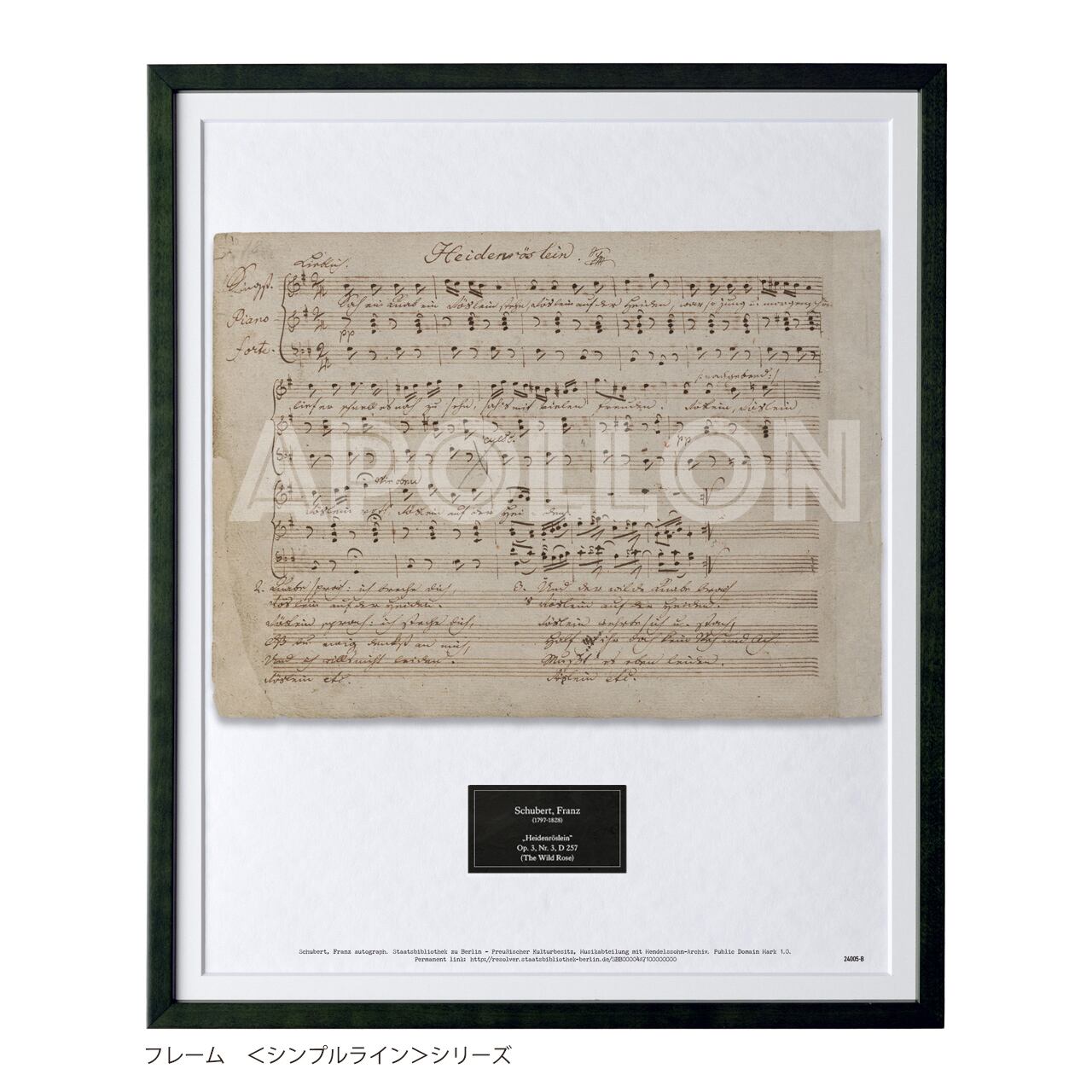


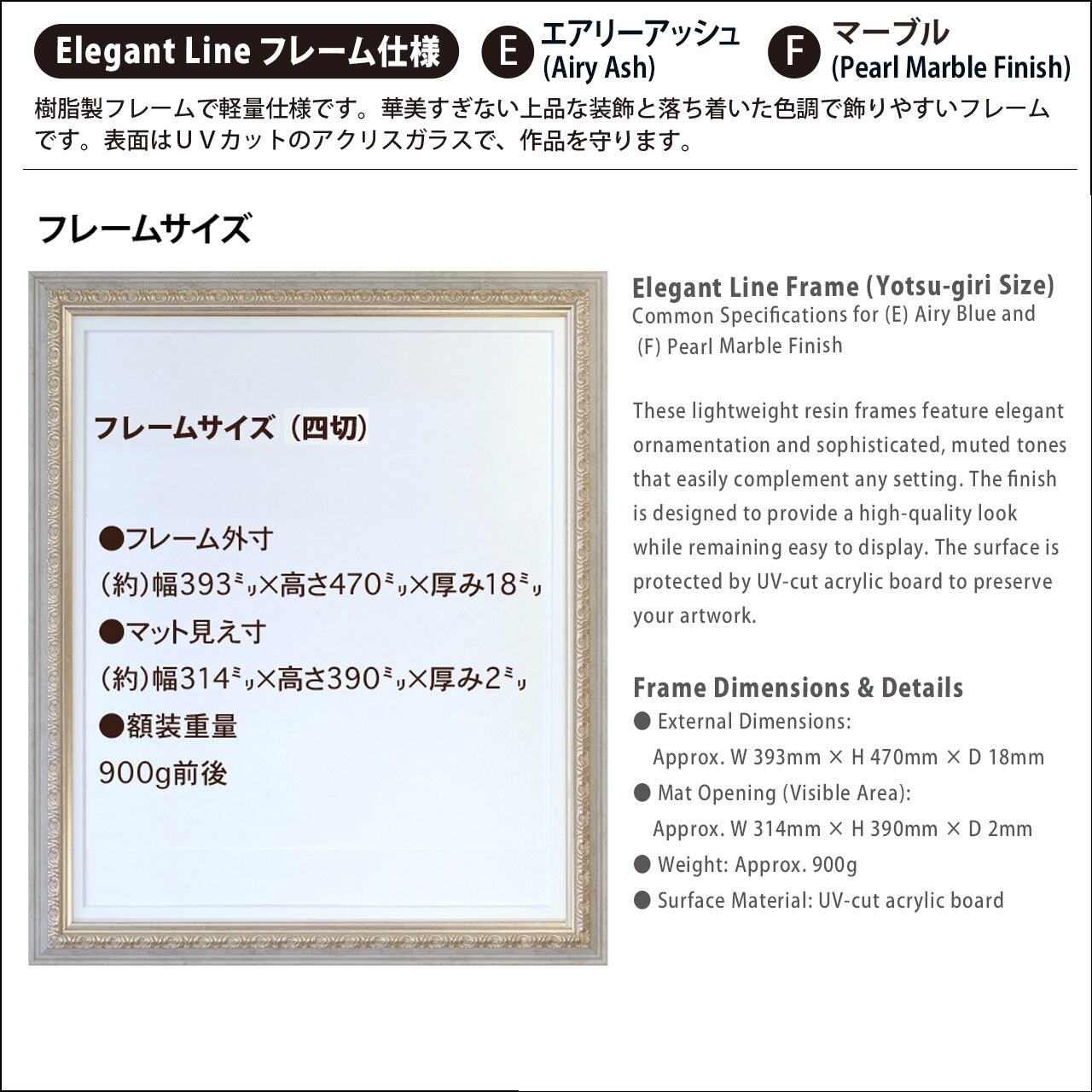

シューベルト:「野ばら」ト長調 Op. 3, No. 3, D. 257 /Schubert, Franz:„Heidenröslein“ Op. 3, Nr. 3, D. 257
¥14,630 ($92.68)
Schubert, Franz (1797–1828)
„Heidenröslein“
Op. 3, Nr. 3, D. 257
《商品説明》 Product Specifications
◉プリントタイプ/高精細ジークレープリント
Print Type: High-definition Giclée print
◉出力紙/ドイツ製ハーネミューレ ファイン・アート紙(アシッドフリー)
Paper: Hahnemühle Fine Art Paper (Made in Germany, Acid-free)
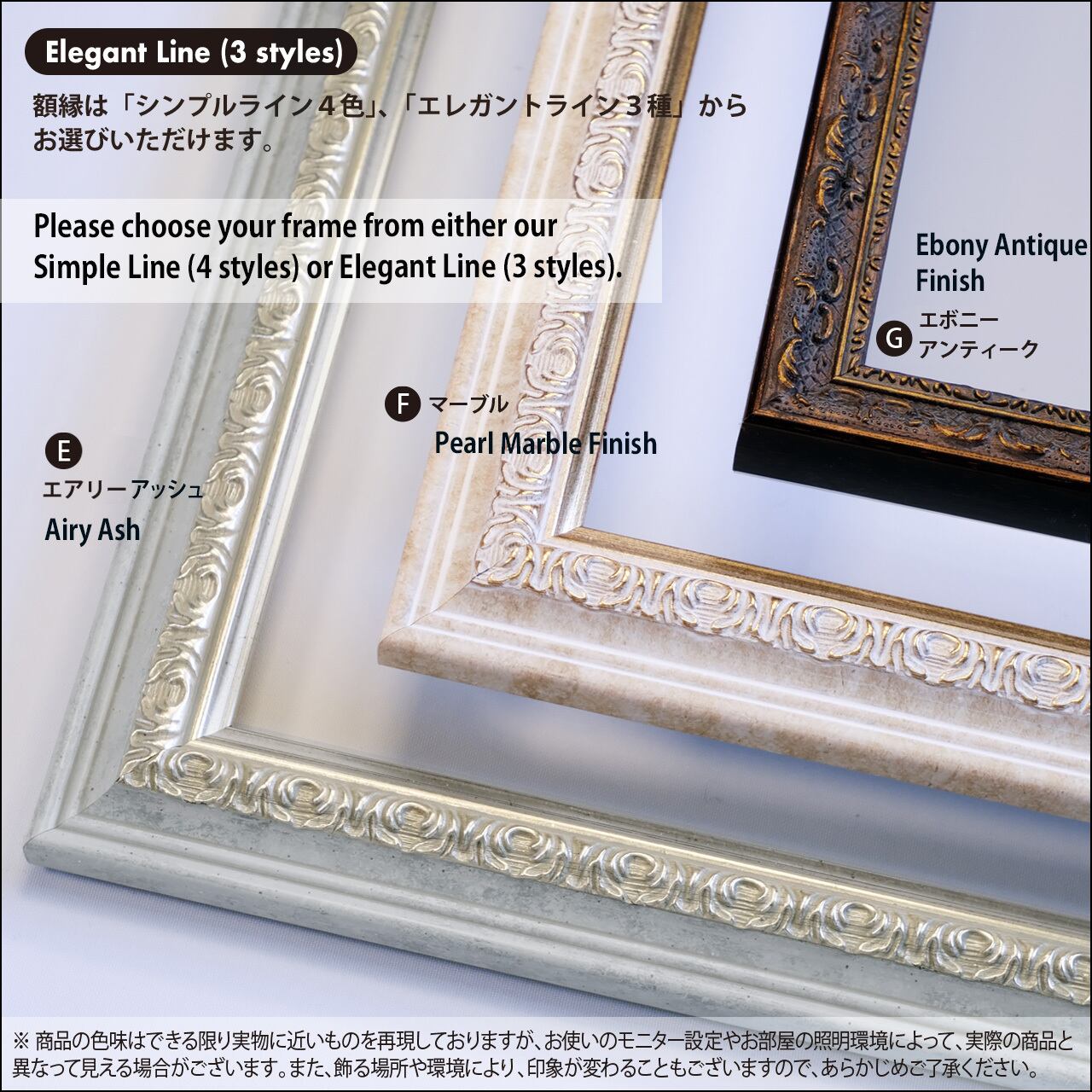
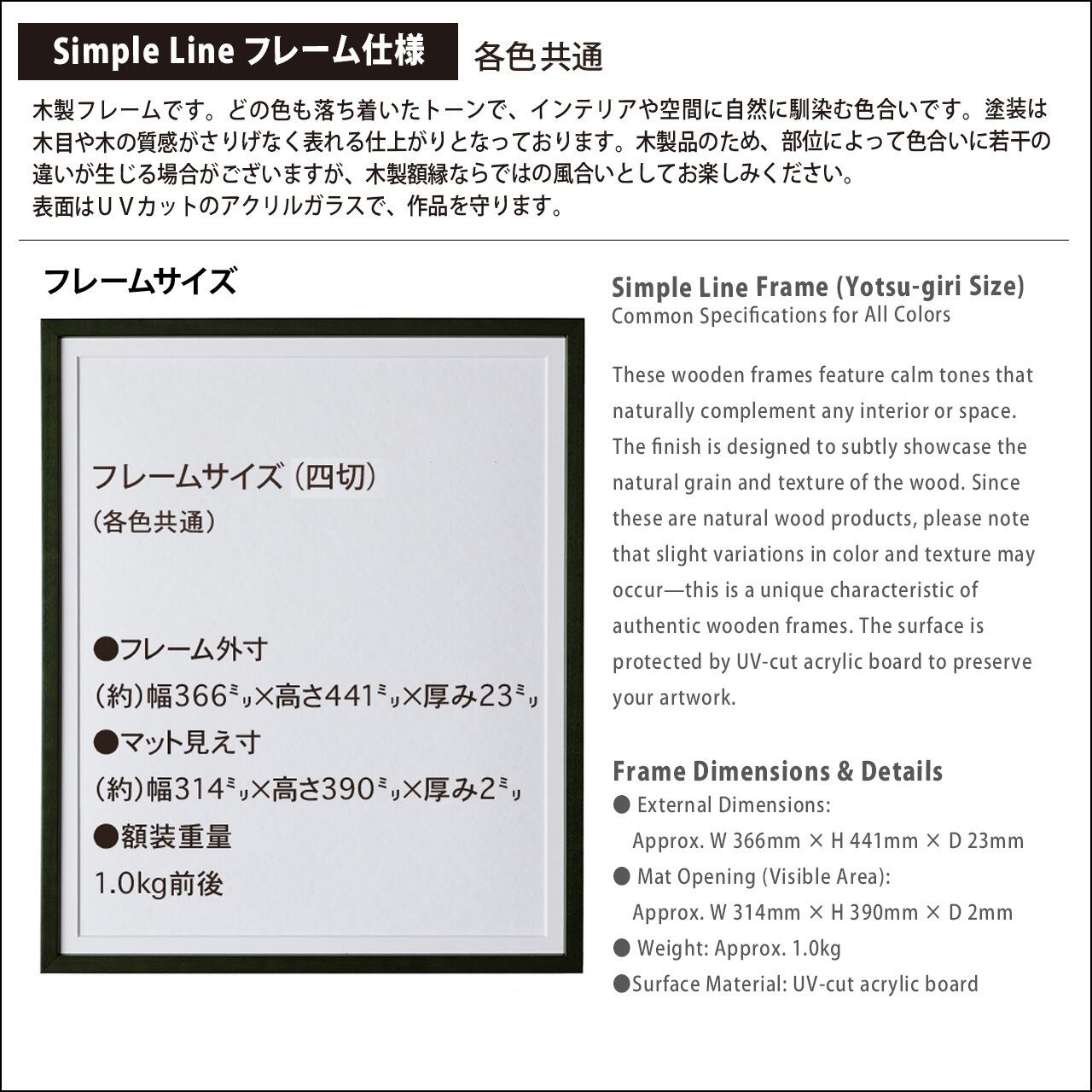
◉額縁/UVカットアクリルガラス、中性紙マット、吊元金具(額側)、吊紐、外箱
Framing: UV-protective acrylic glazing and acid-free mat
Accessories: Hanging hardware (pre-installed), hanging cord
1815年8月19日。18歳のシューベルトは、ゲーテの詩「Heidenröslein(野ばら)」に曲をつけました。当時のシューベルトは、ウィーンで教師として働きながら作曲を続けていました。少年期には宮廷楽長アントニオ・サリエリから作曲を学び、その後、自らの音楽を深く掘り下げながら、若くして数多くの作品を生み出していきます。
限られた時間を惜しむように楽譜に向かい、仕事を終えた後も情熱を注ぎ続けた若き日に、多くの歌曲が誕生しました。その音楽を支えたのが、親しい友人たちでした。彼らはシューベルトの歌曲や室内楽を囲み、やがて「シューベルティアーデ」と呼ばれる私的な音楽の集まりが開かれるようになります。友人たちの前で新しい作品が演奏され、音楽を語り、楽しむ――そんな親密な環境の中で、シューベルトの音楽は人々の間に広がっていきました。「野ばら」もまた、こうした親しい音楽の輪の中で親しまれていく、シューベルト初期の歌曲の一つでした。
「野ばら」といえば、野に咲く一輪の花をめぐる可憐な詩を思い浮かべるかもしれません。けれども、ゲーテの詩は、それほど穏やかなだけの物語ではありません。少年が野ばらを見つけ、その美しさに惹かれて近づく。少年が花を折ろうとすれば、ばらは棘で抗おうとする。それでも少年は花を折り、ばらは傷つけられる。愛らしさのすぐ隣に、少年の衝動と野ばらの抵抗、そして小さな残酷さが潜んでいます。
シューベルトは、この詩を重い悲劇としてではなく、軽やかに動くピアノと親しみやすい旋律によって、詩の情景と物語を生き生きと音楽へと変えました。明るく素朴な音楽の中に、詩が秘める危うさがほのかに漂う。その対照もまた、この歌曲の魅力の一つです。
1816年、シューベルトはこの歌曲を自筆で清書しました。その清書譜を含む歌曲集がまとめられ、4月17日、友人のヨーゼフ・フォン・シュパウンによってゲーテへ送られました。そこには「野ばら」のほか、「糸を紡ぐグレートヒェン」「魔王」など、ゲーテの詩による歌曲が収められていました。
当時ゲーテは66歳、シューベルトは19歳。若き作曲家は、自身の音楽を詩を書いた本人へ届けようとしたのです。しかし、ゲーテから返事が届くことはありませんでした。歌曲集は返送されます。
やがて、この清書譜は歌曲を世に送り出すための初版の原稿として用いられました。
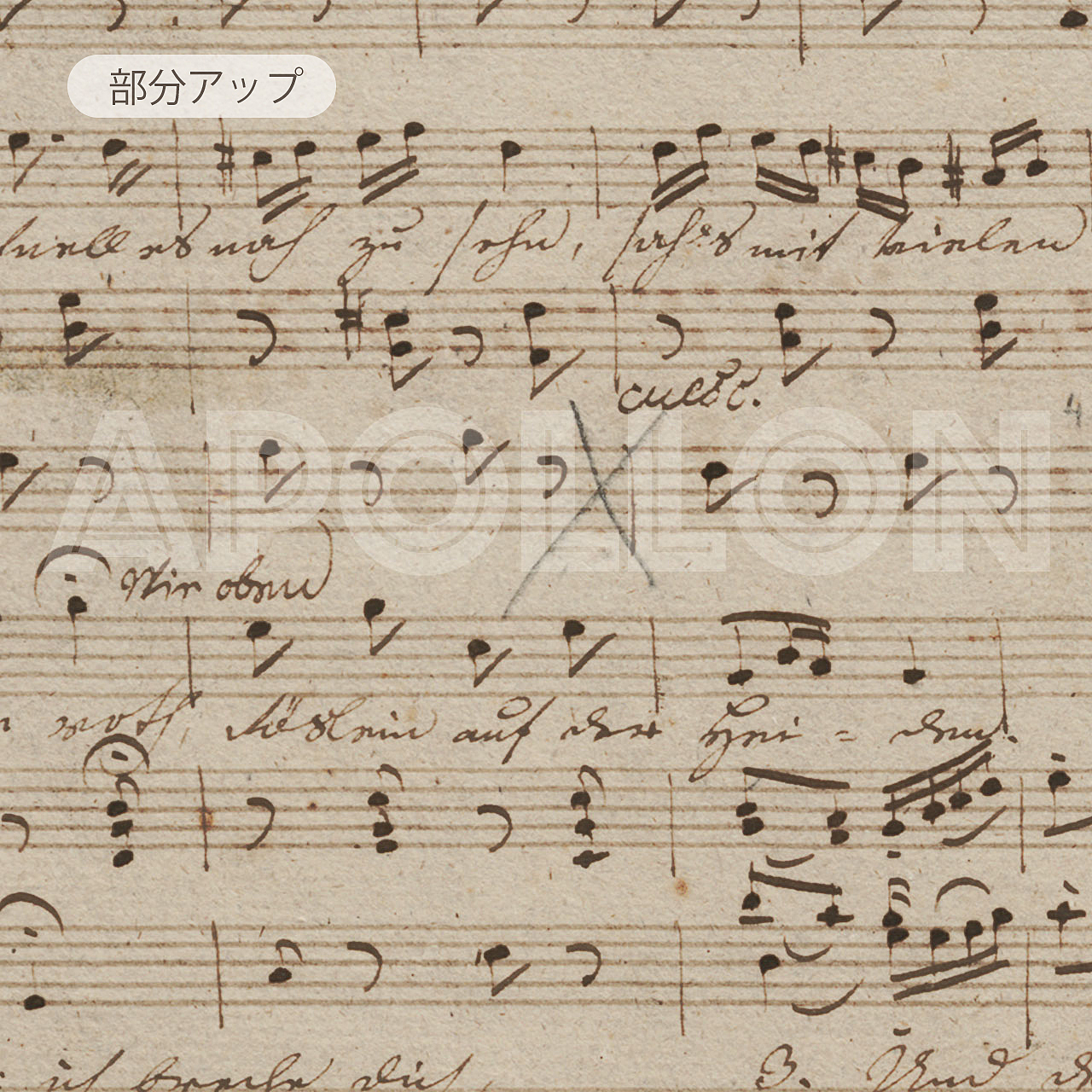
ここに再現されているのは、まさにその自筆清書譜です。
歌曲はやがて出版され、演奏され、二百年を経た今もなお歌い継がれています。
On August 19, 1815, 18-year-old Schubert set Goethe’s poem “Heidenröslein” (“The Wild Rose”) to music. At the time, Schubert was working as a teacher in Vienna while continuing to compose. In his youth, he studied composition with the court Kapellmeister Antonio Salieri, and went on to develop his own musical voice, producing a remarkable number of works at a young age.
With limited time at his disposal, he continued to compose, returning to his music even after finishing his daily work and producing numerous songs in his youth. His music was sustained by a close circle of friends. They gathered around Schubert’s songs and chamber music, and in time, private musical gatherings known as “Schubertiades” began to take place. New works were performed before his friends, who listened, discussed, and enjoyed the music together. In this intimate environment, Schubert’s music gradually spread among those around him. “The Wild Rose” was also one of the early songs that became cherished within this close musical circle.
When we think of “The Wild Rose,” we may imagine a charming poem about a single flower blooming in the countryside. Yet Goethe’s poem is not quite as gentle as it might first appear. A boy discovers a wild rose and, captivated by its beauty, approaches it. When he tries to pick the flower, the rose resists with its thorns. Nevertheless, the boy plucks it, and the rose is wounded. Beside its beauty and innocence lies the boy’s impulse, the rose’s resistance, and a hint of cruelty.
Schubert did not treat the poem as a grave tragedy. Instead, with a light, animated piano accompaniment and an immediately appealing melody, he brought its scene and story vividly to life in music. Beneath the bright, simple character of the song lies a subtle sense of danger concealed within the poem. This contrast is part of what gives the song its enduring appeal.
In 1816, Schubert made a fair copy of the song in his own hand. The collection of songs containing this manuscript was assembled and, on April 17, sent to Goethe by Schubert’s friend Joseph von Spaun. Alongside “The Wild Rose,” it included such settings of Goethe’s poetry as “Gretchen at the Spinning Wheel” and “The Erl King.”
At the time, Goethe was 66 and Schubert was 19. The young composer sought to bring his own music to the very poet who had written the words. Yet no reply ever came from Goethe, and the collection was returned.
Eventually, this fair copy was used as the engraver’s manuscript for the first edition, helping to bring the song into print.
Reproduced here is that very fair copy, written in Schubert’s own hand.
The song was eventually published and performed, and more than two centuries after its creation, it continues to be sung today.
※Pay IDからご覧の方は下記URL(当店サイト)に
額の色目、仕様等、詳しく載っていますので、ぜひご確認下さい。
https://apollon.kooki-museum.com
<商品画像と実物の色味について>
商品の色味については、できる限り実物に近づけるよう調整を行っておりますが、お使いのモニター設定や機種、お部屋の照明環境によっても、実際の商品と異なって見える場合がございます。また、所蔵機関のスキャニングデータに基づくため、オリジナルの自筆譜と色味が異なることもございます。あらかじめご理解いただきますようお願い申し上げます。なお、一部の作品には、裏写り(裏面の楽譜の透け)、経年によるシミ、または原資料の修復に由来する痕跡が見られる場合がありますが、これは所蔵先のスキャニングデータに起因するもので、原稿の忠実な再現です。
<Important Notes on Color & Appearance>
Color Consistency:The actual color may vary depending on your monitor settings or room lighting. As these prints are based on official institutional scans, minor color variations from the original manuscript may occur.
<Image Detail & Historical Authenticity>
Some prints may show "bleed-through" (musical notation from the reverse side), authentic age spots, or visible restoration marks from the original source. These are not defects, but a faithful reproduction of the original historical manuscript, preserved to maintain its archival character.
▼【Reference】
YouTube Channel:Renée Fleming
-
 クララ・シューマン:ピアノとヴァイオリンのための3つのロマンス 第1曲 Op.22-1/Schumann, Clara: Drei Romanzen, Op. 22, Nr. 1: Andante molto¥14,630 ($92.68)
 -
 クララ・シューマン:6つの歌 より「僕は暗い夢の中にいた」Op. 13, Nr. 1/Clara Schumann:6 Lieder, Op. 13, Nr. 1 „Ich stand in dunklen Träumen“¥14,630 ($92.68)
 -
 クララ・シューマン:ピアノのための3つのロマンス 第1曲 Op. 21-1/Clara Schumann:Drei Romanzen für Klavier Op. 21 Nr. 1 (Widmung an Robert Schumann)¥14,630 ($92.68)