



ブラームス:ブラームスの子守唄 Op. 49 Nr. 4/Brahms:5 Lieder, Op. 49 Nr. 4 „Wiegenlied“ (Guten Abend, gute Nacht/Brahms' Lullaby)
¥14,630 ($92.28)
Brahms, Johannes (1833–1897)
5 Lieder, Op. 49 Nr. 4
„Wiegenlied“ (Guten Abend, gute Nacht/Brahms' Lullaby)
《商品説明》 Product Specifications
◉プリントタイプ/高精細ジークレープリント
Print Type: High-definition Giclée print
◉出力紙/ドイツ製ハーネミューレ ファイン・アート紙(アシッドフリー)
Paper: Hahnemühle Fine Art Paper (Made in Germany, Acid-free)
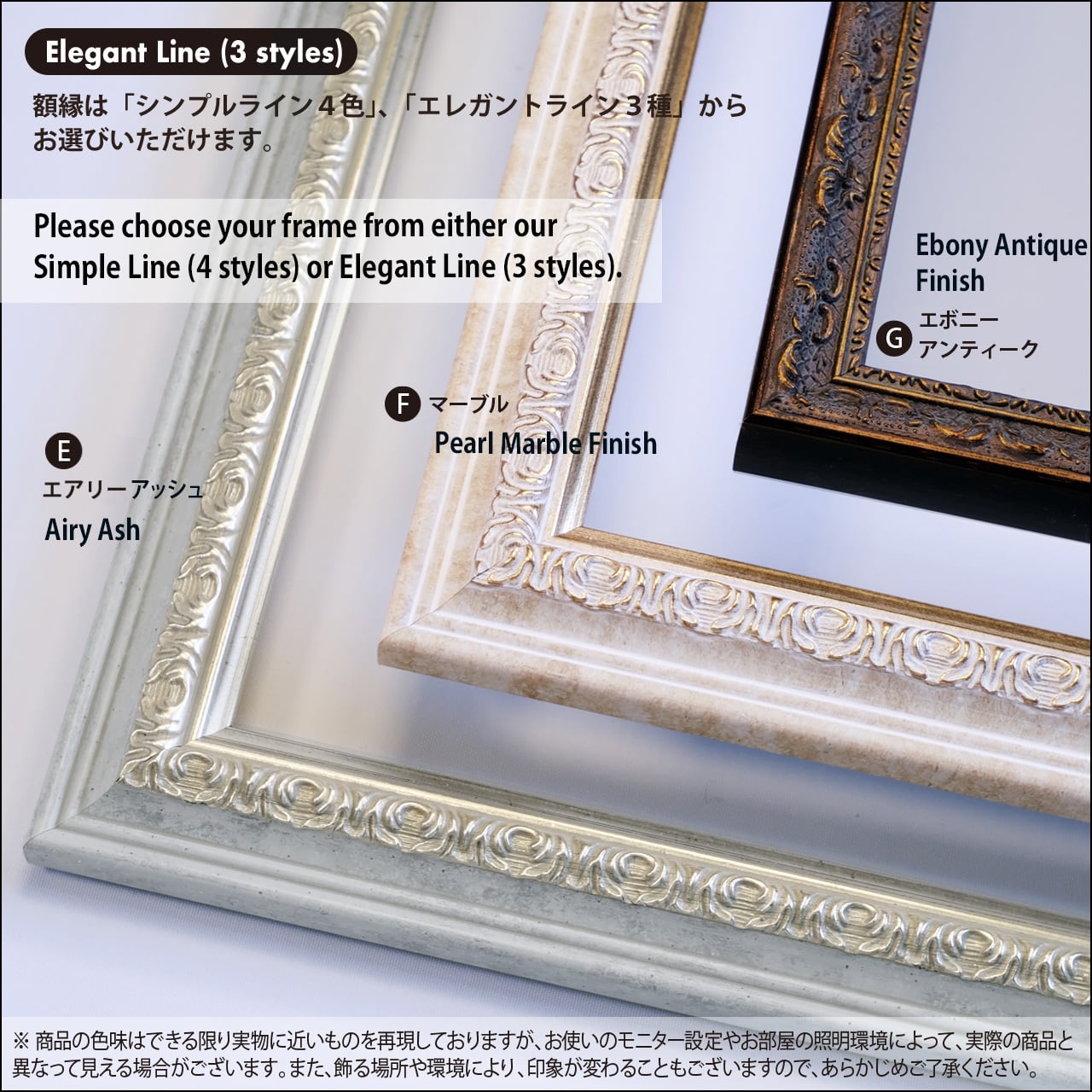
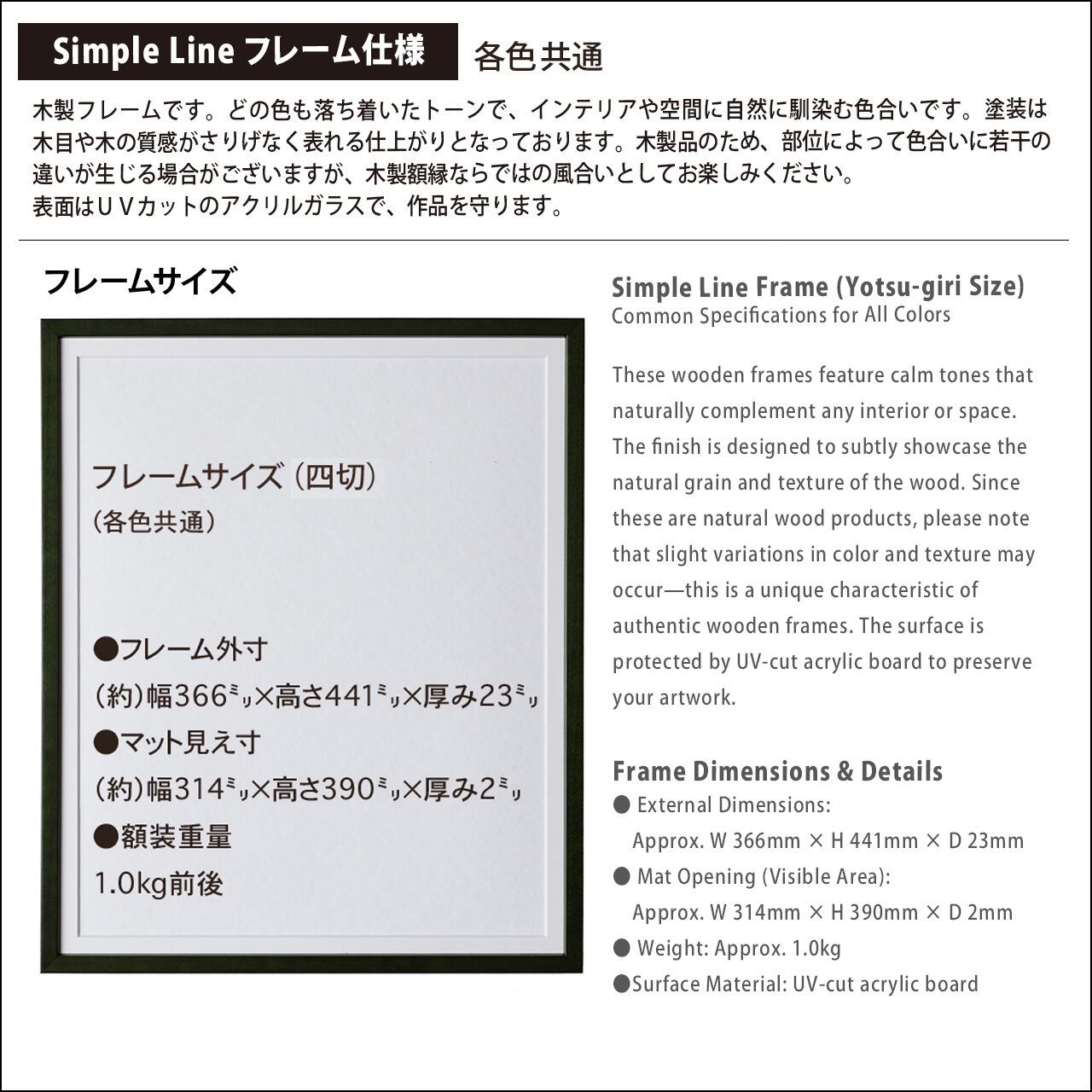
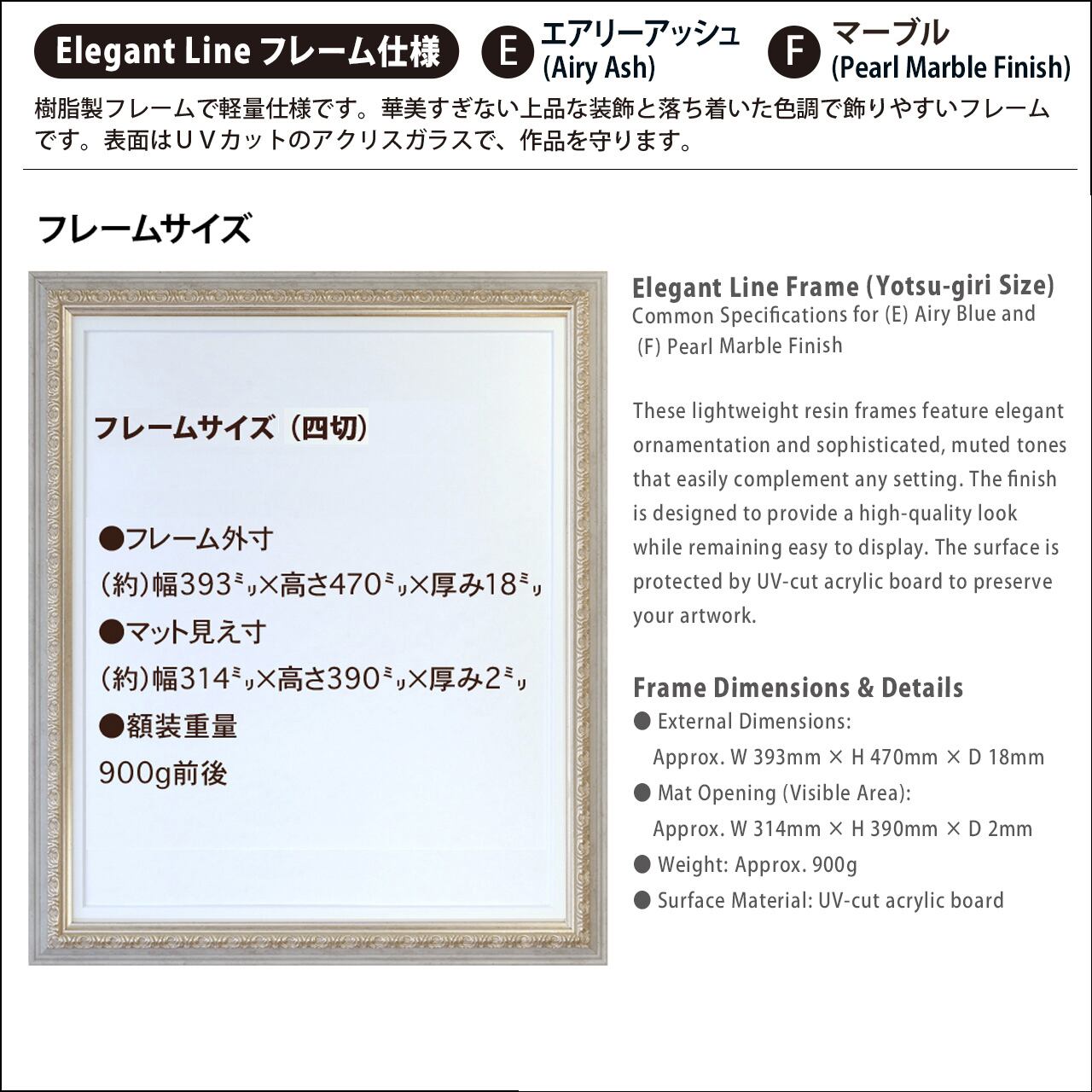
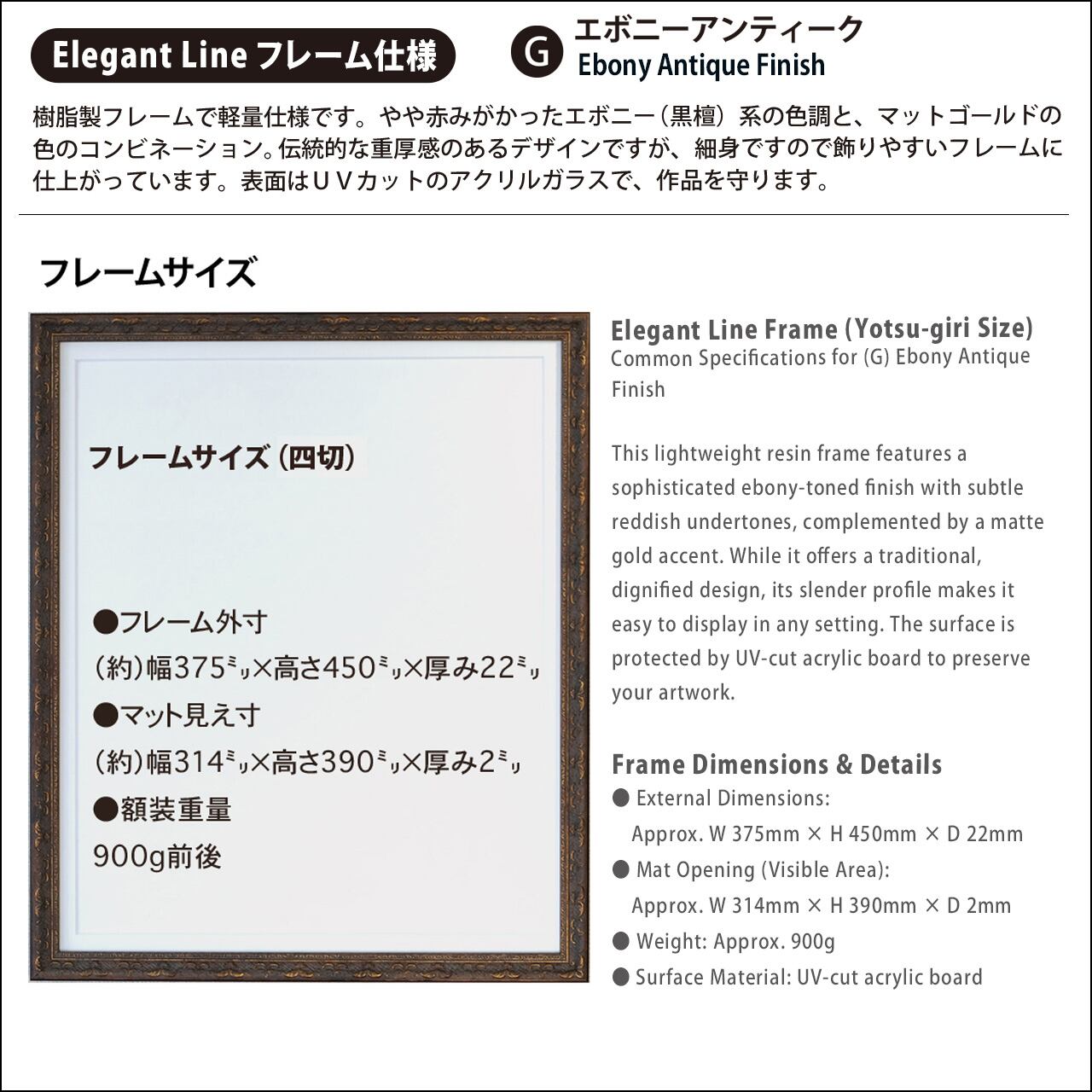
◉額縁/UVカットアクリルガラス、中性紙マット、吊元金具(額側)、吊紐、外箱
Framing: UV-protective acrylic and acid-free mat
Accessories: Hanging hardware (pre-installed), hanging cord
ヨハネス・ブラームスの《子守歌(Wiegenlied)》Op. 49, Nr. 4は、世界中で親しまれているクラシック音楽の名曲です。英語圏では「Brahms' Lullaby」としても広く知られています。
この作品は、1868年に第1節(1番の歌詞)のみで出版されました。
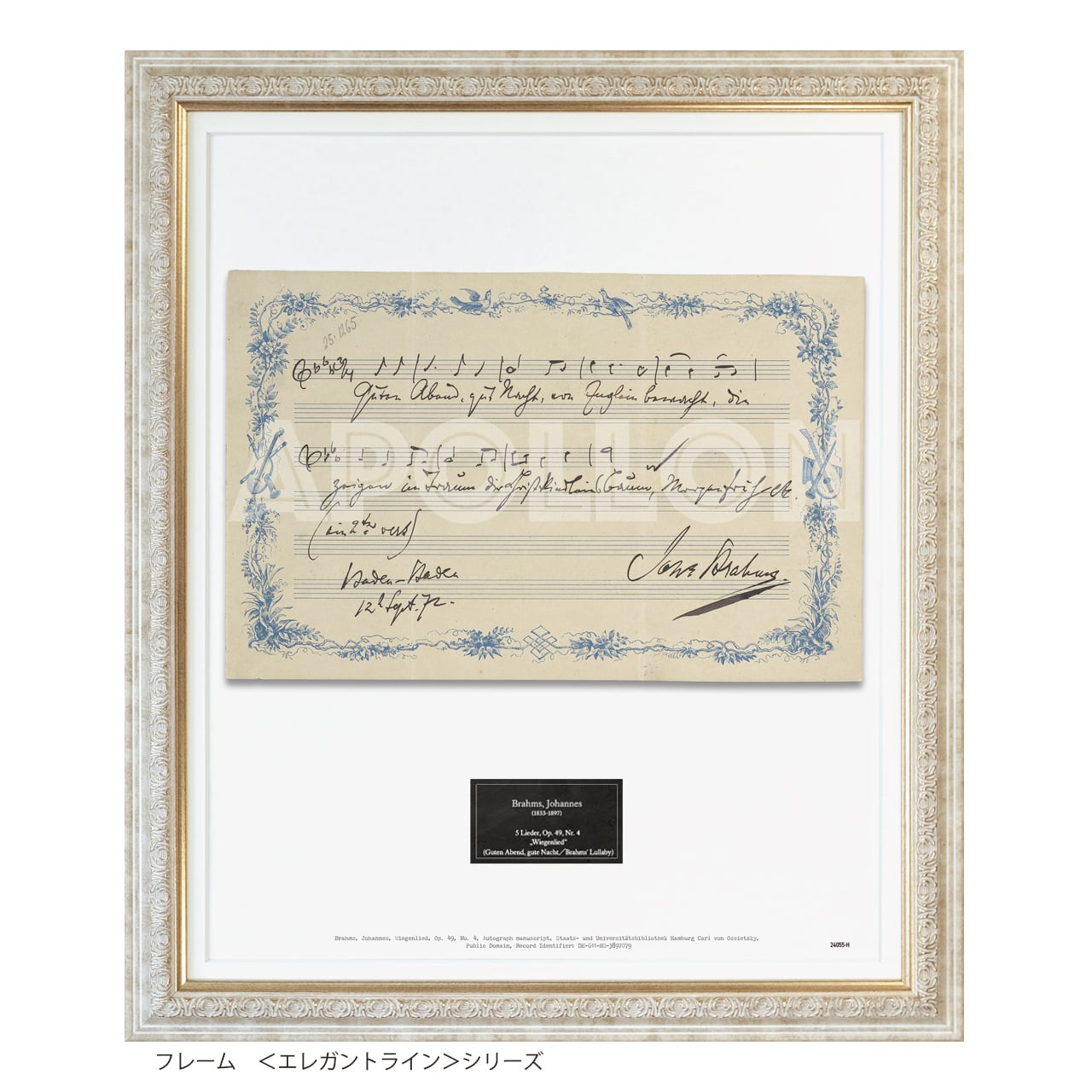
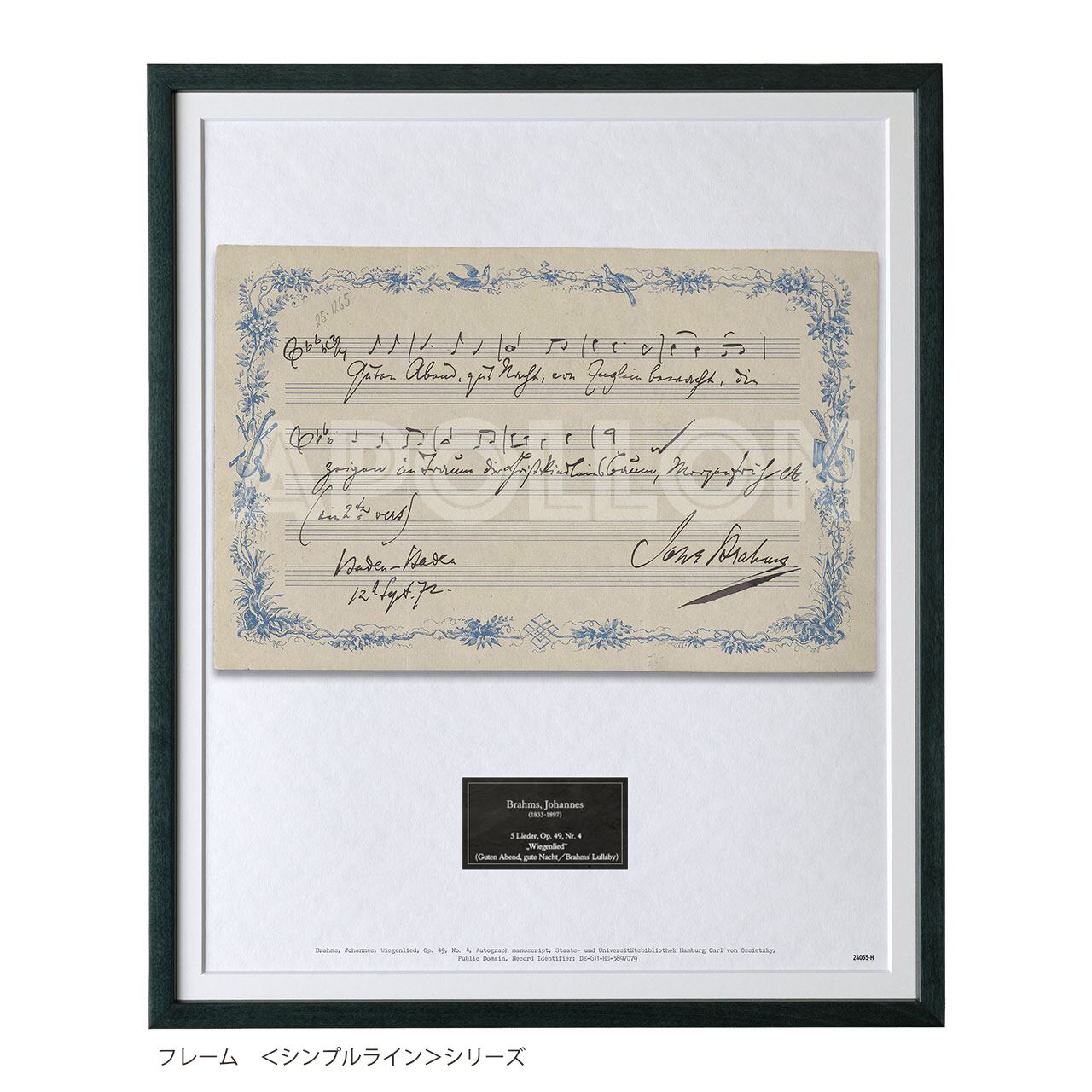
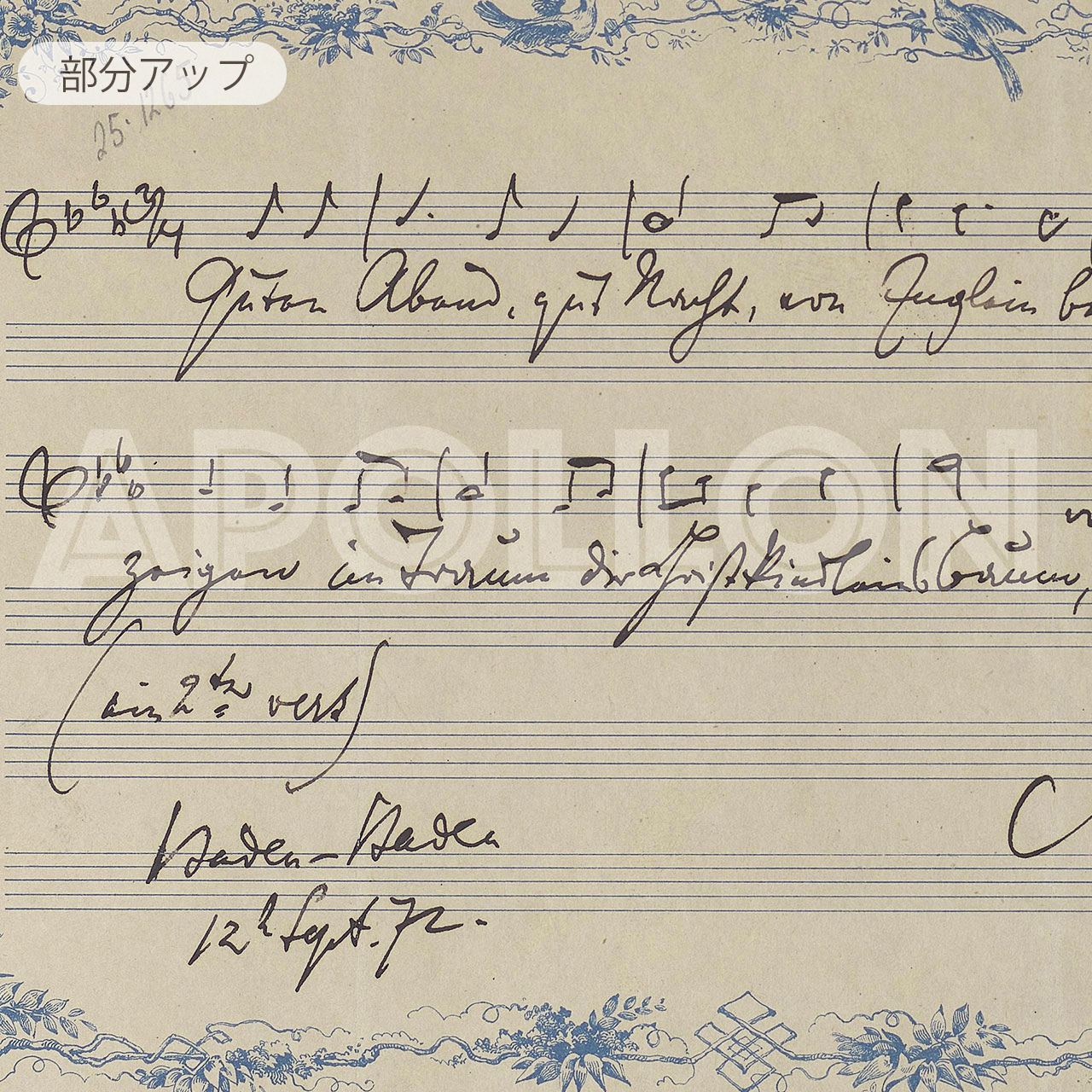
その後、ブラームスはこの歌曲に新たな第2節(2番の歌詞)を加えることを考えます。1872年、ブラームスは新たに加えようとしていた2番の歌詞の冒頭をクララ・シューマンに示すため、その歌詞と旋律を自らの手で一枚のアルバム・リーフに記しました。それが今回の作品です。
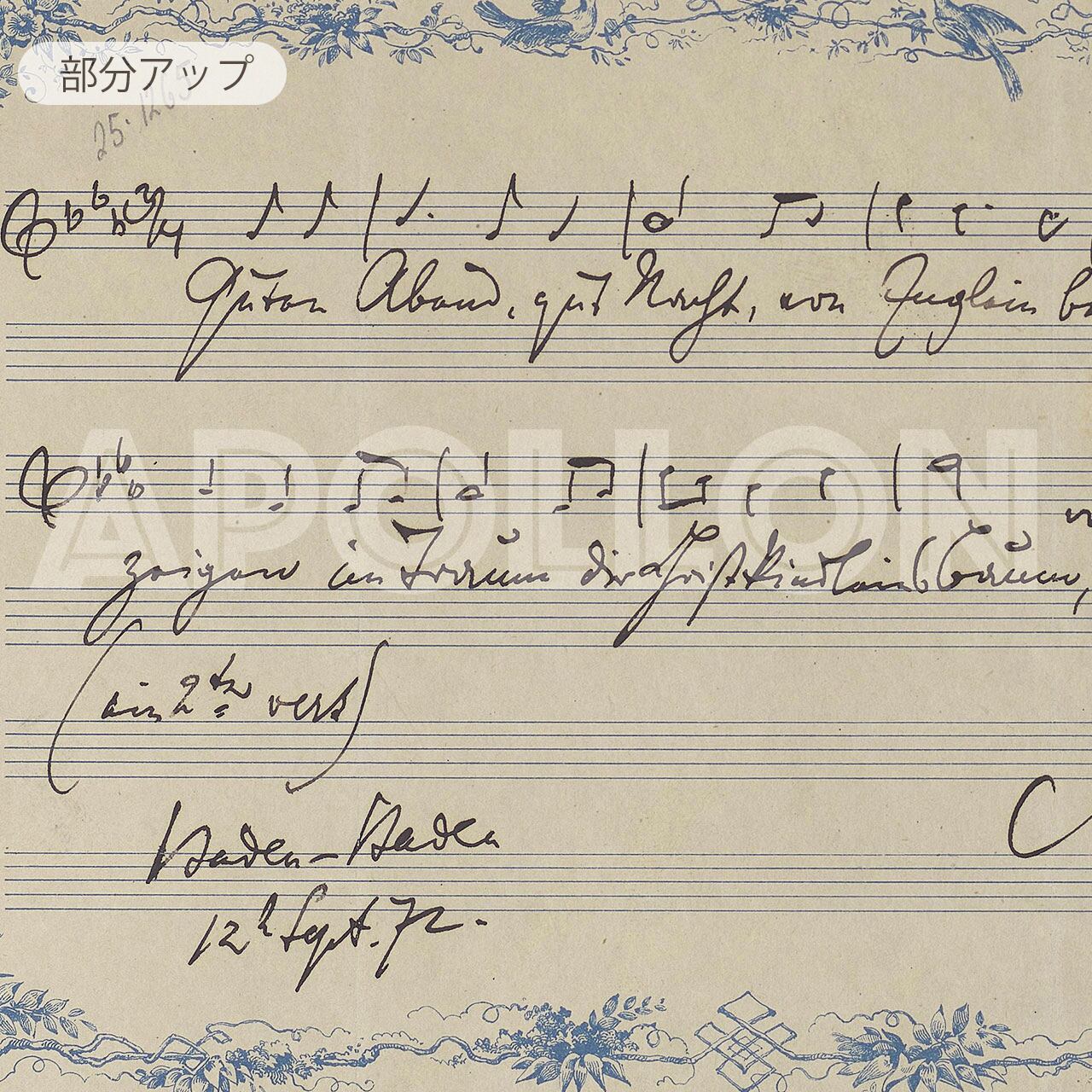
本作品は、1872年9月12日、ドイツのバーデン=バーデンでブラームス自身によって清書された自筆稿です。ブラームスがクララ・シューマンに示すために作成したこの一枚は、出版後もなお、ブラームスが《子守歌》に新たな第2節を加えようと試みていた創作過程を伝える、貴重な歴史的資料でもあります。
この自筆稿には、ブラームスが加えようとしていた第2節(2番の歌詞)の冒頭4行が記されています。
「Guten Abend, gut' Nacht,
Von Englein bewacht,
Die zeigen im Traum
Dir Christkindleins Baum.」
「こんばんは、おやすみなさい。
天使たちに見守られながら、
夢の中であなたに
幼子キリストの木を見せてくれる。」
世界中で愛され続けている《子守歌》の旋律を、ブラームス自身が自らの手で記した一枚。その筆跡は、単なる楽譜の記録にとどまらず、ひとつの歌曲が世に出た後もなお、ブラームスが新たな第2節の歌詞と旋律を試行錯誤していた創作の過程を今に伝えています。
そしてこの一枚は、ブラームスがクララ・シューマンに示すために自ら記した、二人の交流を今に伝える自筆稿でもあります。
穏やかで心温まる旋律は、世代を超えて多くの人々に親しまれてきました。誰もが一度は耳にしたことのあるこのメロディが、ブラームス自身の筆跡によって残されている...その特別な一枚を、高精細ジークレープリントでお楽しみください。
Johannes Brahms’s “Wiegenlied,” Op. 49, No. 4, is one of the most beloved pieces in the classical music repertoire. In the English-speaking world, it is also widely known as “Brahms’ Lullaby.”
The song was first published in 1868 with only the first verse of the lyrics.
Later, Brahms considered adding a new second verse to the song. In 1872, he wrote the opening of this new verse, together with its melody, in his own hand on a single album leaf in order to show it to Clara Schumann. This is the manuscript reproduced in this artwork.
This manuscript is an autograph fair copy, written by Brahms himself in Baden-Baden, Germany, on September 12, 1872. Created by Brahms to show to Clara Schumann, this single leaf is also a valuable historical document of the creative process through which Brahms continued to consider adding a new second verse to “Wiegenlied” even after its publication.
The manuscript contains the opening four lines of the second verse that Brahms was considering adding:
“Guten Abend, gut' Nacht,
Von Englein bewacht,
Die zeigen im Traum
Dir Christkindleins Baum.”
“Good evening, good night,
Watched over by angels,
Who show you in your dreams
The Christ Child’s tree.”
The melody of “Wiegenlied” has been cherished around the world for generations. Here, that beloved melody survives in a single sheet written in Brahms’s own hand. More than a mere musical document, the manuscript preserves a glimpse of Brahms’s creative process as he continued to explore the possibility of adding new lyrics and a melody to a song that had already been published.
This single leaf also preserves a tangible trace of the relationship between Brahms and Clara Schumann: a manuscript written by Brahms himself to show to Clara Schumann.
The gentle, heartwarming melody of “Wiegenlied” has touched generations of listeners. A melody almost everyone has heard at some point in their lives, preserved in the handwriting of Johannes Brahms himself—this exceptional manuscript is presented here as a high-resolution Giclée print. Please enjoy this special piece.
※Pay IDからご覧の方は下記URL(当店サイト)に
額の色目、仕様等、詳しく載っていますので、ぜひご確認下さい。
https://apollon.kooki-museum.com
<商品画像と実物の色味について>
商品の色味については、できる限り実物に近づけるよう調整を行っておりますが、お使いのモニター設定や機種、お部屋の照明環境によっても、実際の商品と異なって見える場合がございます。また、所蔵機関のスキャニングデータに基づくため、オリジナルの自筆譜と色味が異なることもございます。あらかじめご理解いただきますようお願い申し上げます。なお、一部の作品には、裏写り(裏面の楽譜の透け)、経年によるシミ、または原資料の修復に由来する痕跡が見られる場合がありますが、これは所蔵先のスキャニングデータに起因するもので、原稿の忠実な再現です。
<Important Notes on Color & Appearance>
Color Consistency:The actual color may vary depending on your monitor settings or room lighting. As these prints are based on official institutional scans, minor color variations from the original manuscript may occur.
<Image Detail & Historical Authenticity>
Some prints may show "bleed-through" (musical notation from the reverse side), authentic age spots, or visible restoration marks from the original source. These are not defects, but a faithful reproduction of the original historical manuscript, preserved to maintain its archival character.
▼【Reference】
YouTube Channel: Renée Fleming
-
 クララ・シューマン:ピアノとヴァイオリンのための3つのロマンス 第1曲 Op.22-1/Schumann, Clara: Drei Romanzen, Op. 22, Nr. 1: Andante molto¥14,630 ($92.28)
 -
 クララ・シューマン:6つの歌 より「僕は暗い夢の中にいた」Op. 13, Nr. 1/Clara Schumann:6 Lieder, Op. 13, Nr. 1 „Ich stand in dunklen Träumen“¥14,630 ($92.28)
 -
 クララ・シューマン:ピアノのための3つのロマンス 第1曲 Op. 21-1/Clara Schumann:Drei Romanzen für Klavier Op. 21 Nr. 1 (Widmung an Robert Schumann)¥14,630 ($92.28)