


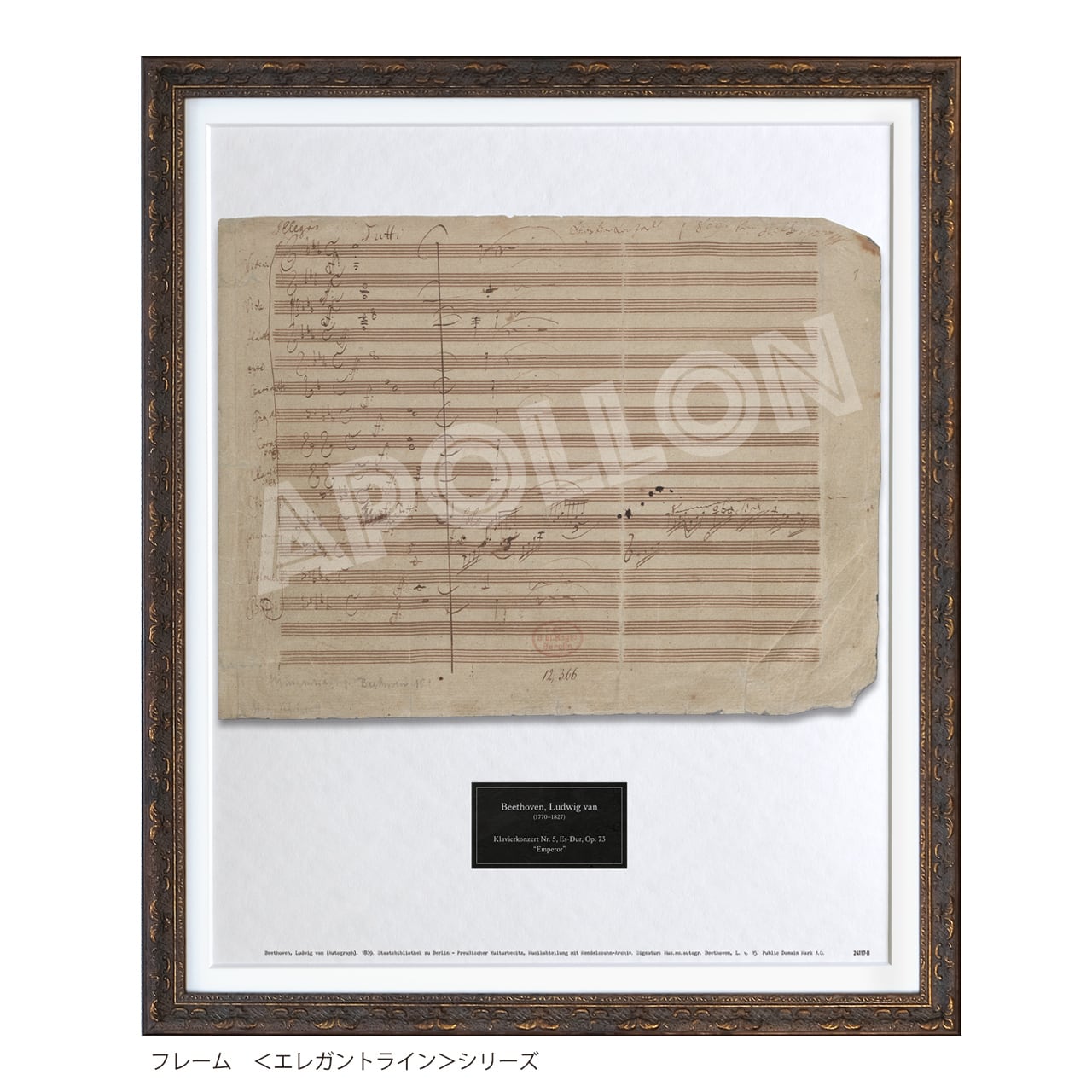
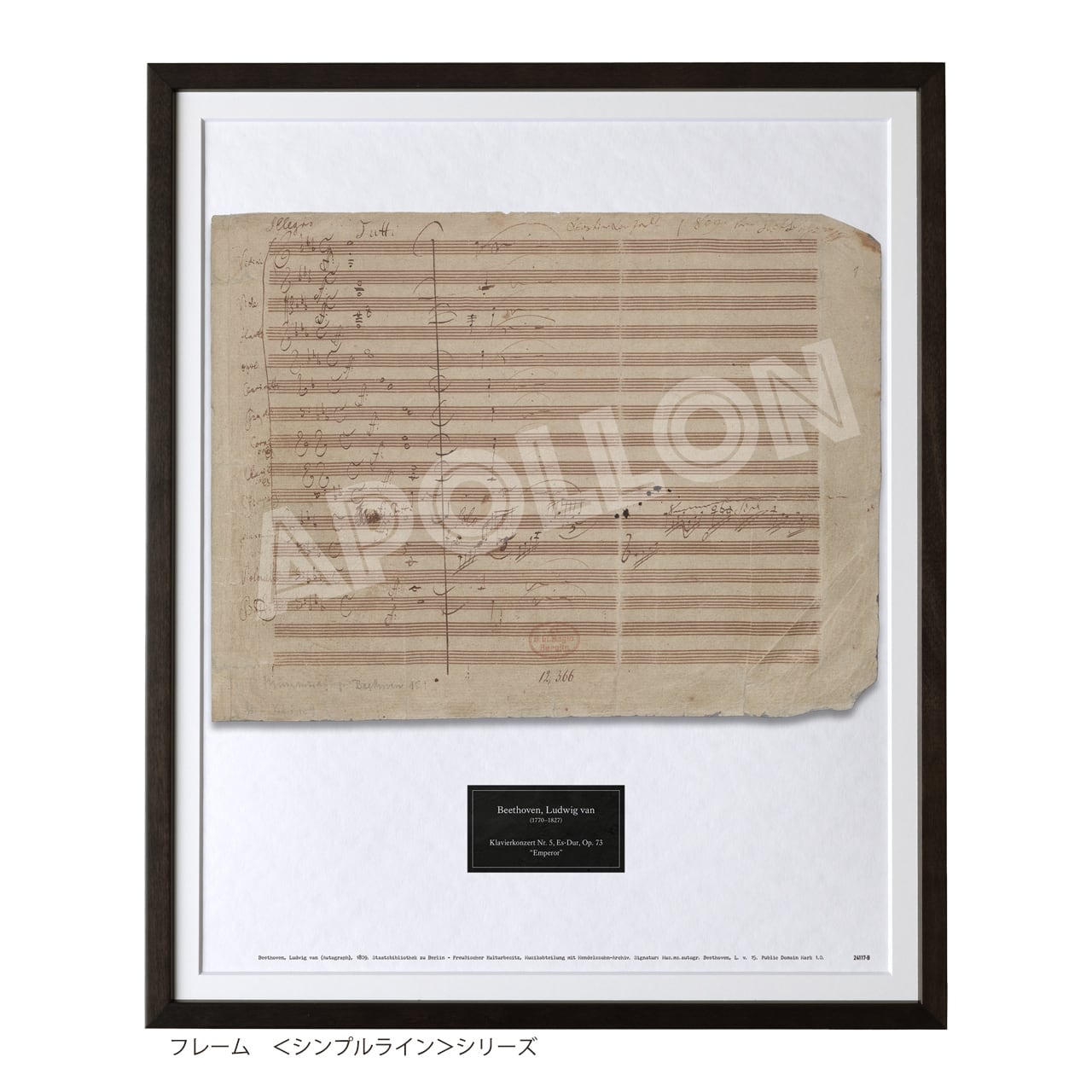

ベートーヴェン:《皇帝》ピアノ協奏曲第5番 変ホ長調 作品73/Beethoven: Piano Concerto No. 5 in E-flat major, Op. 73 “Emperor”
¥14,630 ($92.68)
Beethoven, Ludwig van (1770–1827)
Klavierkonzert Nr. 5, Es-Dur, Op. 73
“Emperor”
《商品説明》 Product Specifications
◉プリントタイプ/高精細ジークレープリント
Print Type: High-definition Giclée print
◉出力紙/ドイツ製ハーネミューレ ファイン・アート紙(アシッドフリー)
Paper: Hahnemühle Fine Art Paper (Made in Germany, Acid-free)
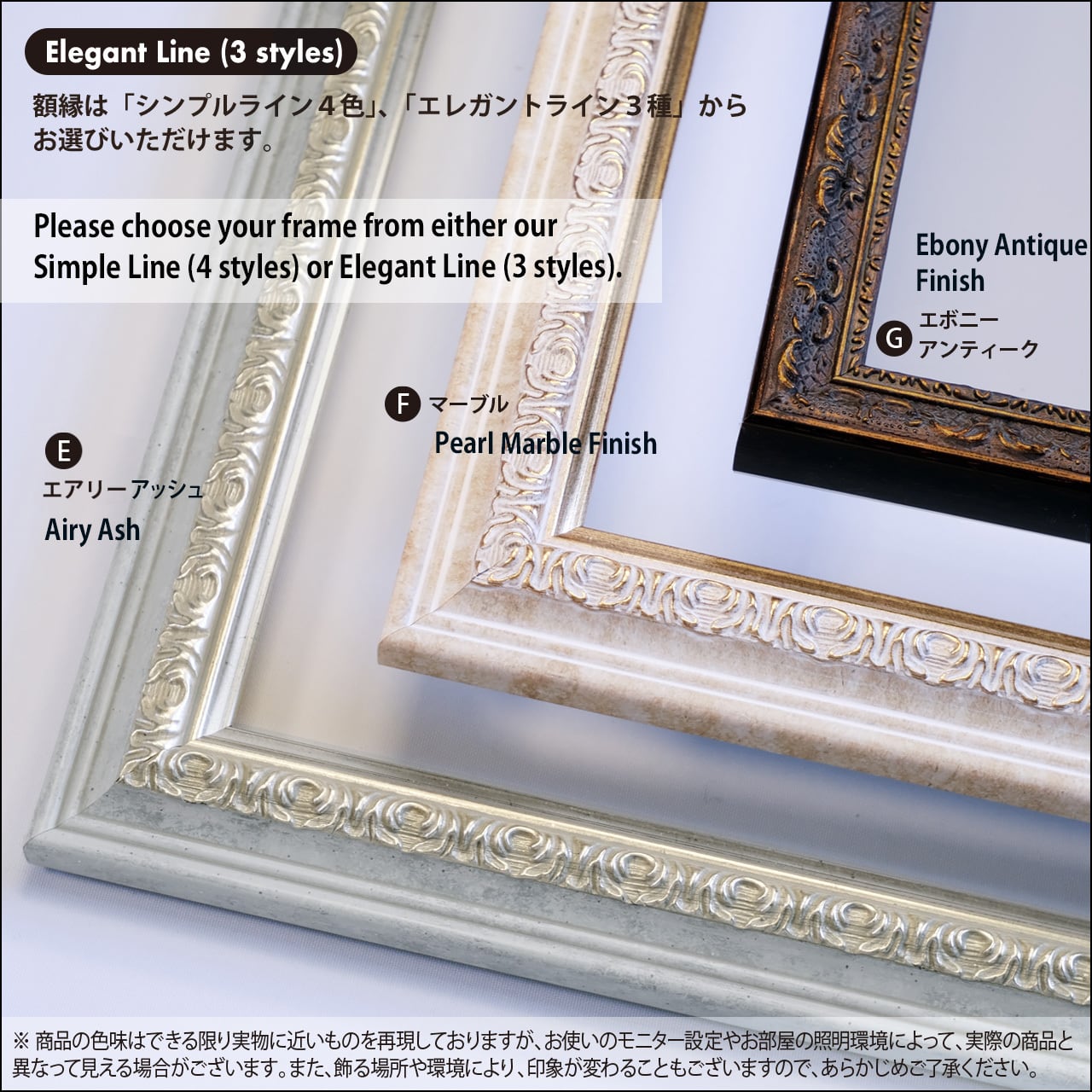
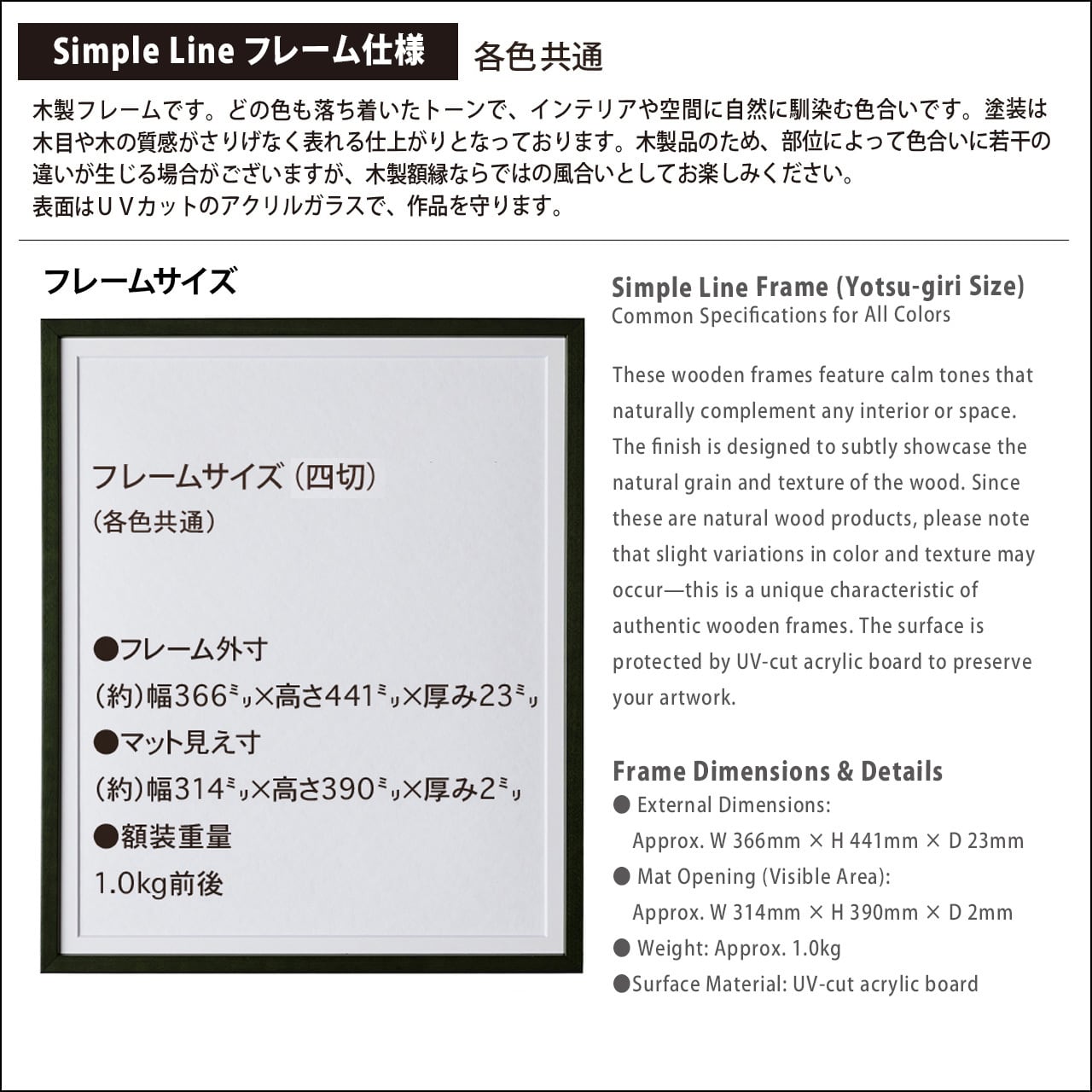
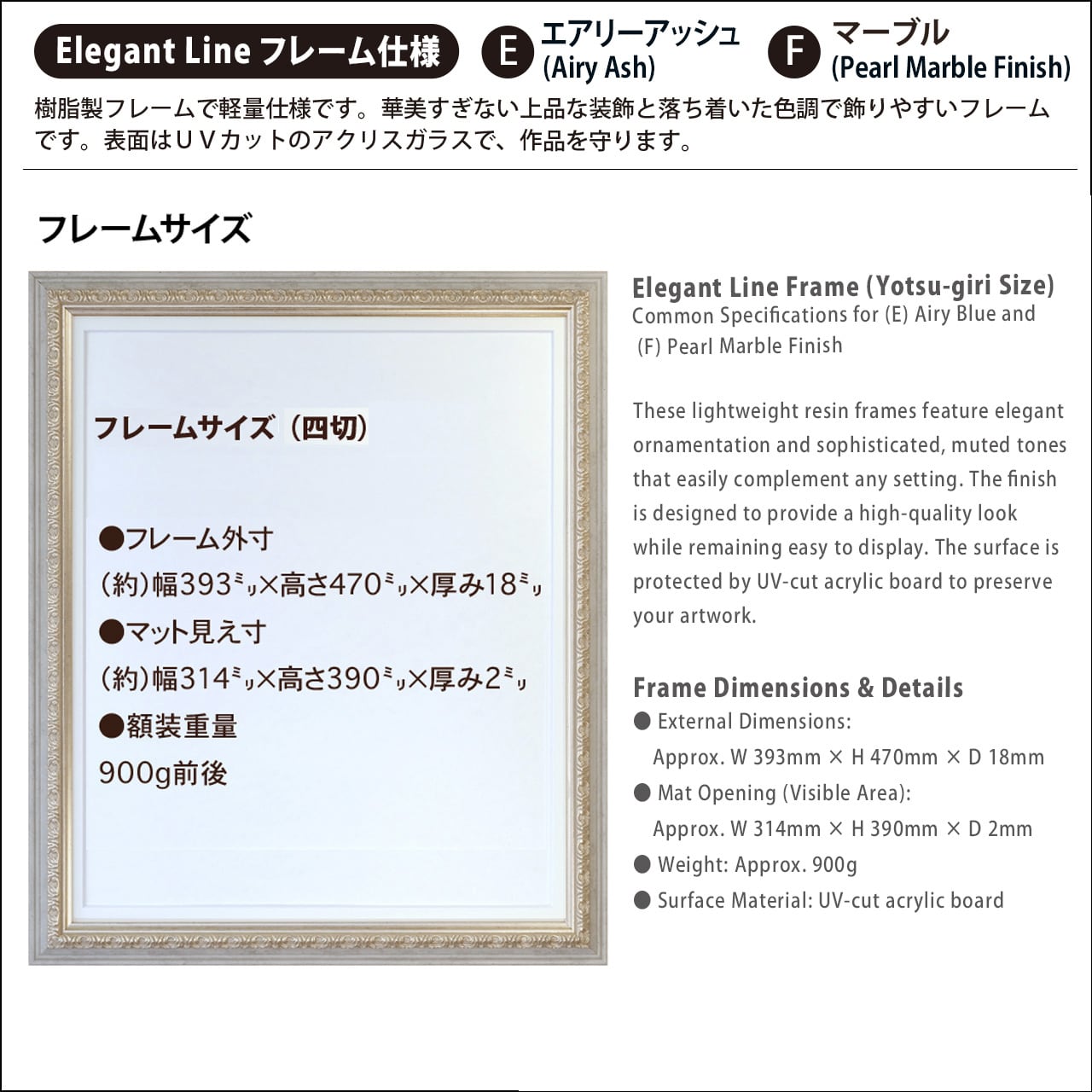
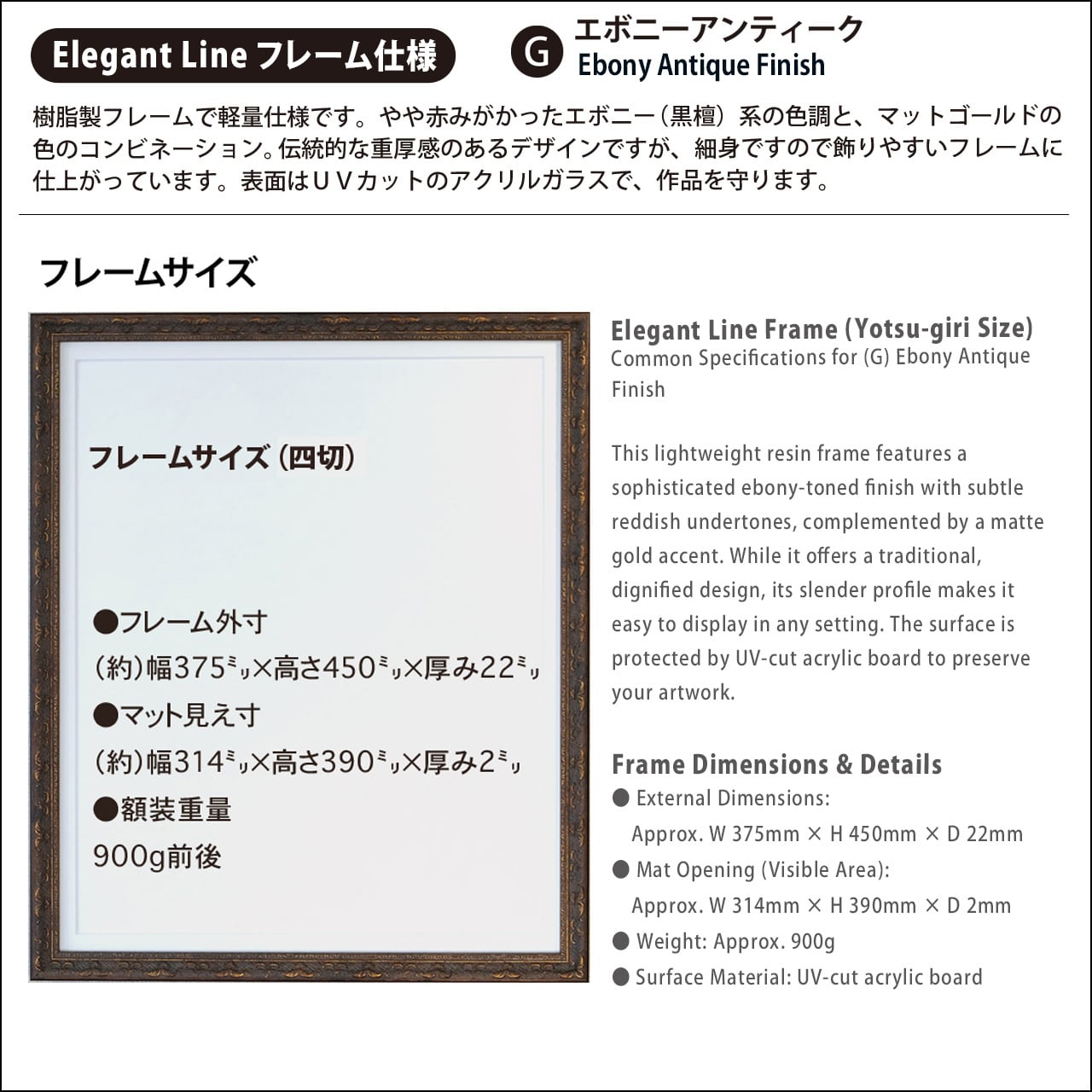
◉額縁/UVカットアクリルガラス、中性紙マット、吊元金具(額側)、吊紐、外箱
Framing: UV-protective acrylic and acid-free mat
Accessories: Hanging hardware (pre-installed), hanging cord
1809年、38歳のベートーヴェン(1770–1827)は、ウィーンで《ピアノ協奏曲第5番 変ホ長調 作品73》の構想を進めていました。今日《皇帝(Emperor)》の名で広く知られるこの作品ですが、この呼び名はベートーヴェン自身が付けたものではありません。自筆譜や初版譜にもその記載はなく、後に作品の持つ壮大で堂々とした性格から広まった通称とされています。
この頃、ヨーロッパはナポレオン戦争のさなかにありました。若き日のベートーヴェンは、ナポレオンにフランス革命の理想「自由と平等」の象徴として強い関心を抱いていたことが知られています。しかし1804年、ナポレオンが自ら皇帝に即位すると、その期待は大きく揺らぎました。もともとナポレオンへ献呈する予定であった交響曲第3番変ホ長調『英雄』(Eroica)作品55の献辞を削除したという逸話は、今日でも広く知られています。
1809年5月、ナポレオン軍はウィーンを包囲し、都市は激しい砲撃にさらされました。この時期についても、ひとつの逸話が伝えられています。すでに難聴に苦しんでいたベートーヴェンが、外から響く砲声からわずかに残された聴覚を守るため、枕を耳に押し当てながら地下室に身を潜めていた、というものです。この話は後年の伝承に基づくものですが、当時のウィーンが極度の緊張状態にあったことを象徴的に示すエピソードとして語られてきました。
そうした緊張のさなかで、後に《皇帝》と呼ばれるこの協奏曲は形づくられていきました。
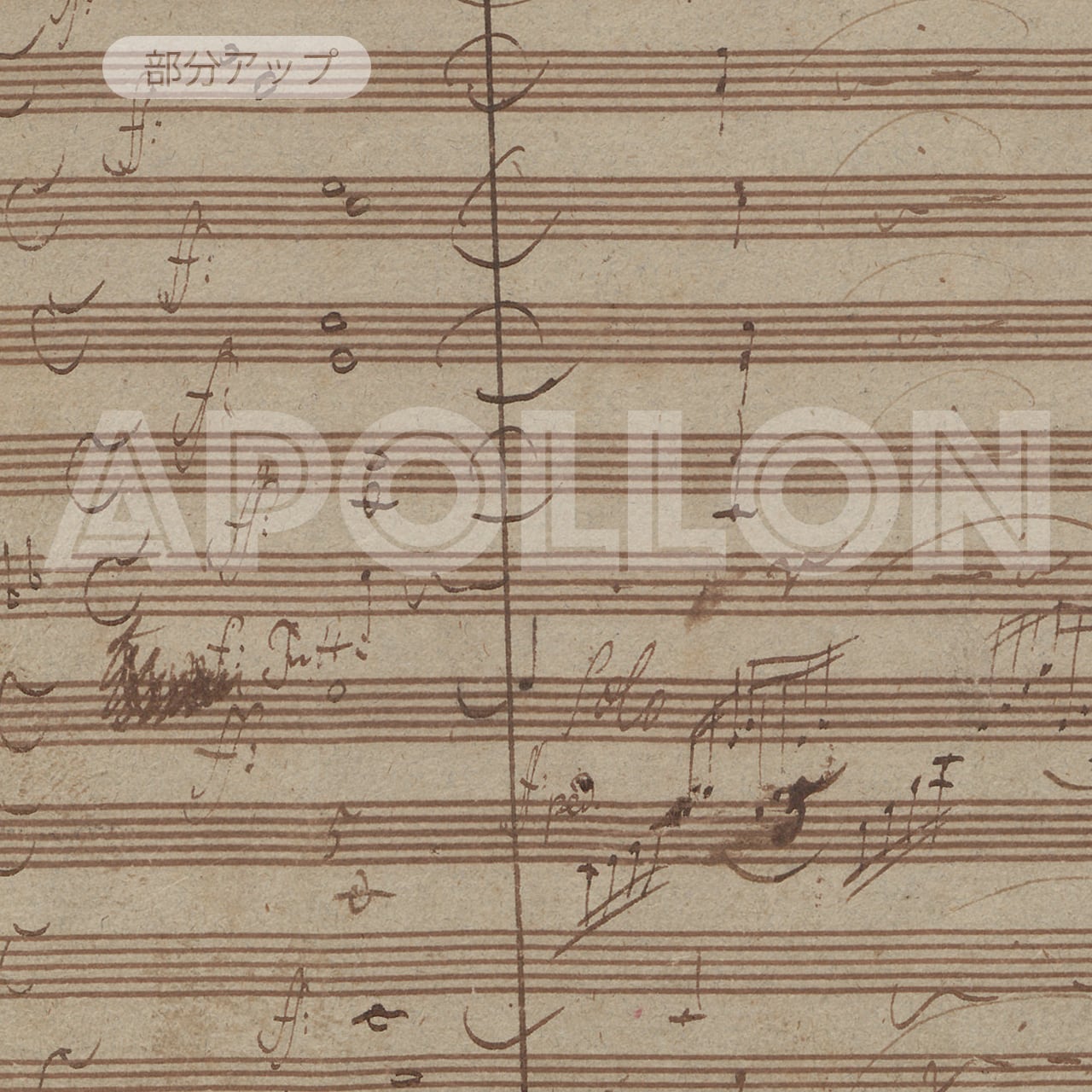
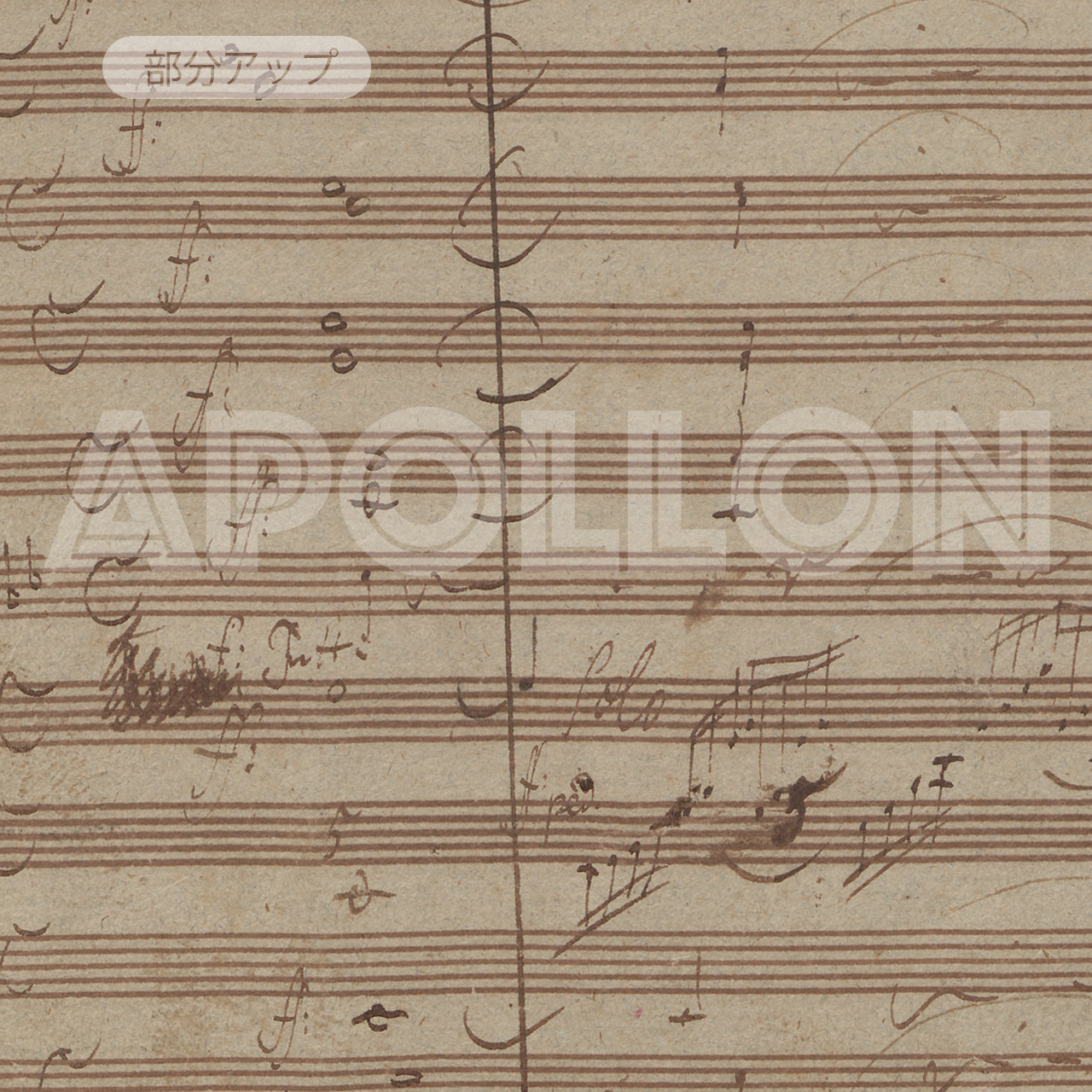
自筆譜に目を向けると、創作の生々しい痕跡が残されています。インクの濃淡、筆圧の揺らぎ、書き直された箇所、五線の上を迷いなく進んでいくペンの動き…そうした一つひとつが、作品が生まれていく過程を静かに物語っているように感じられます。
In 1809, at the age of 38, Ludwig van Beethoven (1770–1827) was working on the conception of his Piano Concerto No. 5 in E-flat major, Op. 73, in Vienna. Today, the work is widely known as “Emperor,” although this title was not given by Beethoven himself. It does not appear in either the autograph manuscript or the first edition score, and is generally understood to have become established later, based on the work’s grand and dignified character.
At this time, Europe was in the midst of the Napoleonic Wars. It is well known that the young Beethoven regarded Napoleon as a symbol of the ideals of the French Revolution—liberty and equality. However, in 1804, when Napoleon proclaimed himself Emperor, this admiration is said to have turned into a profound disillusionment. An often-cited anecdote holds that Beethoven withdrew the dedication of his Symphony No. 3 in E-flat major, Op. 55, “Eroica,” which had originally been intended for Napoleon, a story that remains widely known today.
In May 1809, Napoleon’s army besieged Vienna, and the city was subjected to intense bombardment. A further anecdote from this period has been handed down: Beethoven, already suffering from severe hearing loss, is said to have pressed pillows against his ears in an attempt to protect his remaining hearing from the sound of the artillery, taking refuge in a cellar. This account is based on later biographical tradition, but it has often been retold as an emblematic image of Vienna under extreme tension at the time.
Against this backdrop of tension, the work that would later be known as “Emperor” gradually took shape.
Examining the autograph manuscript, one finds traces of the act of composition itself: variations in ink density, fluctuations in handwriting pressure, passages of revision, and the movement of the pen across the staves. These elements quietly suggest the process through which the work came into being.
※Pay IDからご覧の方は下記URL(当店サイト)に
額の色目、仕様等、詳しく載っていますので、ぜひご確認下さい。
https://apollon.kooki-museum.com
<商品画像と実物の色味について>
商品の色味については、できる限り実物に近づけるよう調整を行っておりますが、お使いのモニター設定や機種、お部屋の照明環境によっても、実際の商品と異なって見える場合がございます。また、所蔵機関のスキャニングデータに基づくため、オリジナルの自筆譜と色味が異なることもございます。あらかじめご理解いただきますようお願い申し上げます。なお、一部の作品には、裏写り(裏面の楽譜の透け)、経年によるシミ、または原資料の修復に由来する痕跡が見られる場合がありますが、これは所蔵先のスキャニングデータに起因するもので、原稿の忠実な再現です。
<Important Notes on Color & Appearance>
Color Consistency:The actual color may vary depending on your monitor settings or room lighting. As these prints are based on official institutional scans, minor color variations from the original manuscript may occur.
<Image Detail & Historical Authenticity>
Some prints may show "bleed-through" (musical notation from the reverse side), authentic age spots, or visible restoration marks from the original source. These are not defects, but a faithful reproduction of the original historical manuscript, preserved to maintain its archival character.
▼【Reference】
YouTube Channel: University of Music FRANZ LISZT Weimar
-
 ハイドン:交響曲 第101番 『時計』〜第2楽章/Haydn:Sinfonie Nr. 101 in D-Dur, Hob. I:101 "The Clock" – II. Andante¥14,630 ($92.68)
 -
 ハイドン:皇帝讃歌(神よ、皇帝フランツを守り給え)」/Haydn:"Gott erhalte Franz den Kaiser" Hob. XXVIa:43¥14,630 ($92.68)
 -
 ハイドン:ピアノ・ソナタ 第49番 変ホ長調 Hob. XVI:49(ウィーン原典版:第59番)/ Haydn: Piano Sonata in E-flat major, Hob. XVI:49¥14,630 ($92.68)