


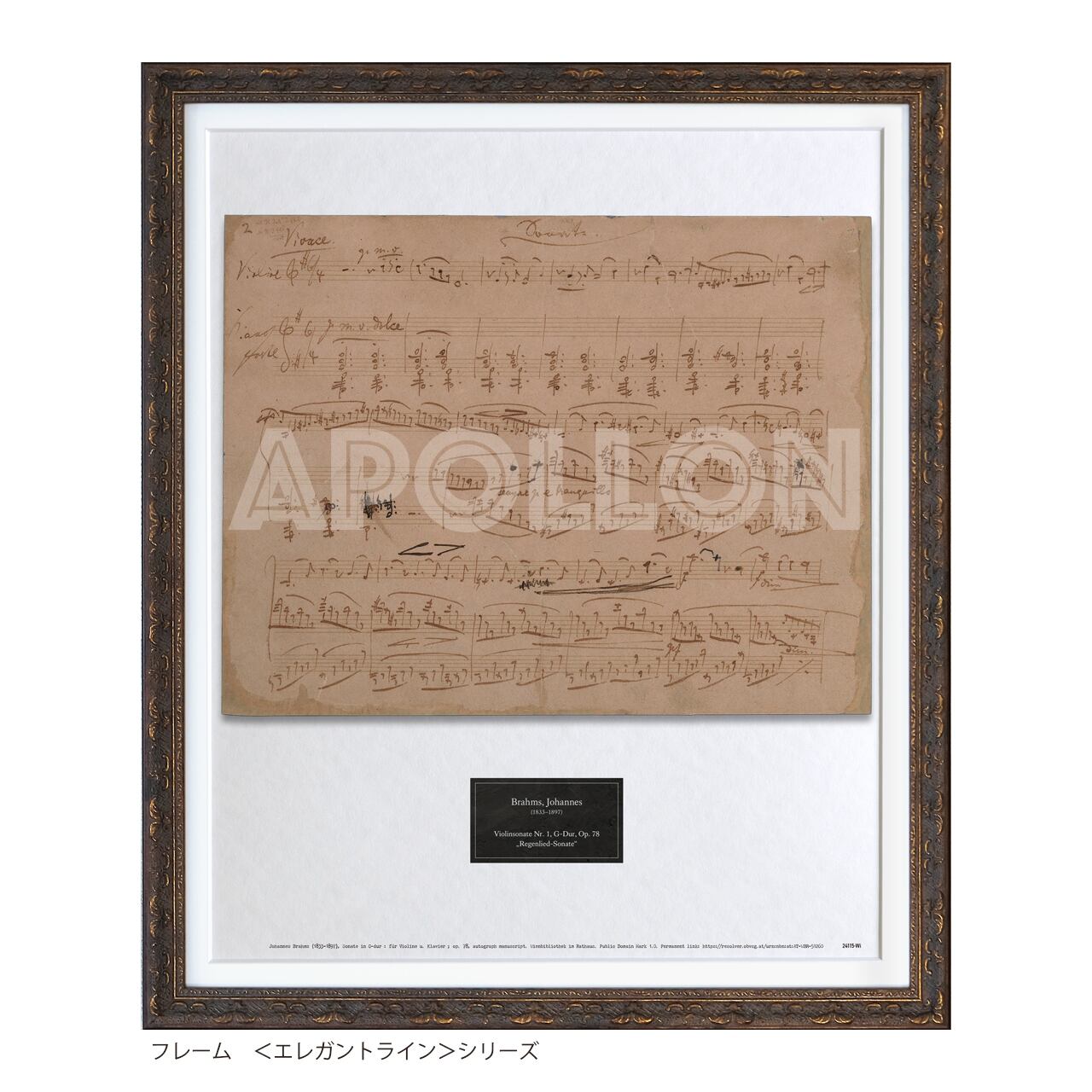
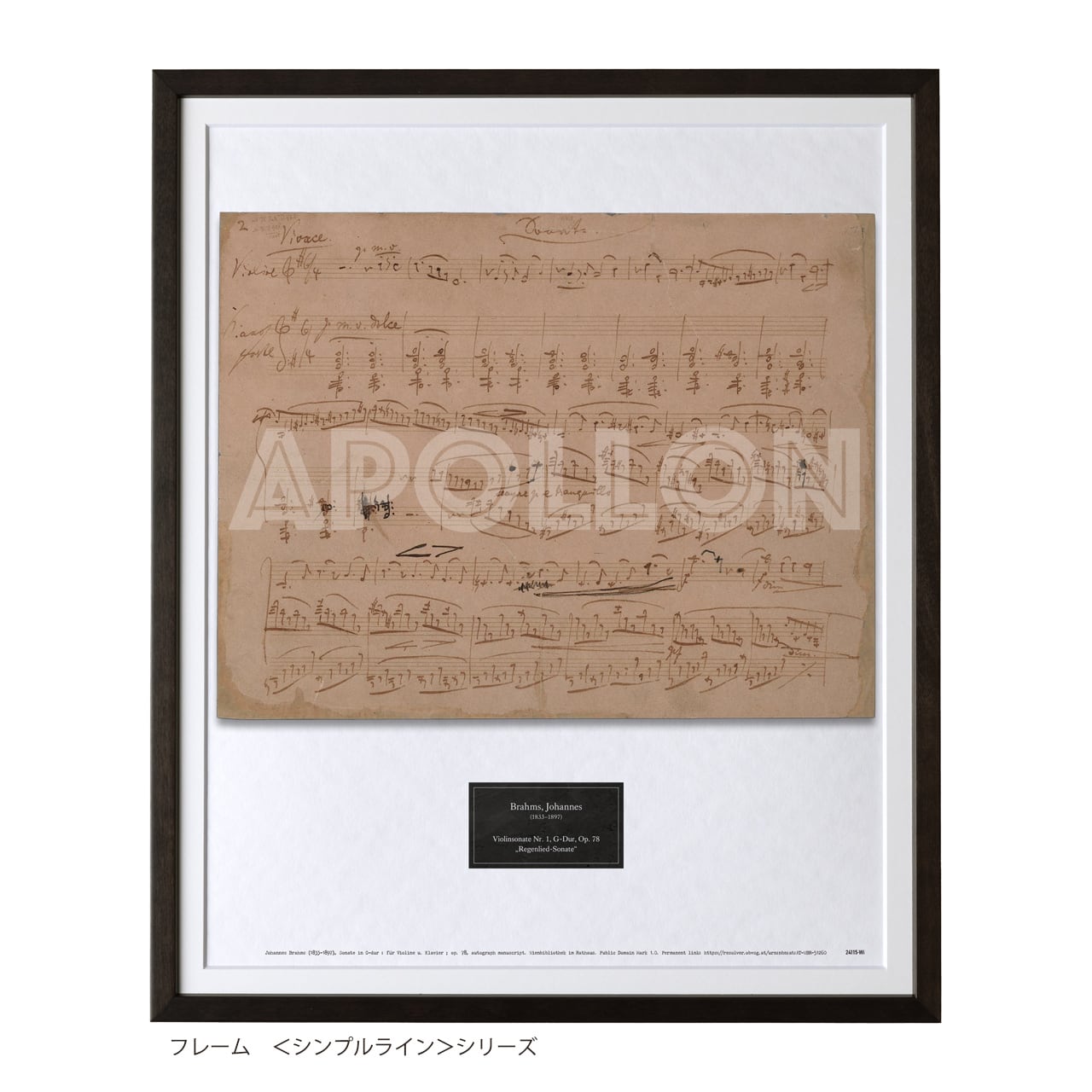

ブラームス:《雨の歌ソナタ》ヴァイオリン・ソナタ第1番 ト長調 Op.78 / Brahms: Violinsonate Nr. 1 in G-Dur, Op. 78 “Regenlied-Sonate”
¥14,630 ($92.28)
Brahms, Johannes (1833–1897)
Violinsonate Nr. 1, G-Dur, Op. 78
„Regenlied-Sonate“
《商品説明》 Product Specifications
◉プリントタイプ/高精細ジークレープリント
Print Type: High-definition Giclée print
◉出力紙/ドイツ製ハーネミューレ ファイン・アート紙(アシッドフリー)
Paper: Hahnemühle Fine Art Paper (Made in Germany, Acid-free)
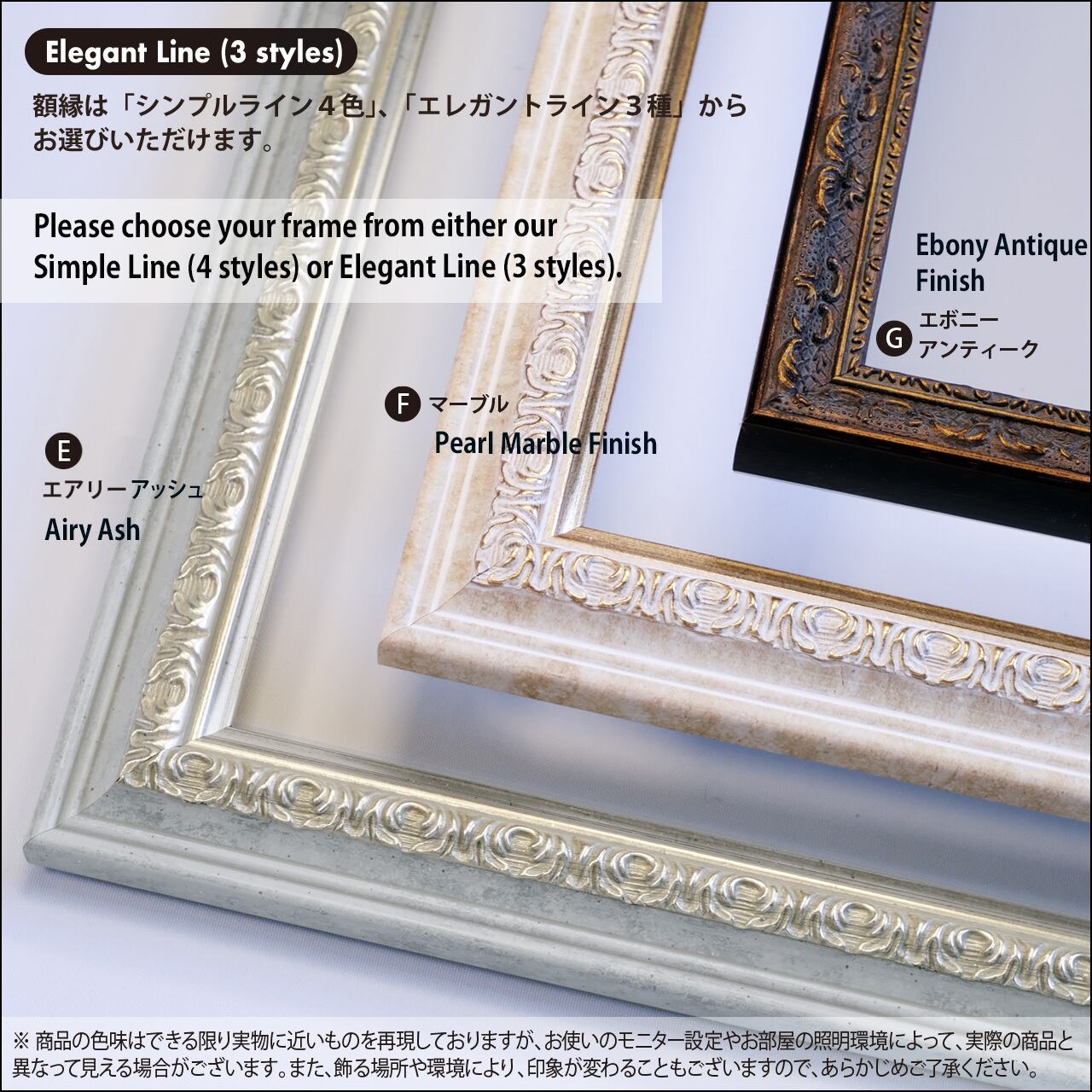
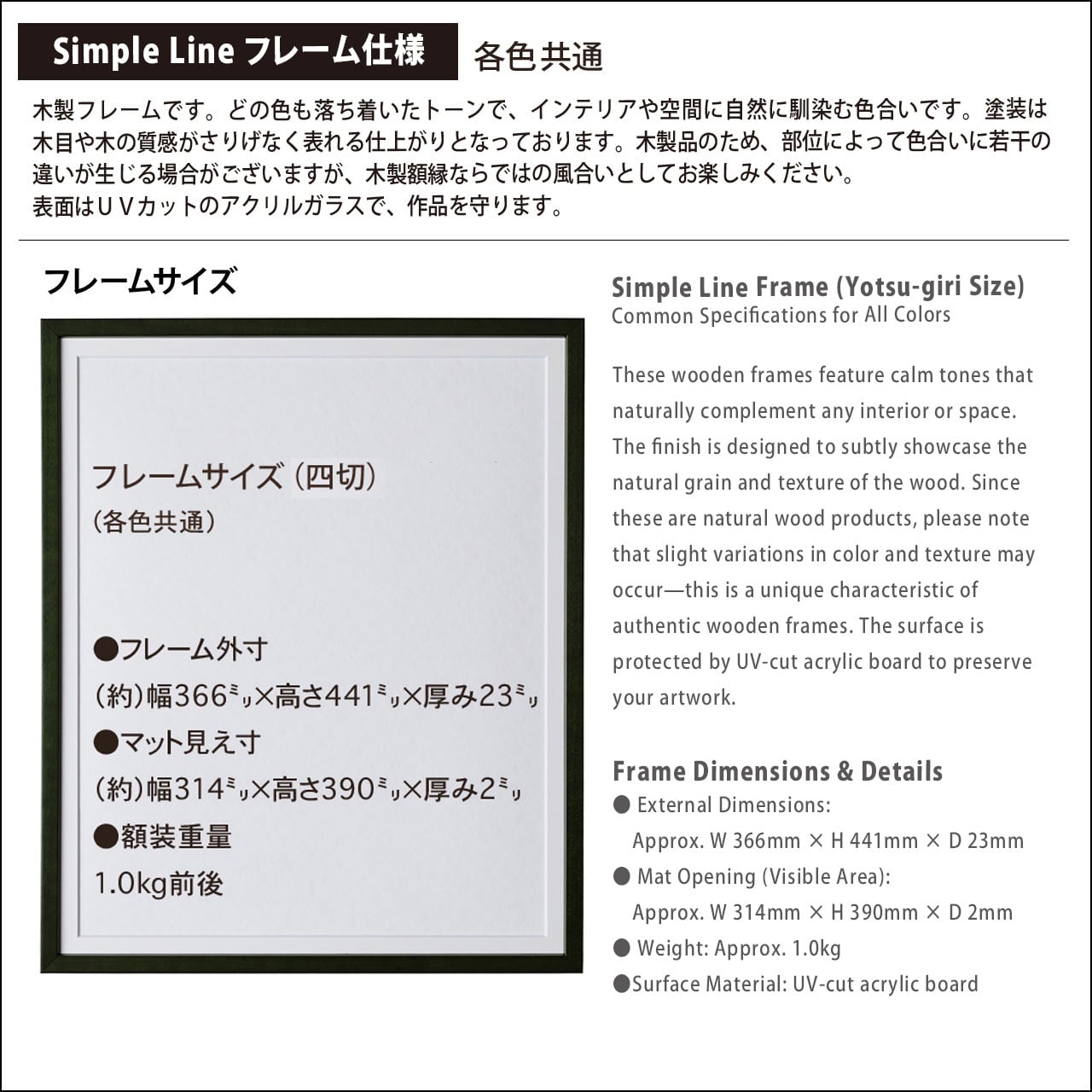
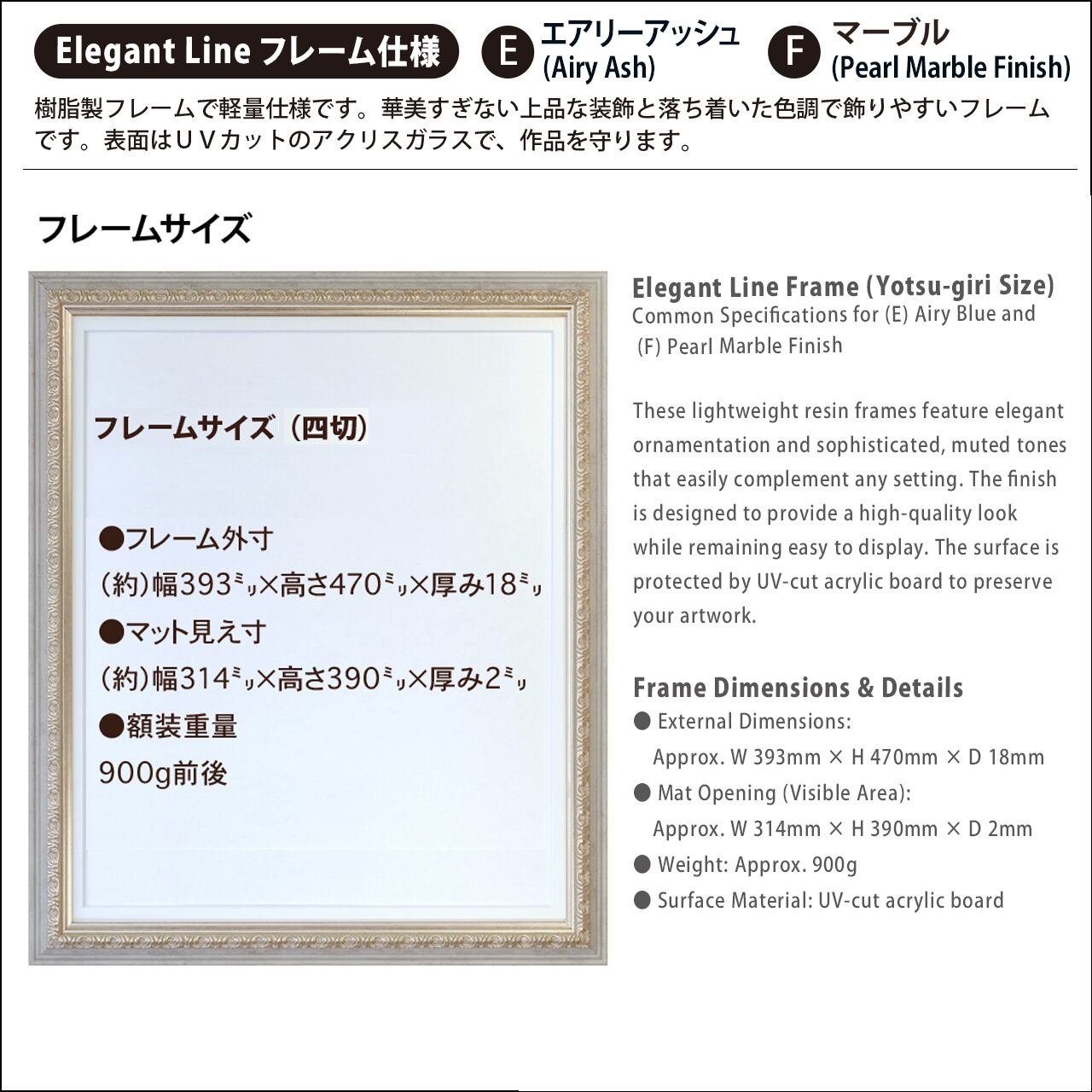
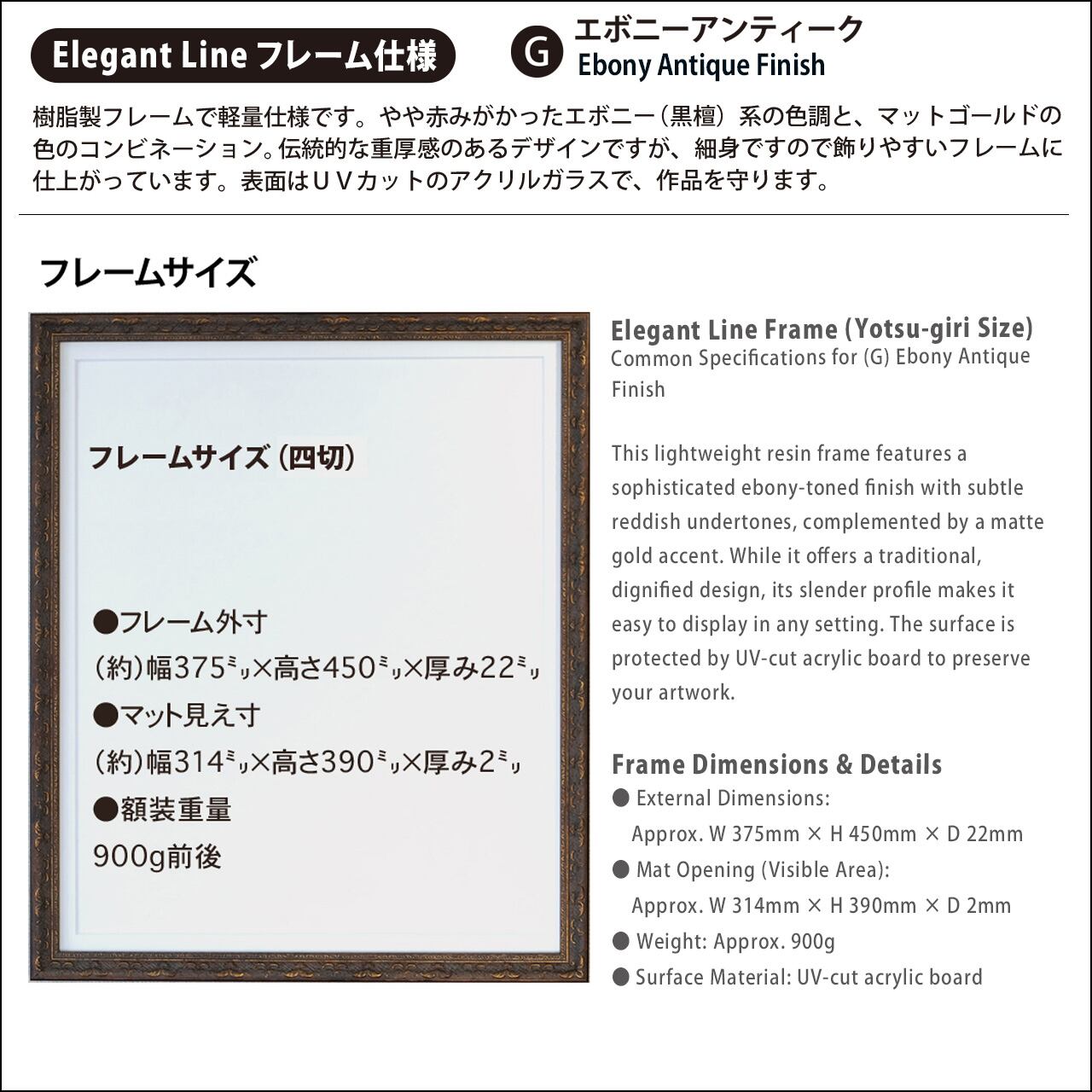
◉額縁/UVカットアクリルガラス、中性紙マット、吊元金具(額側)、吊紐、外箱
Framing: UV-protective acrylic and acid-free mat
Accessories: Hanging hardware (pre-installed), hanging cord
ブラームスがこのヴァイオリン・ソナタの作曲に着手したのは、45歳を迎えた1878年夏、オーストリア南部・ペルチャッハ滞在中のことでした。翌1879年、この湖畔の町で作品を完成させたブラームスは、その楽譜をクララ・シューマンへ送り、「この曲を聴けば、私の心も伝わるでしょう」といった趣旨の言葉を書き添えています。深い意味までは分かりませんが、長年にわたり深い信頼で結ばれていた二人の関係を思うと、この静かなソナタの響きもまた、どこか私的な手紙のように感じられます。
この曲は、「雨の歌ソナタ」という愛称で広く親しまれていますが、これは後世に定着した呼び名です。終楽章(第3楽章)冒頭には、ブラームス自身の歌曲《Regenlied(雨の歌)》Op.59-3 を思わせる主題が用いられており、このことが愛称の由来になったとされています。
この作品には、劇的な誇張や激しい感情の昂ぶりはほとんどありません。ヴァイオリンとピアノは終始対等に寄り添い、互いの呼吸を確かめ合うように音楽が進んでいきます。今もなお演奏機会の多い作品として親しまれている理由も、こうした親密で抑制された美しさにあるのかもしれません。
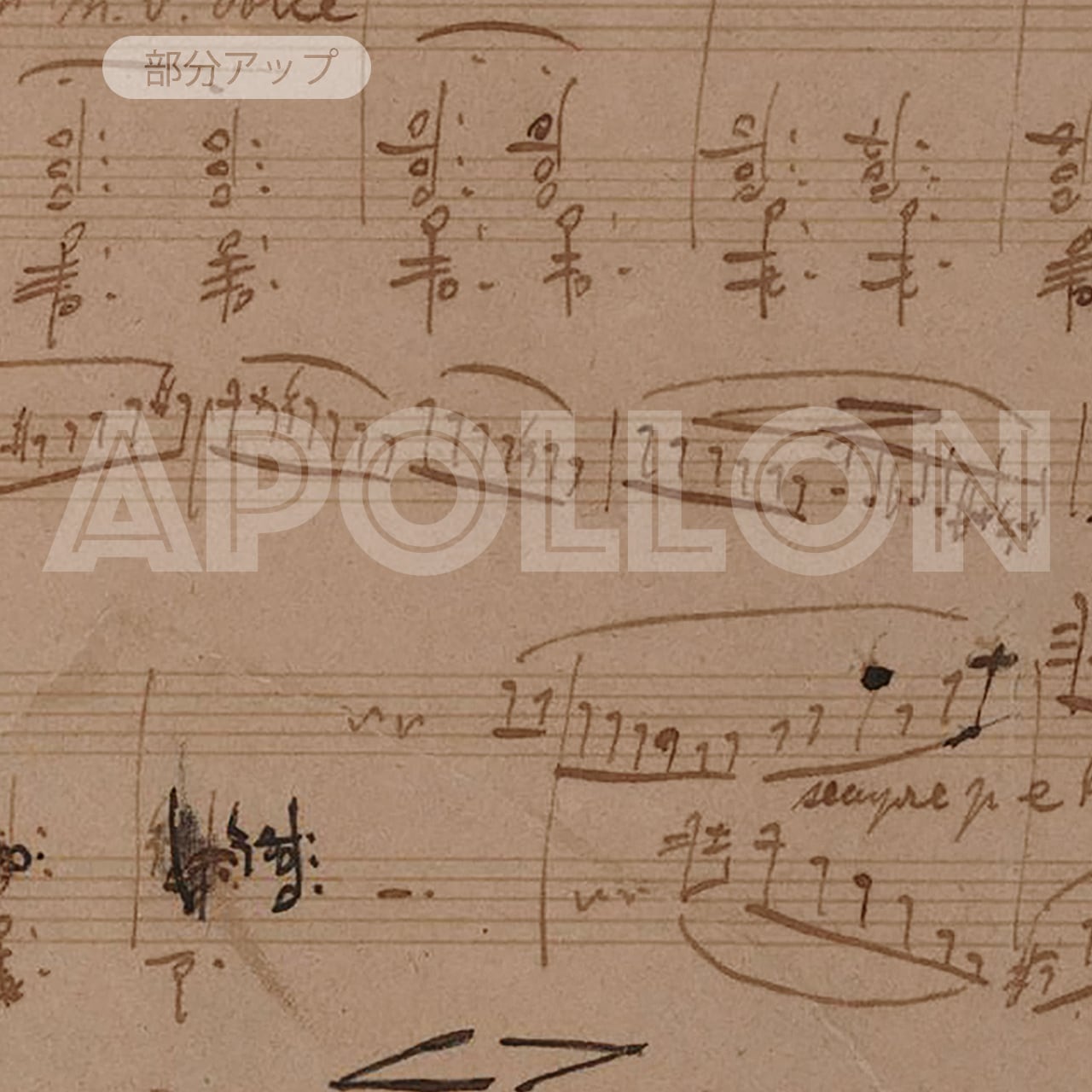
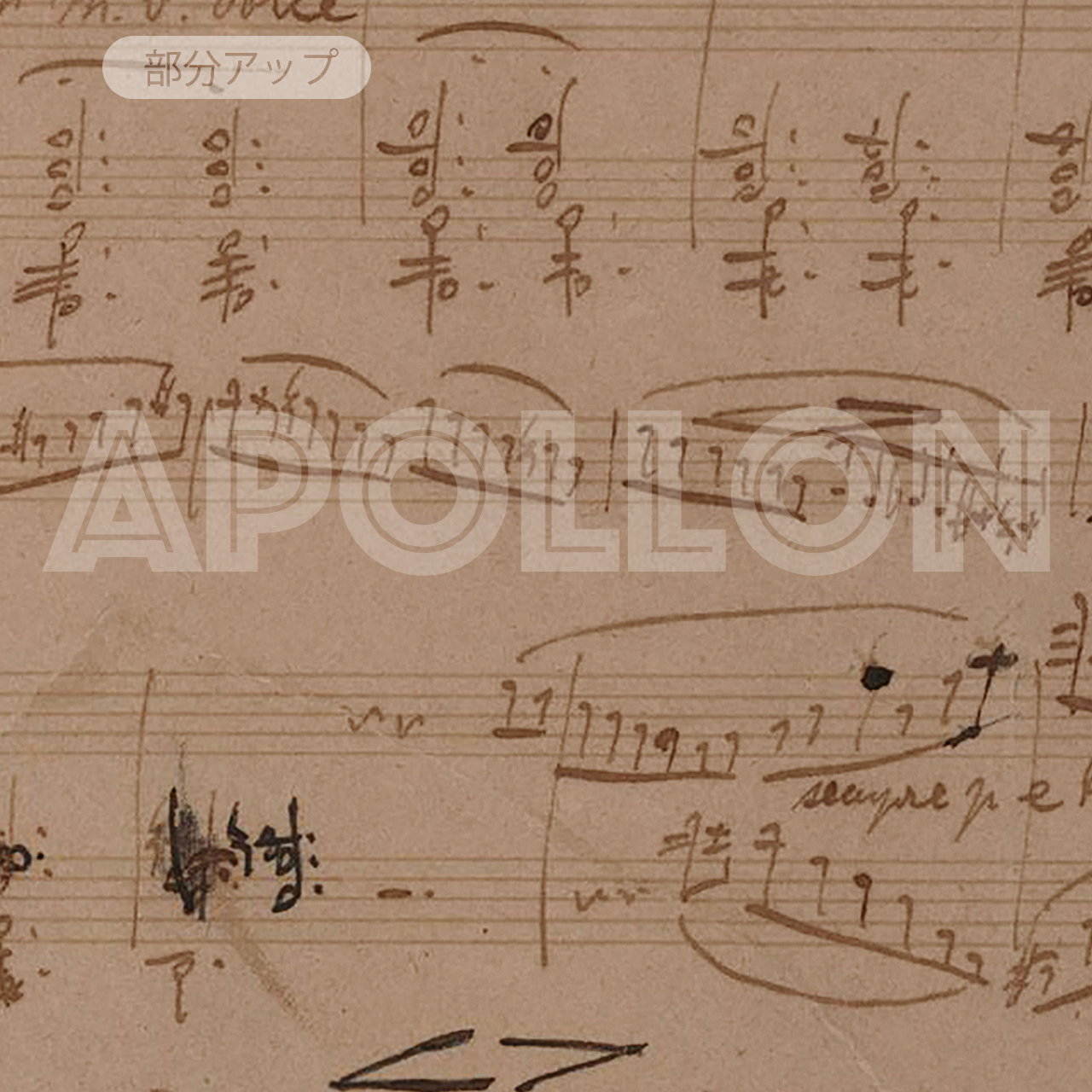
自筆譜を見ると、譜面には細かな修正や書き直しの跡も残されており、ブラームスが音の流れや響きの均衡を慎重に整えていった過程を、今も静かに伝えています。
この楽譜に激しい雨の描写はありません。
けれど、雨音によって遠い記憶がふいに呼び覚まされるような、懐かしく温かな気配が、この作品には静かに流れているかのようです。
Brahms began work on this violin sonata during the summer of 1878, at the age of forty-five, while staying in Pörtschach in southern Austria. The following year, after completing the work in this lakeside town, Brahms sent the score to Clara Schumann with words suggesting, “If you listen to this piece, you may understand something of what is in my heart.” The deeper meaning behind those words remains uncertain, yet considering the profound trust that united them over many years, this quietly intimate sonata can feel almost like a deeply personal letter.
Today, the work is widely known by the nickname “Regenlied Sonata” (“Rain Song Sonata”), although this was not a title given by Brahms himself. The opening theme of the finale recalls Brahms’s earlier song Regenlied (“Rain Song”), Op.59 No.3, and this connection is thought to have inspired the nickname that later became attached to the work.
There is little dramatic exaggeration or overt emotional display in this music. Instead, the violin and piano remain closely intertwined throughout, as though listening carefully to one another. Perhaps this intimate and restrained beauty is one reason why the sonata continues to be frequently performed and cherished today.
Looking at the autograph manuscript, one can still see traces of revisions and careful corrections across the pages. They quietly reveal the process through which Brahms refined the balance of sonority and musical flow with great care and patience.
This music does not depict rain in any literal sense.
And yet, throughout the work, there seems to linger a warm and nostalgic atmosphere, like the sudden return of a distant memory awakened by the sound of rain.
※Pay IDからご覧の方は下記URL(当店サイト)に
額の色目、仕様等、詳しく載っていますので、ぜひご確認下さい。
https://apollon.kooki-museum.com
<商品画像と実物の色味について>
商品の色味については、できる限り実物に近づけるよう調整を行っておりますが、お使いのモニター設定や機種、お部屋の照明環境によっても、実際の商品と異なって見える場合がございます。また、所蔵機関のスキャニングデータに基づくため、オリジナルの自筆譜と色味が異なることもございます。あらかじめご理解いただきますようお願い申し上げます。なお、一部の作品には、裏写り(裏面の楽譜の透け)、経年によるシミ、または原資料の修復に由来する痕跡が見られる場合がありますが、これは所蔵先のスキャニングデータに起因するもので、原稿の忠実な再現です。
<Important Notes on Color & Appearance>
Color Consistency:The actual color may vary depending on your monitor settings or room lighting. As these prints are based on official institutional scans, minor color variations from the original manuscript may occur.
<Image Detail & Historical Authenticity>
Some prints may show "bleed-through" (musical notation from the reverse side), authentic age spots, or visible restoration marks from the original source. These are not defects, but a faithful reproduction of the original historical manuscript, preserved to maintain its archival character.
▼【Reference】
YouTube Channel:silesius
-
 クララ・シューマン:ピアノとヴァイオリンのための3つのロマンス 第1曲 Op.22-1/Schumann, Clara: Drei Romanzen, Op. 22, Nr. 1: Andante molto¥14,630 ($92.28)
 -
 クララ・シューマン:6つの歌 より「僕は暗い夢の中にいた」Op. 13, Nr. 1/Clara Schumann:6 Lieder, Op. 13, Nr. 1 „Ich stand in dunklen Träumen“¥14,630 ($92.28)
 -
 クララ・シューマン:ピアノのための3つのロマンス 第1曲 Op. 21-1/Clara Schumann:Drei Romanzen für Klavier Op. 21 Nr. 1 (Widmung an Robert Schumann)¥14,630 ($92.28)