


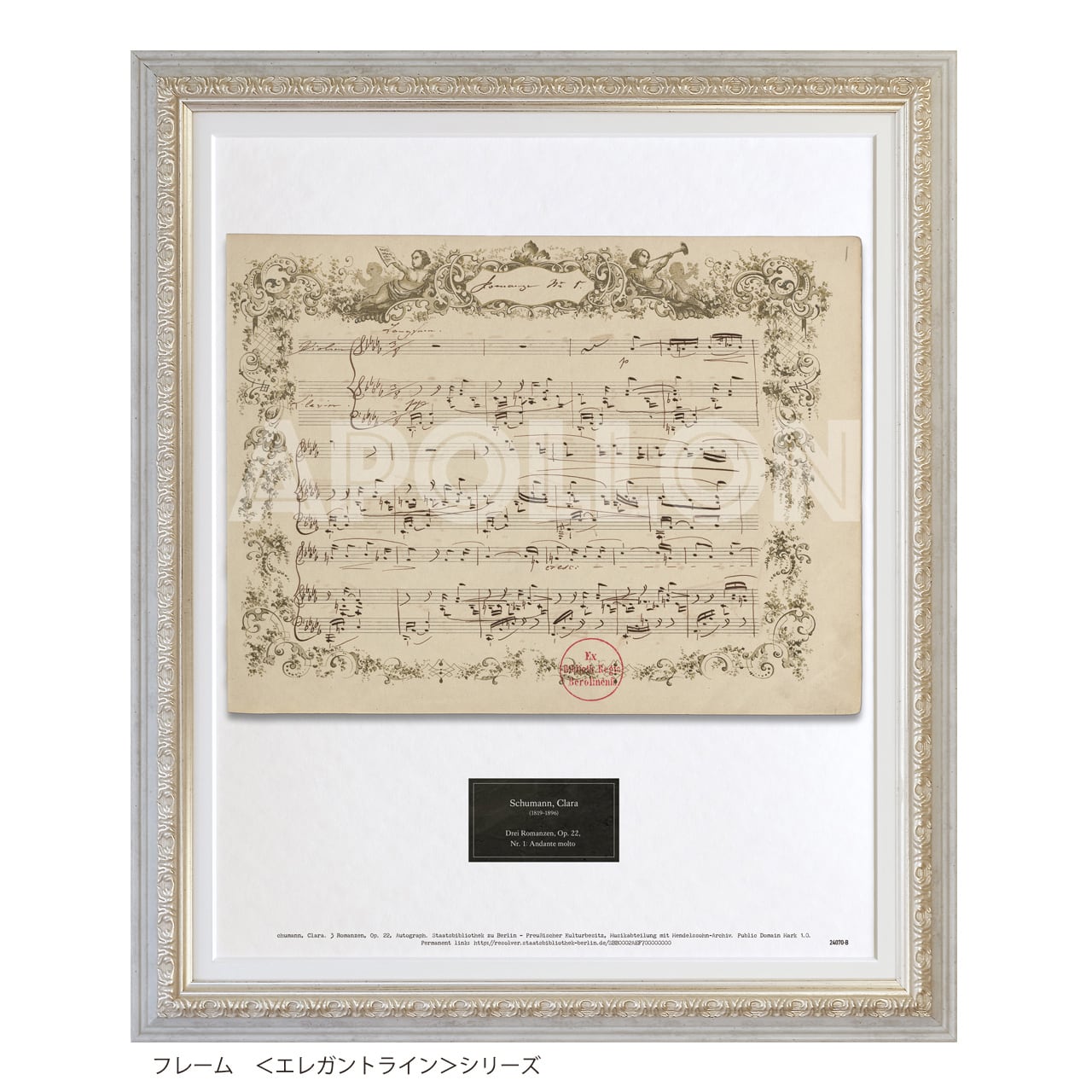
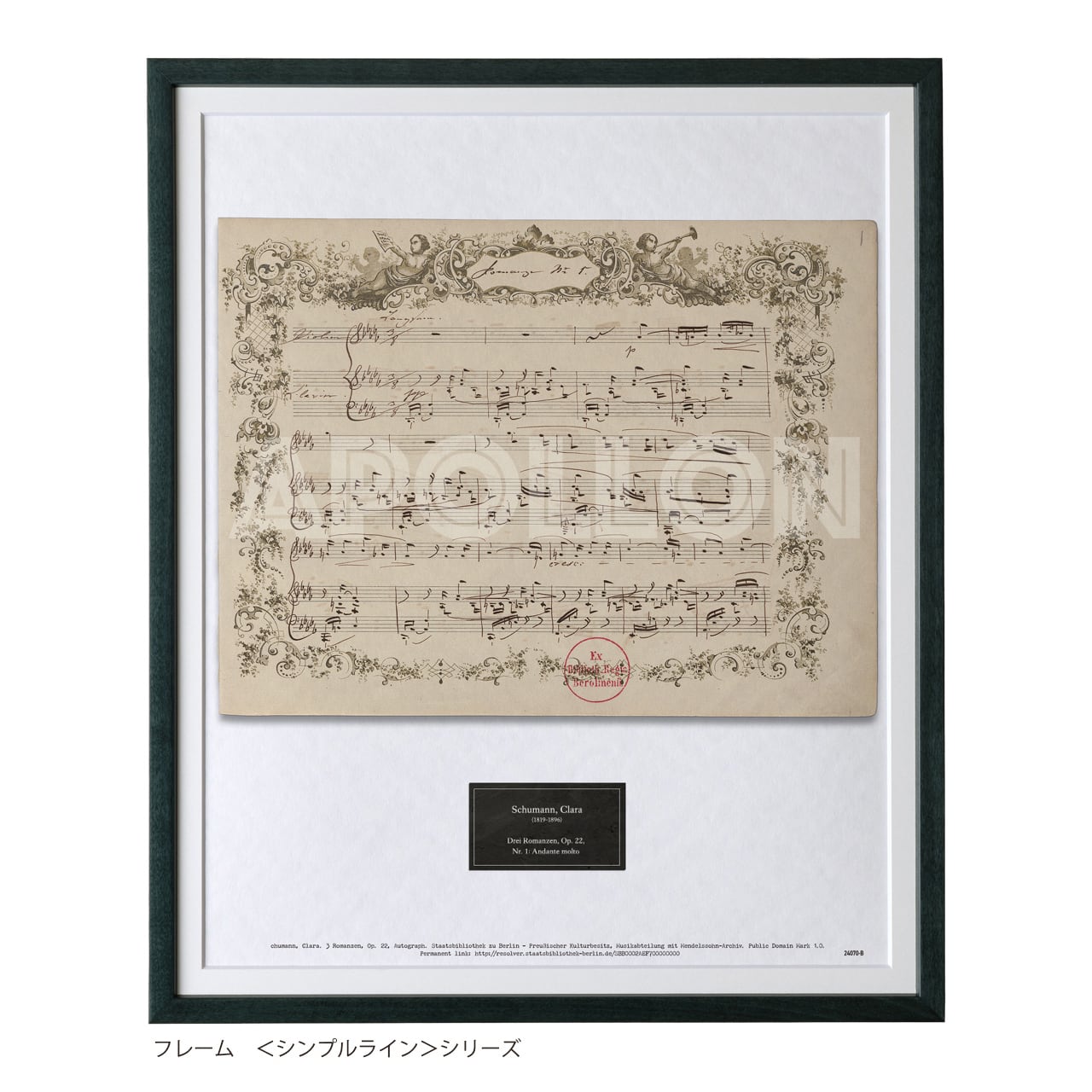


クララ・シューマン:ピアノとヴァイオリンのための3つのロマンス 第1曲 Op.22-1/Schumann, Clara: Drei Romanzen, Op. 22, Nr. 1: Andante molto
¥14,630 ($92.68)
Schumann, Clara (1819–1896)
Drei Romanzen, Op. 22, Nr. 1: Andante molto
《商品説明》 Product Specifications
◉プリントタイプ/高精細ジークレープリント
Print Type: High-definition Giclée print
◉出力紙/ドイツ製ハーネミューレ ファイン・アート紙(アシッドフリー)
Paper: Hahnemühle Fine Art Paper (Made in Germany, Acid-free)
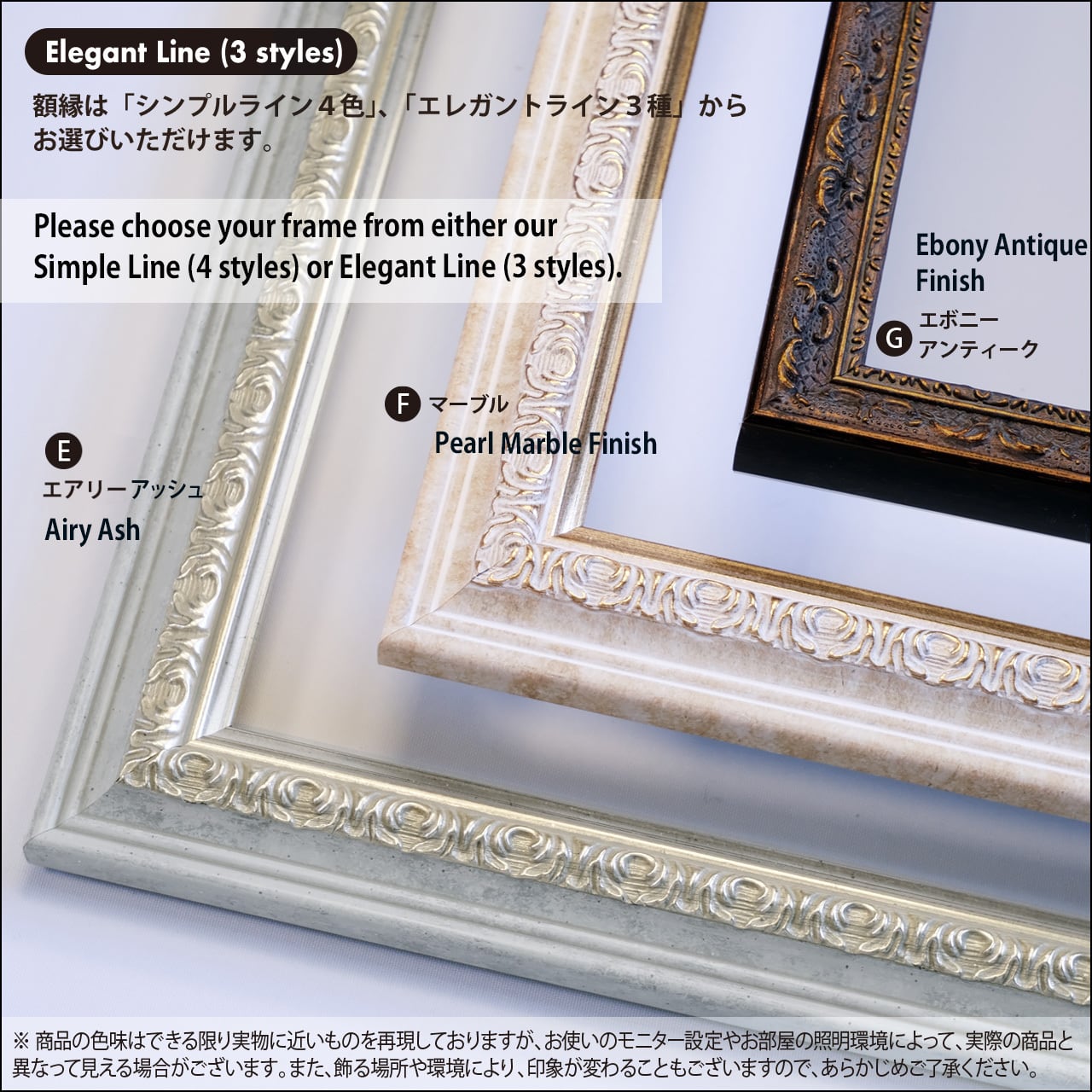
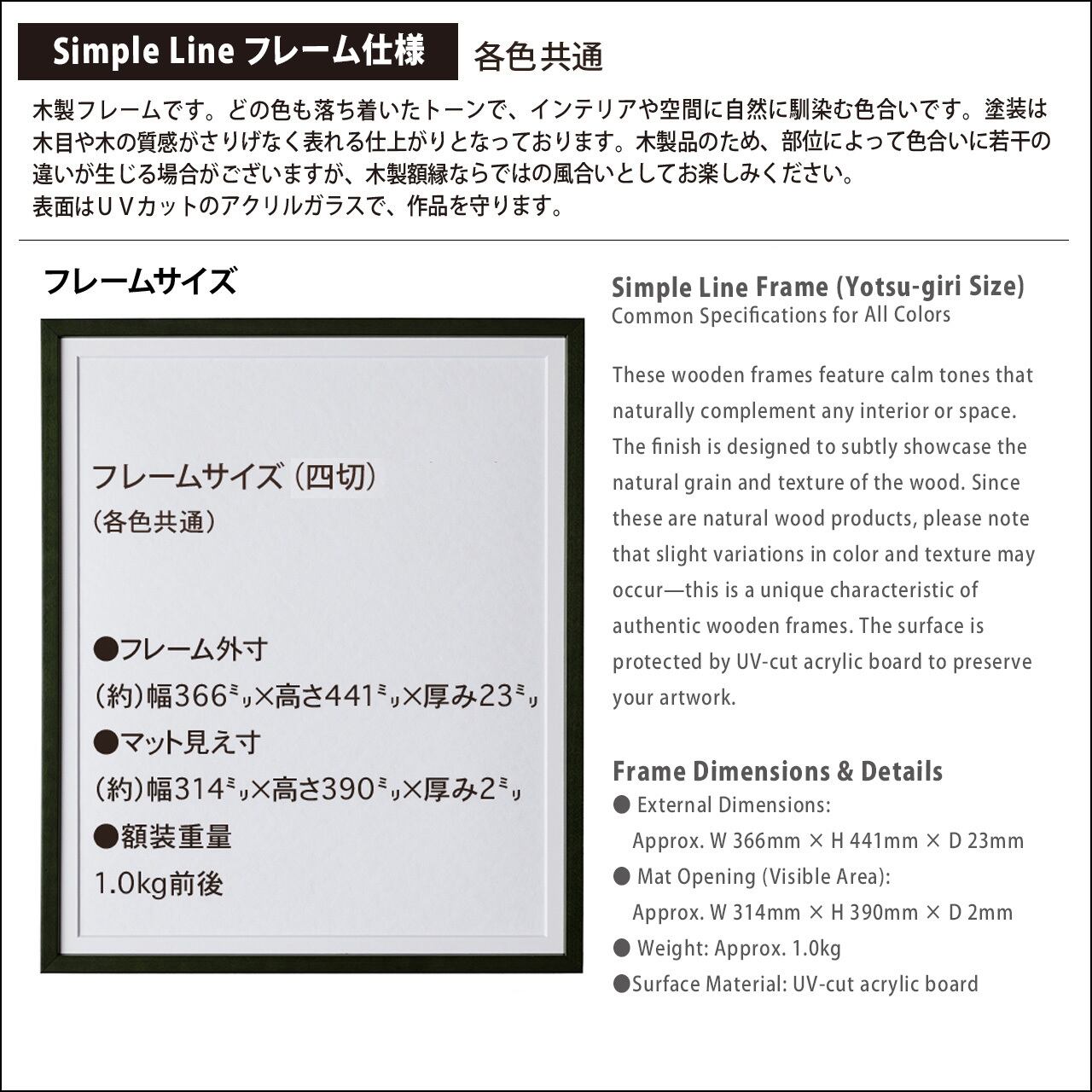
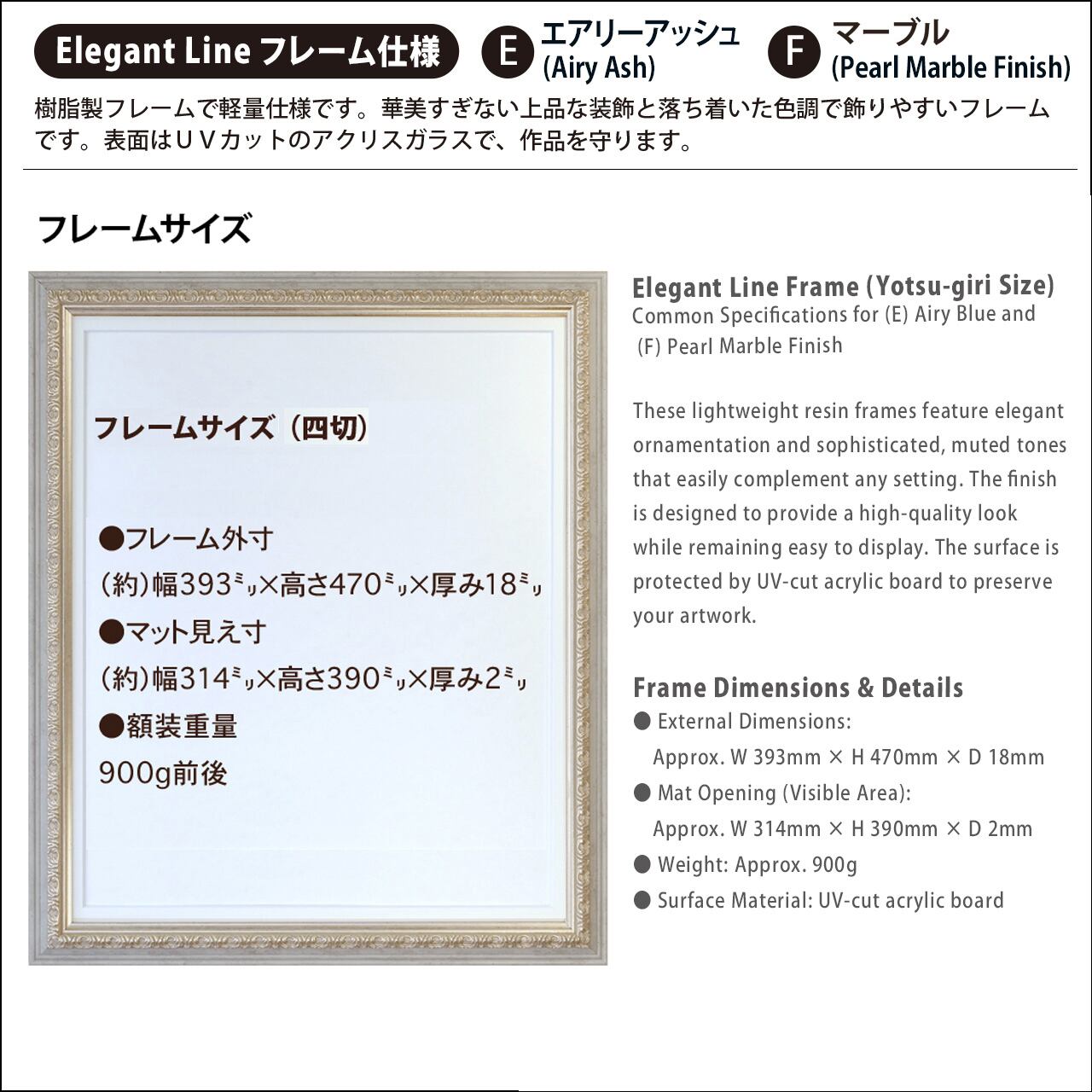
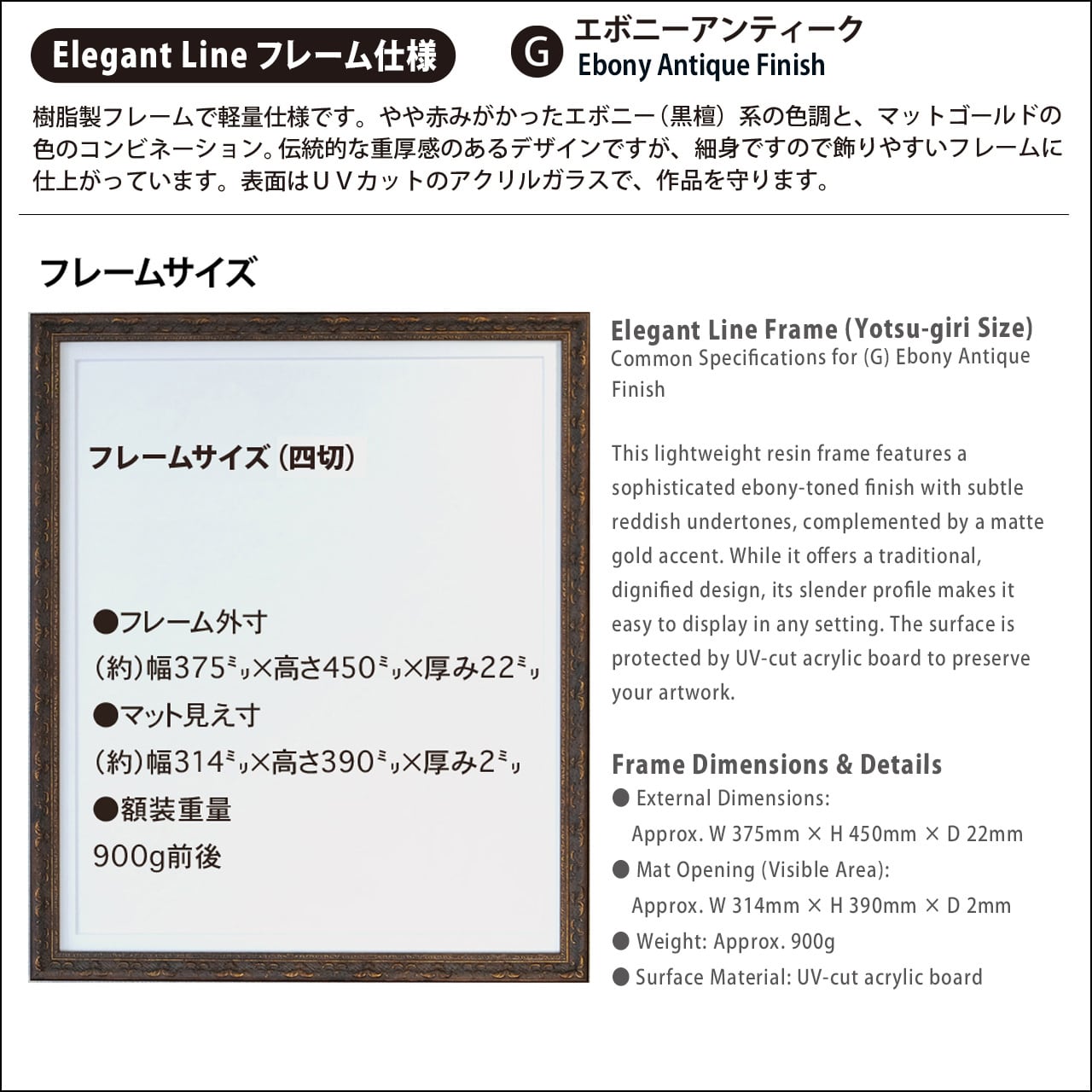
◉額縁/UVカットアクリルガラス、中性紙マット、吊元金具(額側)、吊紐、外箱
Framing: UV-protective acrylic glazing and acid-free mat
Accessories: Hanging hardware (pre-installed), hanging cord
1853年は、クララ・シューマンにとって重要な出来事が重なった年でした。当時、ヨーロッパで注目を集める若きヴァイオリニストであったヨーゼフ・ヨアヒムとの音楽的交流を深め、演奏活動と創作を続ける一方、家庭では8人の子どもを育て、家族を支える大きな責任を担っていました。
その9月には、20歳のヨハネス・ブラームスがシューマン家を訪れ、クララとロベルトとの深い音楽的交流が始まることになります。またこの頃、ロベルト・シューマンの精神的な健康にも変化が現れはじめていました。
そうした人生の大きな転換点が重なる中で、1853年10月に完成したのが、《3つのロマンス》Op.22です。
作品はヴァイオリニストのヨーゼフ・ヨアヒムに献呈されました。当時のヨアヒムは、若くしてヨーロッパ各地で高い評価を受けるヴァイオリニストとして活動しており、クララ・シューマンおよびロベルト・シューマンと深い音楽的なつながりを築いていました。
第1曲「Andante molto」は、静かな流れの中でヴァイオリンとピアノが互いに語り合うように進む作品です。ピアノが繊細な響きで音楽の基盤を築き、その上にヴァイオリンが旋律を重ねていきます。
二つの楽器は単に主旋律と伴奏という関係ではなく、それぞれが独立した声を持ちながら、互いの響きを受け止め、支え合います。その親密な対話のような表現こそ、この作品が持つ室内楽的な魅力のひとつです。
The year 1853 was a period of profound significance in Clara Schumann’s life. While deepening her musical relationship with Joseph Joachim, a young violinist who was already gaining recognition throughout Europe, she continued her career as a performer and composer. At the same time, she carried the great responsibility of raising eight children and supporting her family.
In September of that year, the 20-year-old Johannes Brahms visited the Schumann household, marking the beginning of a profound musical relationship with Clara and Robert. During this same period, Robert Schumann’s personal and emotional difficulties were also becoming increasingly apparent.
Amid these many important events, Clara completed Drei Romanzen, Op. 22, in October 1853.
The work was dedicated to Joseph Joachim. At the time, Joachim was a young violinist who had already gained great recognition throughout Europe, and he had developed close musical relationships with both Clara and Robert Schumann.
The first movement, “Andante molto,” unfolds as an intimate musical dialogue between violin and piano. The piano creates a delicate harmonic foundation, upon which the violin introduces its expressive melody.
Rather than functioning simply as melody and accompaniment, the two instruments maintain independent voices while responding to and supporting one another. This sense of musical conversation is one of the defining qualities of the work’s chamber music character.
※Pay IDからご覧の方は下記URL(当店サイト)に
額の色目、仕様等、詳しく載っていますので、ぜひご確認下さい。
https://apollon.kooki-museum.com
<商品画像と実物の色味について>
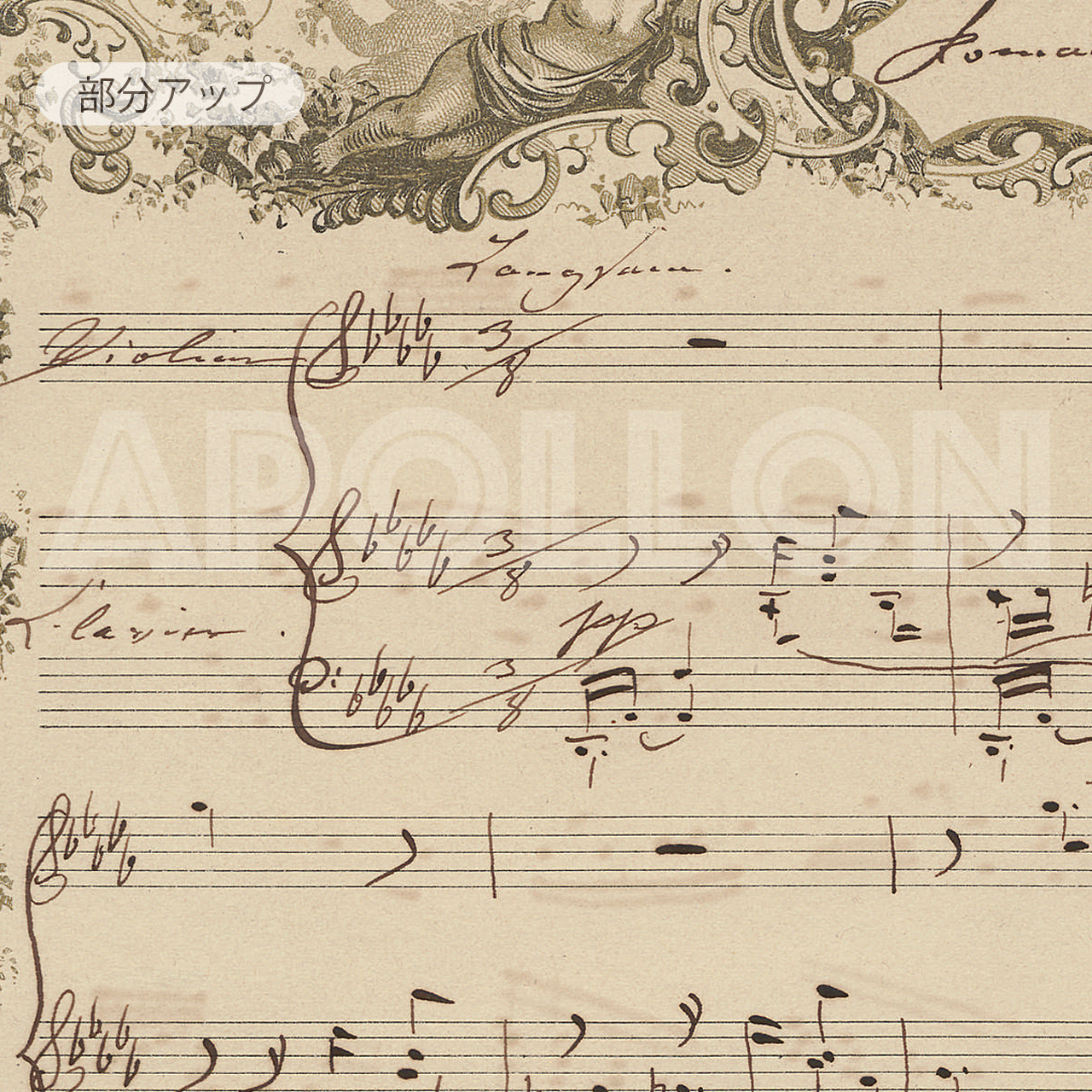
商品の色味については、できる限り実物に近づけるよう調整を行っておりますが、お使いのモニター設定や機種、お部屋の照明環境によっても、実際の商品と異なって見える場合がございます。また、所蔵機関のスキャニングデータに基づくため、オリジナルの自筆譜と色味が異なることもございます。あらかじめご理解いただきますようお願い申し上げます。なお、一部の作品には、裏写り(裏面の楽譜の透け)、経年によるシミ、または原資料の修復に由来する痕跡が見られる場合がありますが、これは所蔵先のスキャニングデータに起因するもので、原稿の忠実な再現です。
<Important Notes on Color & Appearance>
Color Consistency:The actual color may vary depending on your monitor settings or room lighting. As these prints are based on official institutional scans, minor color variations from the original manuscript may occur.
<Image Detail & Historical Authenticity>
Some prints may show "bleed-through" (musical notation from the reverse side), authentic age spots, or visible restoration marks from the original source. These are not defects, but a faithful reproduction of the original historical manuscript, preserved to maintain its archival character.
▼【Reference】
YouTube Channel: Esther Abrami
-
 クララ・シューマン :ピアノとヴァイオリンのための3つのロマンス 第2曲 Op.22-2/Schumann, Clara (1819–1896): Drei Romanzen, Op. 22, Nr. 2: Allegretto¥14,630 ($92.68)
 -
 クララ・シューマン:6つの歌 より「僕は暗い夢の中にいた」Op. 13, Nr. 1/Clara Schumann:6 Lieder, Op. 13, Nr. 1 „Ich stand in dunklen Träumen“¥14,630 ($92.68)
 -
 クララ・シューマン:ピアノのための3つのロマンス 第1曲 Op. 21-1/Clara Schumann:Drei Romanzen für Klavier Op. 21 Nr. 1 (Widmung an Robert Schumann)¥14,630 ($92.68)