


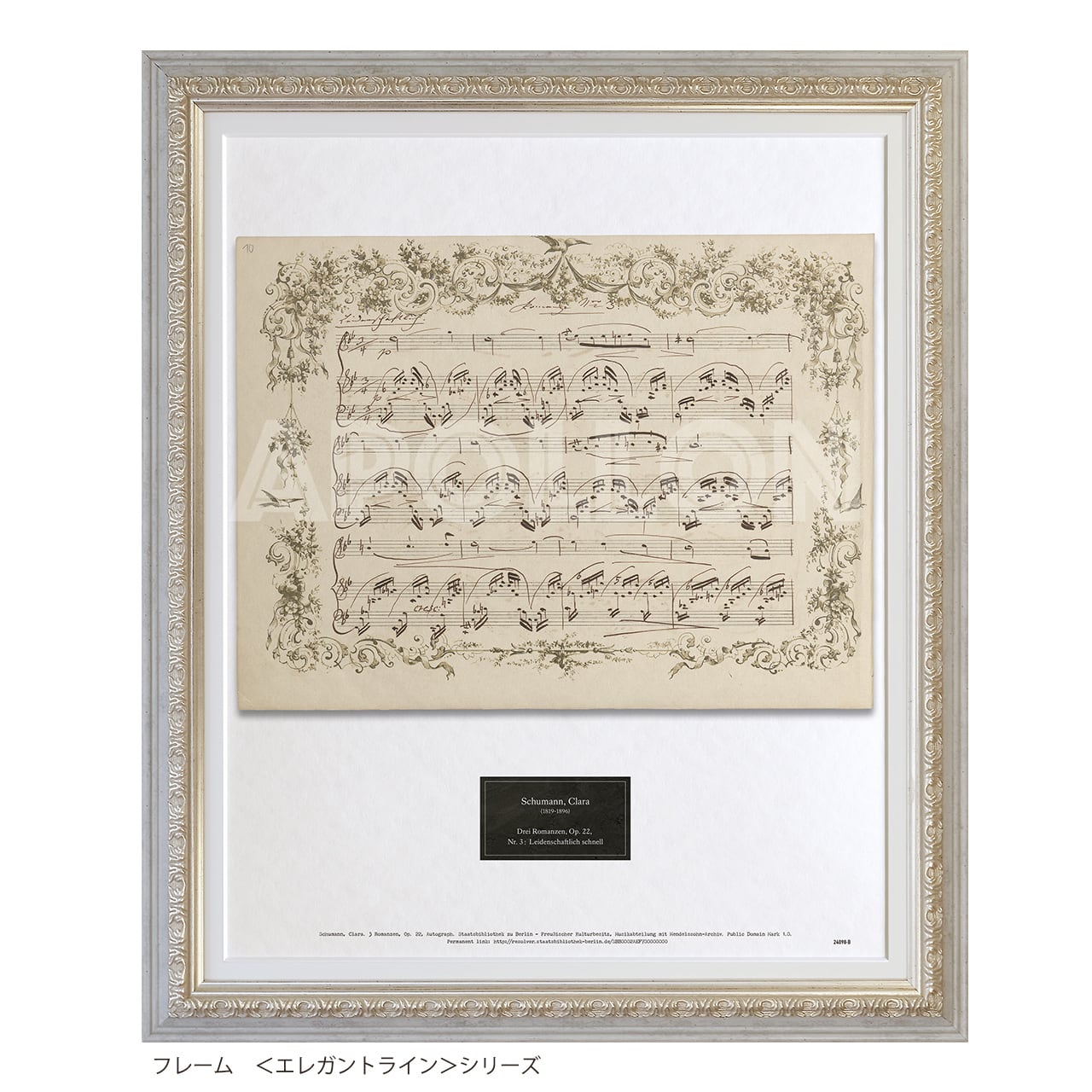
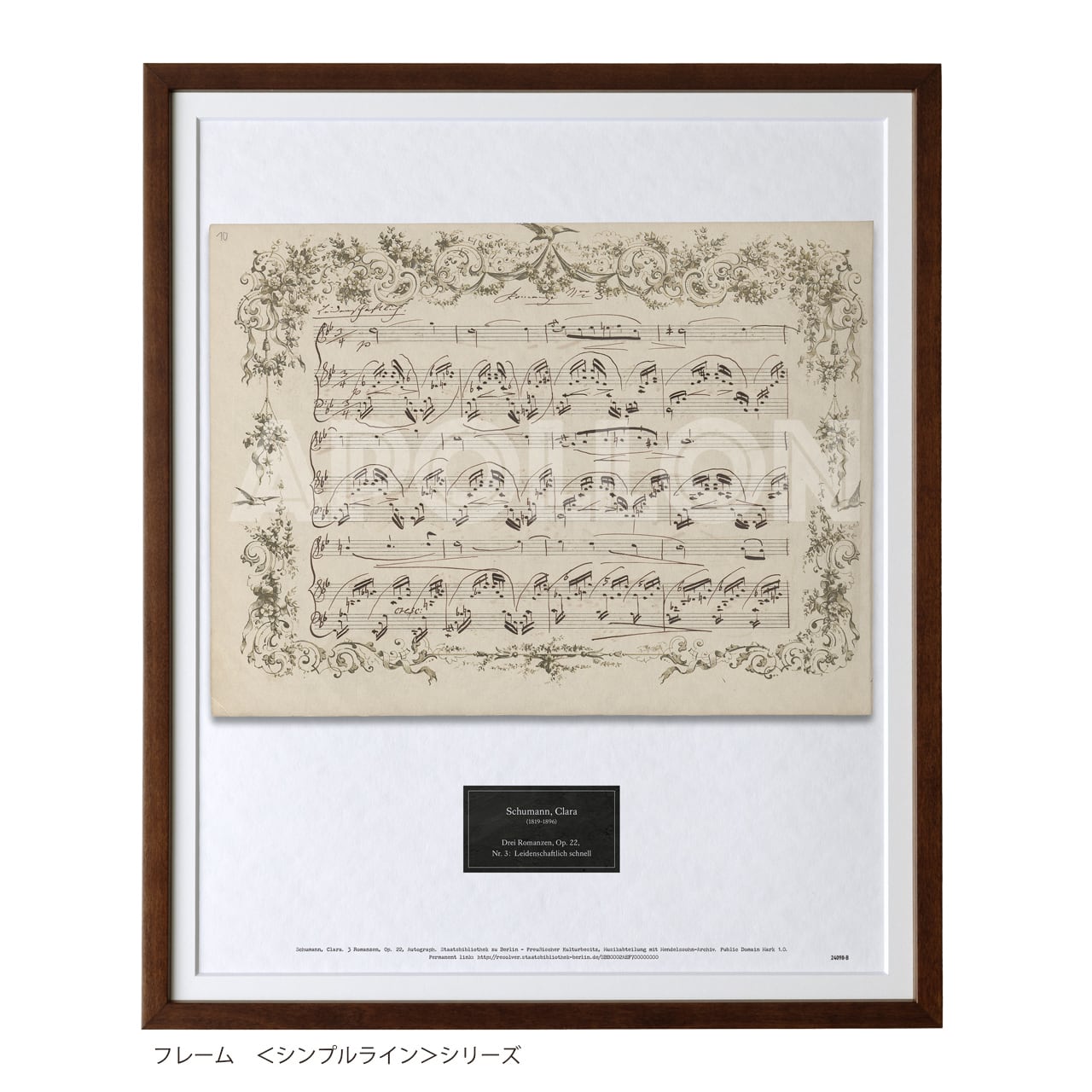
クララ・シューマン:ピアノとヴァイオリンのための3つのロマンス 第3曲 Op.22-3/Schumann, Clara (1819–1896): Drei Romanzen, Op. 22, Nr. 3: Leidenschaftlich schnell
¥14,630 ($92.68)
Schumann, Clara (1819–1896)
Drei Romanzen, Op. 22, Nr. 3: Leidenschaftlich schnell
《商品説明》 Product Specifications
◉プリントタイプ/高精細ジークレープリント
Print Type: High-definition Giclée print
◉出力紙/ドイツ製ハーネミューレ ファイン・アート紙(アシッドフリー)
Paper: Hahnemühle Fine Art Paper (Made in Germany, Acid-free)
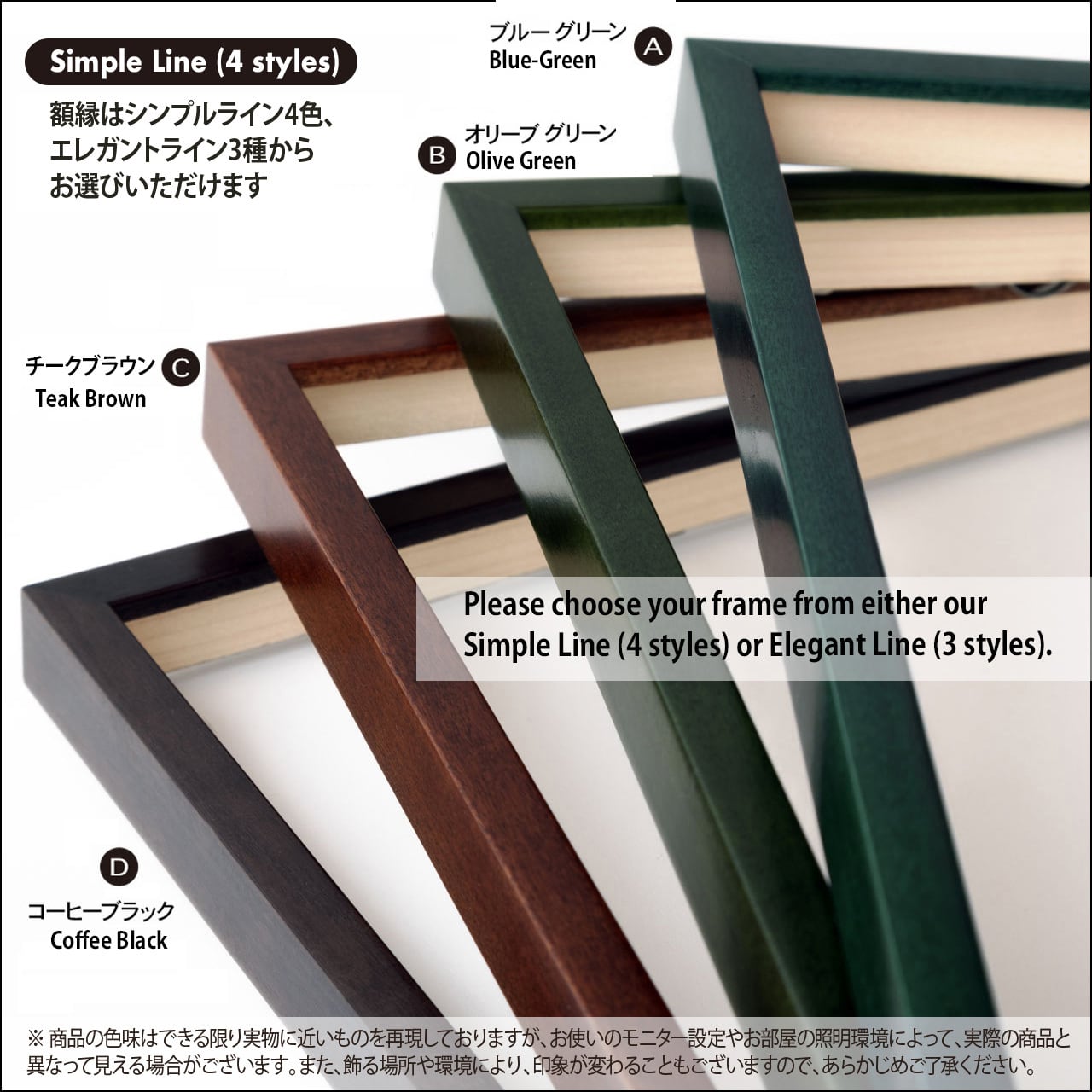
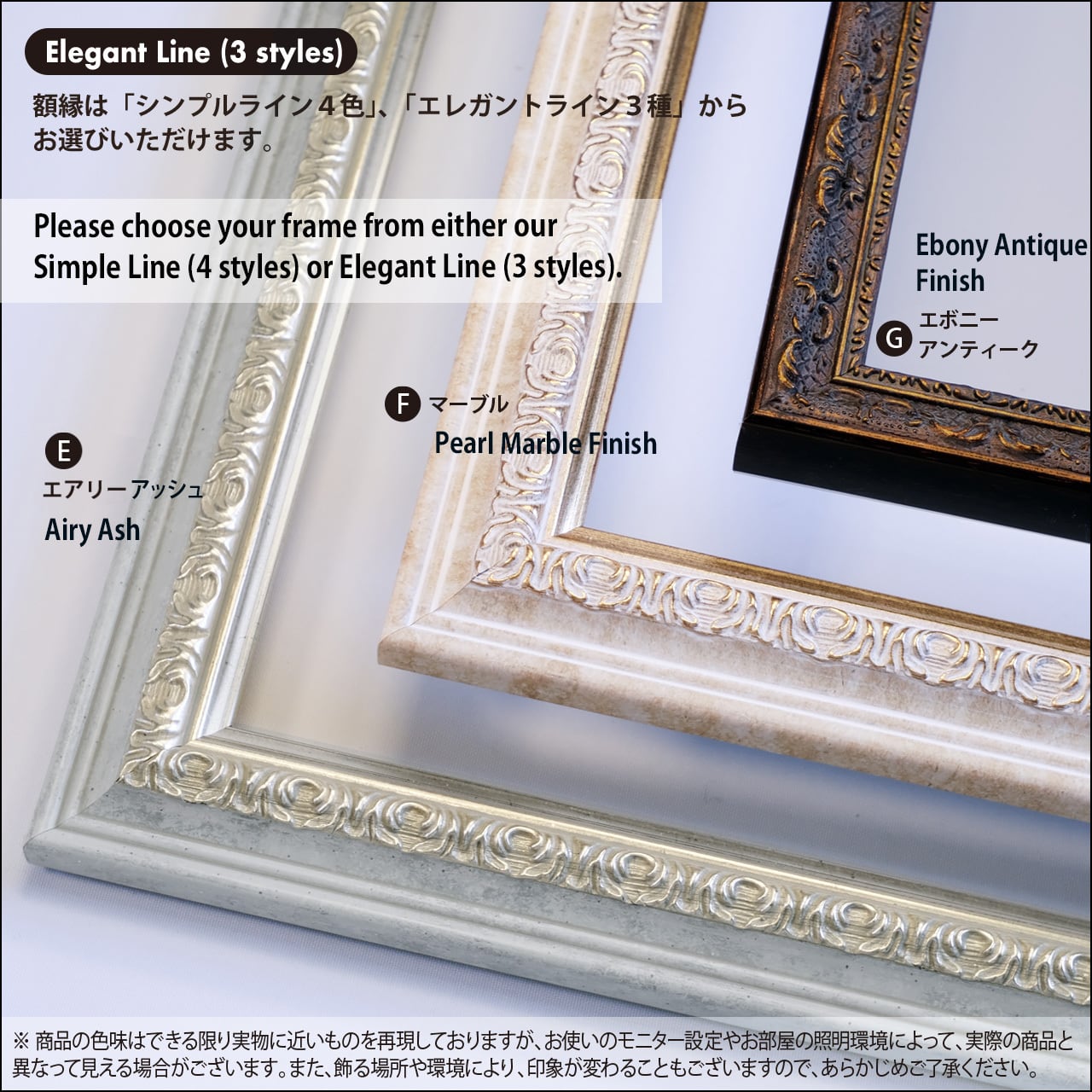
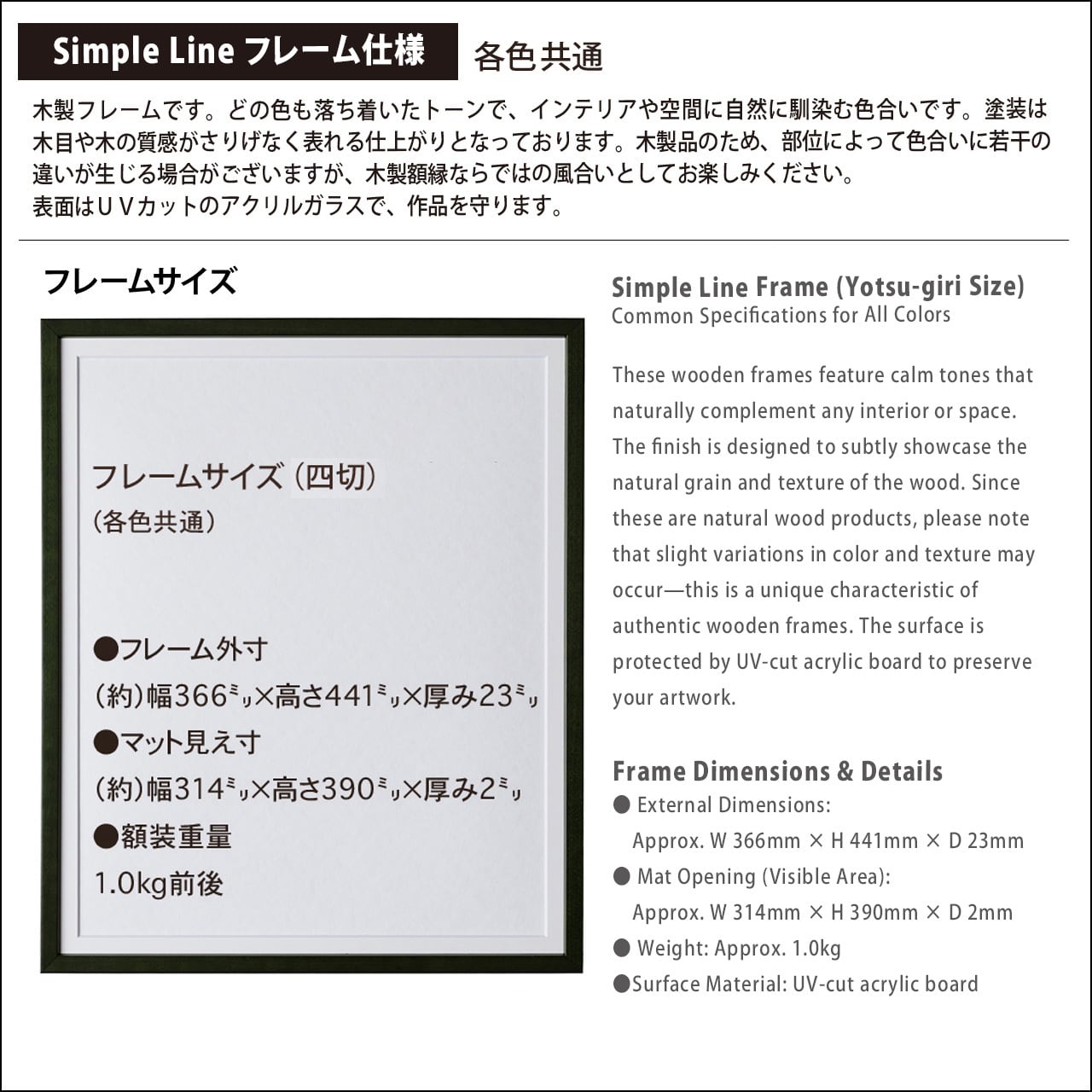
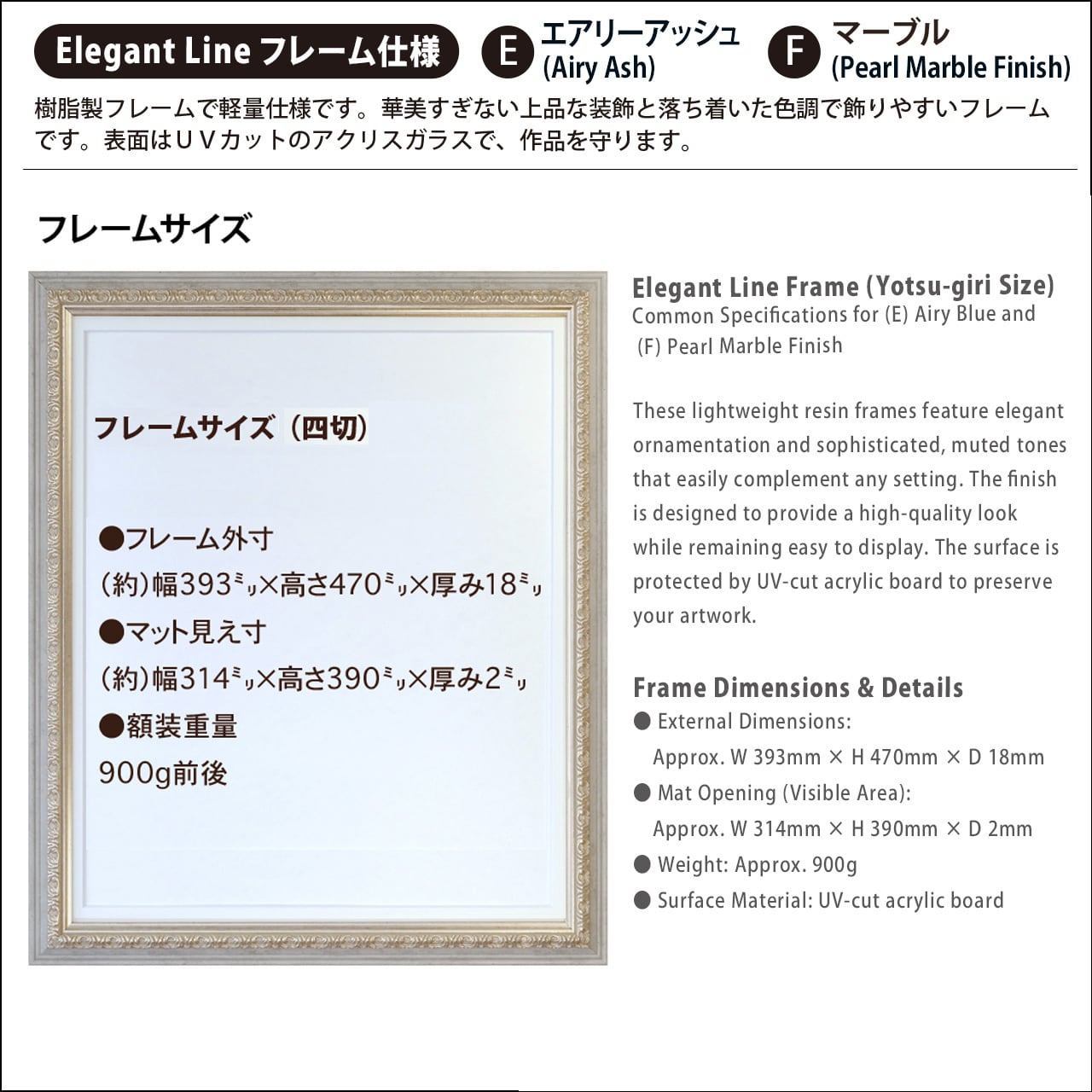
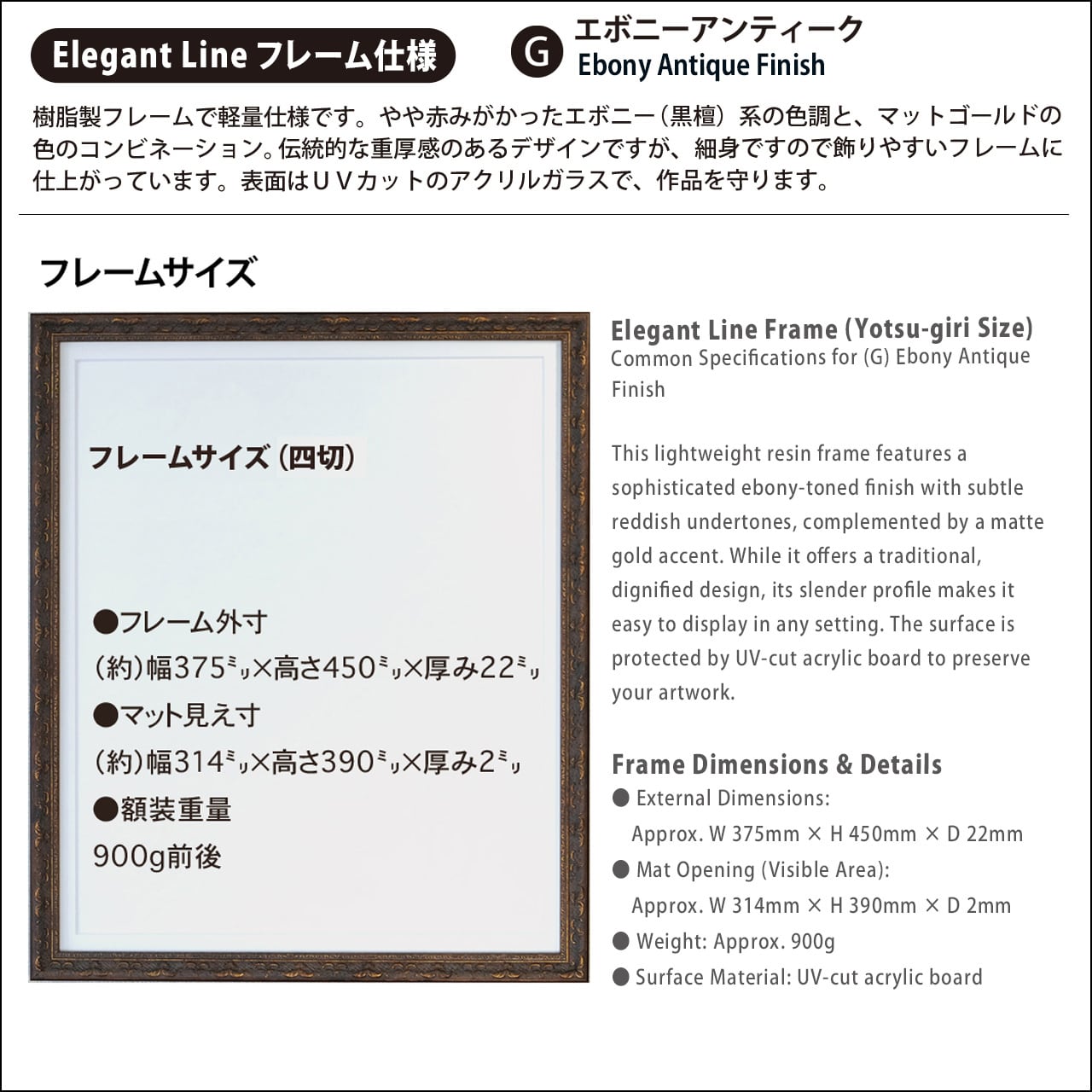
◉額縁/UVカットアクリルガラス、中性紙マット、吊元金具(額側)、吊紐、外箱
Framing: UV-protective acrylic glazing and acid-free mat
Accessories: Hanging hardware (pre-installed), hanging cord
指先が紡ぐ情熱の詩
〜クララ・シューマンが遺した繊細な炎〜
クララ・シューマンは、19世紀を代表するピアニストであり、同時に独自の創作を続けた作曲家でもあります。《3つのロマンス》Op. 22は、1853年に作曲された、ヴァイオリンとピアノのための3曲からなる小品集です。作品は、親交のあったヴァイオリニスト、ヨーゼフ・ヨアヒムに献呈されています。
この年、クララは34歳。8人の子どもを育てながら演奏活動を続け、教育にも力を注ぎつつ、創作にも取り組んでいました。デュッセルドルフでは、若きヨハネス・ブラームスとの出会いがあり、またフランツ・リストをはじめとする同時代の音楽家たちとの交流も重なるなど、豊かな音楽的刺激を受けた時期でした。
一方で、夫ロベルト・シューマンの健康にも変化が現れ始め、家庭を取り巻く状況にも大きな転換が訪れていました。そうした環境のなかで書かれたこの作品には、クララ自身の内面の豊かさや、音楽への静かな情熱が映し出されています。
この第3曲「Leidenschaftlich schnell(情熱的に速く)」は、3つのロマンスそれぞれが異なる性格をもつ中で、とくに情熱的な性格をもった曲です。力強い冒頭主題に始まり、ヴァイオリンとピアノが緊密な対話を交わしながら、熱を帯びた音楽が展開していきます。中間部では一転して静けさを湛えた表情が現れ、そこから再び冒頭の高揚感へと戻る構成は、まるで心の動きが音楽として形をとっていくようです。
この第3曲は、3曲の中でも特に印象的な一曲として、演奏会や録音で取り上げられることがあります。技巧的でありながら感情のこもった旋律が印象的で、クララ・シューマンの室内楽作品を代表する一曲のひとつです。
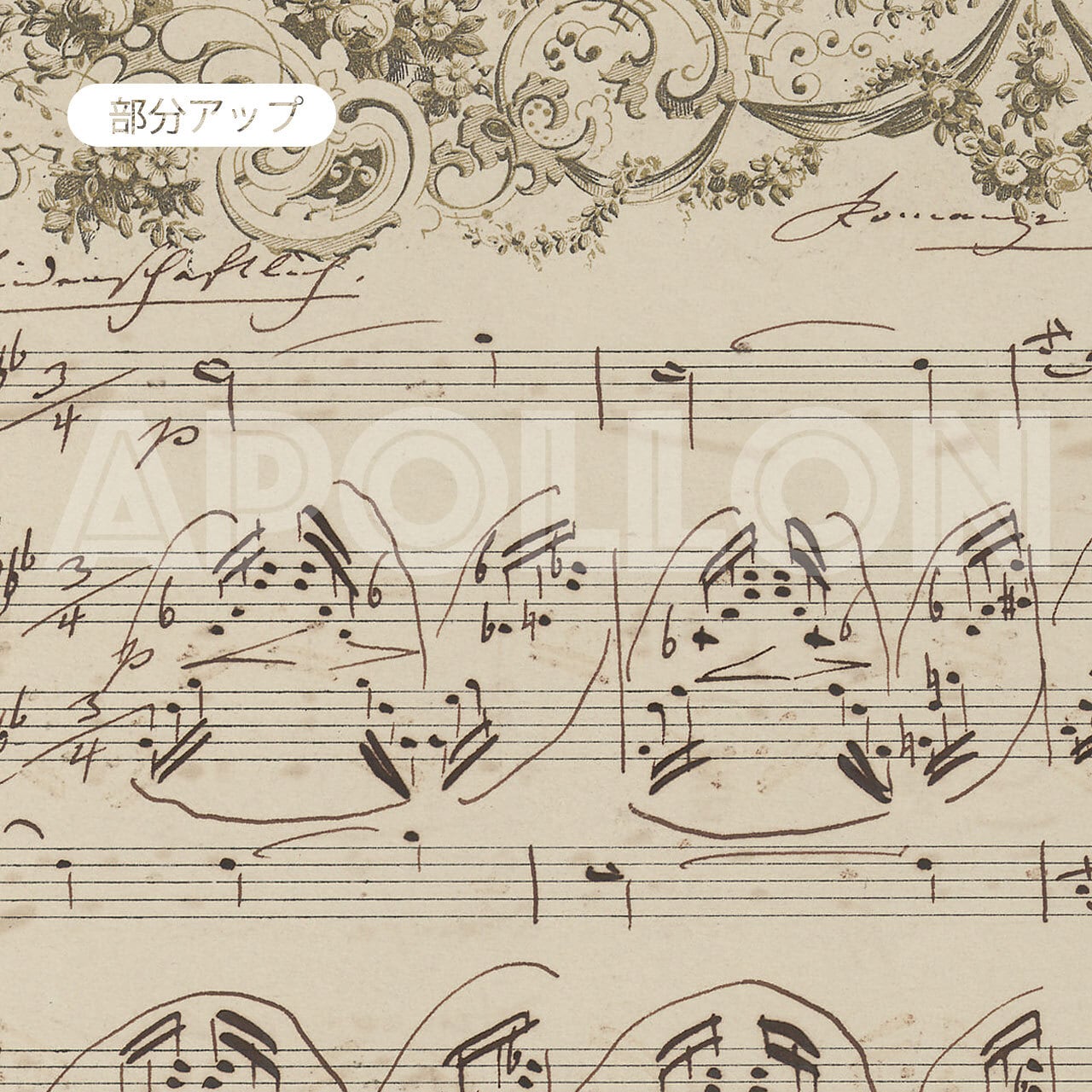
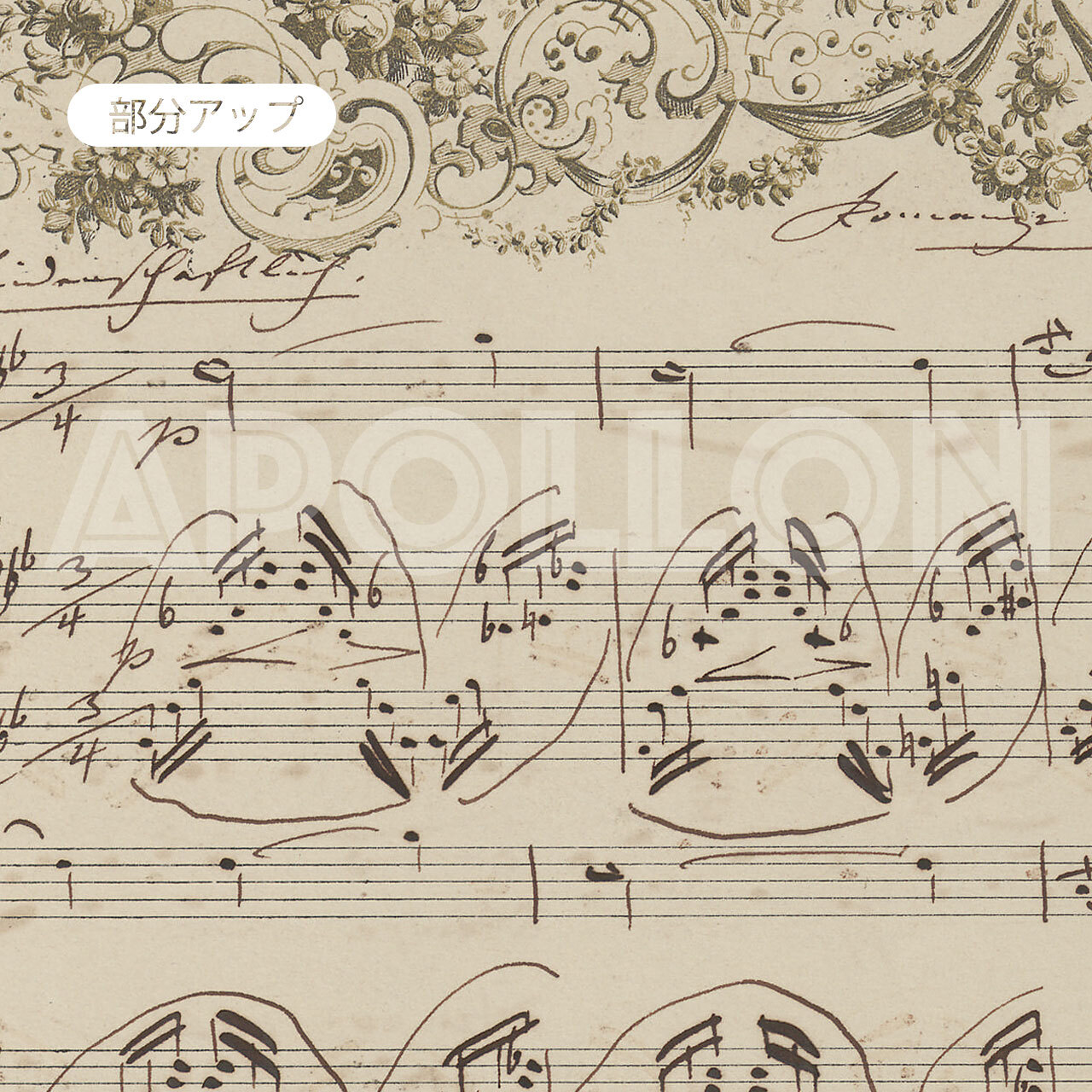
自筆譜には、クララの丁寧な筆づかいが残されており、彼女がいかに細部にまで心を配りながら作曲していたかが伝わってきます。
The Poetry of Passion Woven by the Fingertips
— A Fragile Flame Left by Clara Schumann —
Clara Schumann was one of the leading pianists of the 19th century, and at the same time a composer who continued to develop her own distinctive voice. Drei Romanzen, Op. 22, was composed in 1853 as a set of three short pieces for violin and piano. The work was dedicated to the violinist Joseph Joachim, with whom she shared a close musical relationship.
In that year, Clara Schumann was 34 years old. While continuing her performing career and dedicating herself to teaching, she also raised eight children and found time, within a demanding daily life, to compose. In Düsseldorf, she encountered the young Johannes Brahms, and she also maintained musical connections with Franz Liszt and other contemporary musicians, making it a period of rich artistic exchange.
At the same time, Robert Schumann’s health began to show signs of change, and the circumstances surrounding her family were undergoing significant transformation. Against this backdrop, this work reflects both Clara Schumann’s inner richness and her quiet, enduring passion for music.
The third piece, “Leidenschaftlich schnell (Passionately fast),” is the most intense in character among the three Romanzen. It opens with a powerful principal theme, followed by a tightly woven dialogue between violin and piano as the music gains intensity. In the middle section, the atmosphere shifts toward a moment of stillness before returning to the heightened energy of the opening. The structure seems to mirror the movement of emotions as they take musical form.
Among the three pieces, this movement is particularly striking and is sometimes performed or recorded as a notable work in its own right. Its technically demanding yet expressive writing reflects the distinctive character of Clara Schumann’s chamber music.
The autograph manuscript preserves Clara Schumann’s careful handwriting, offering a sense of how attentively she shaped each detail of the music.
※Pay IDからご覧の方は下記URL(当店サイト)に
額の色目、仕様等、詳しく載っていますので、ぜひご確認下さい。
https://apollon.kooki-museum.com
<商品画像と実物の色味について>
商品の色味については、できる限り実物に近づけるよう調整を行っておりますが、お使いのモニター設定や機種、お部屋の照明環境によっても、実際の商品と異なって見える場合がございます。また、所蔵機関のスキャニングデータに基づくため、オリジナルの自筆譜と色味が異なることもございます。あらかじめご理解いただきますようお願い申し上げます。なお、作品によっては、裏面の楽譜が透けて見えるような画像がございますが、これは所蔵先のスキャニングデータに起因するもので、原稿の忠実な再現です。
<Important Notes on Color & Appearance>
Color Consistency
The actual color may vary depending on your monitor settings or room lighting. As these prints are based on official institutional scans, minor color variations from the original manuscript may occur.
<Image Detail & Historical Authenticity>
Some prints may show "bleed-through" (musical notation from the reverse side), authentic age spots, or visible restoration marks from the original source. These are not defects, but a faithful reproduction of the original historical manuscript, preserved to maintain its archival character.
▼【Reference】
YouTube Channel: opus43
-
 クララ・シューマン:ピアノとヴァイオリンのための3つのロマンス 第1曲 Op.22-1/Schumann, Clara: Drei Romanzen, Op. 22, Nr. 1: Andante molto¥14,630 ($92.68)
 -
 クララ・シューマン:6つの歌 より「僕は暗い夢の中にいた」Op. 13, Nr. 1/Clara Schumann:6 Lieder, Op. 13, Nr. 1 „Ich stand in dunklen Träumen“¥14,630 ($92.68)
 -
 クララ・シューマン:ピアノのための3つのロマンス 第1曲 Op. 21-1/Clara Schumann:Drei Romanzen für Klavier Op. 21 Nr. 1 (Widmung an Robert Schumann)¥14,630 ($92.68)