


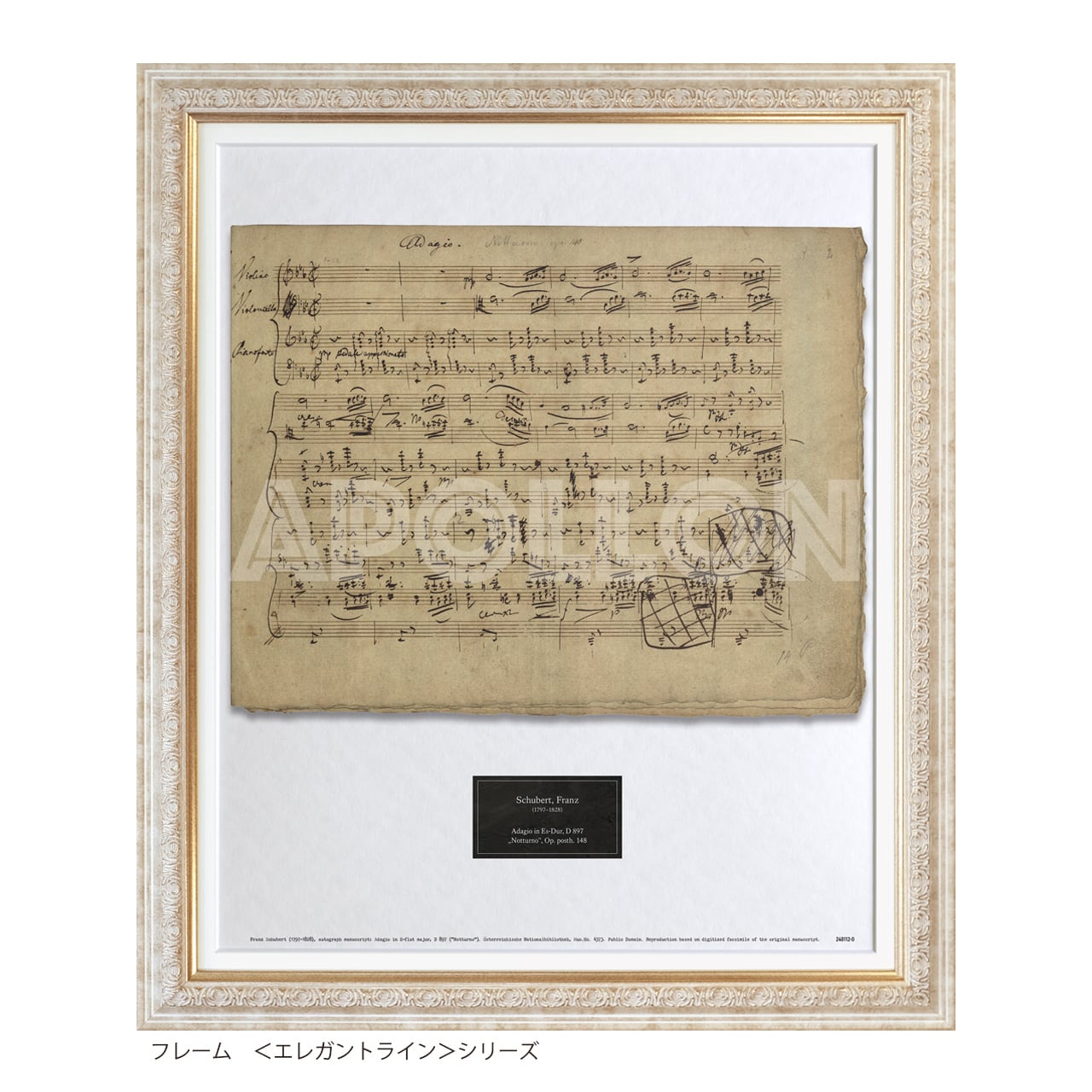
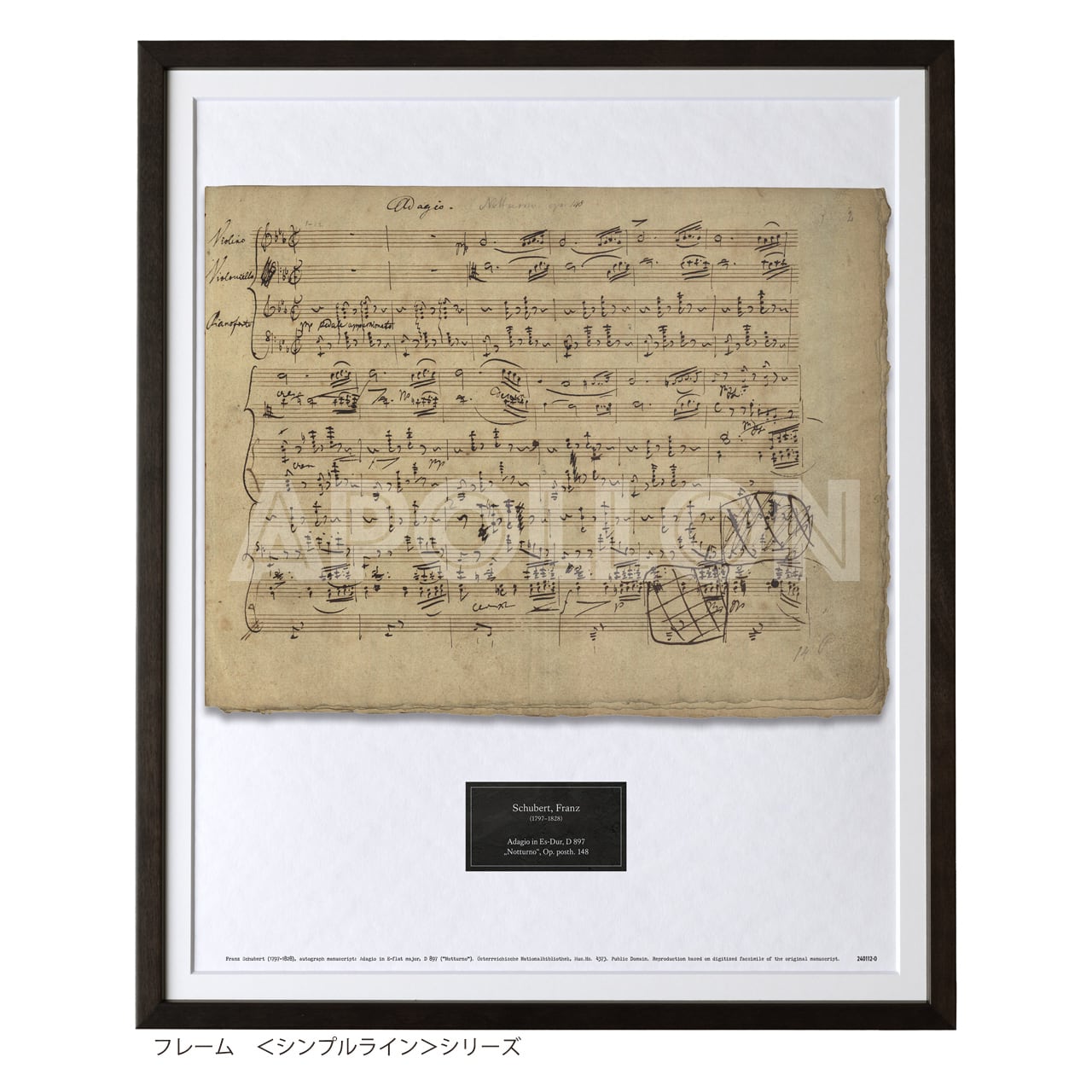

シューベルト:夜想曲(ノットゥルノ)アダージョ 変ホ長調 D 897/Schubert: “Notturno” Adagio in E-flat major, D 897
¥14,630 ($93.92)
Schubert, Franz (1797-1828)
“Notturno” Adagio in E-flat major, D 897
《商品説明》 Product Specifications
◉プリントタイプ/高精細ジークレープリント
Print Type: High-definition Giclée print
◉出力紙/ドイツ製ハーネミューレ ファイン・アート紙(アシッドフリー)
Paper: Hahnemühle Fine Art Paper (Made in Germany, Acid-free)
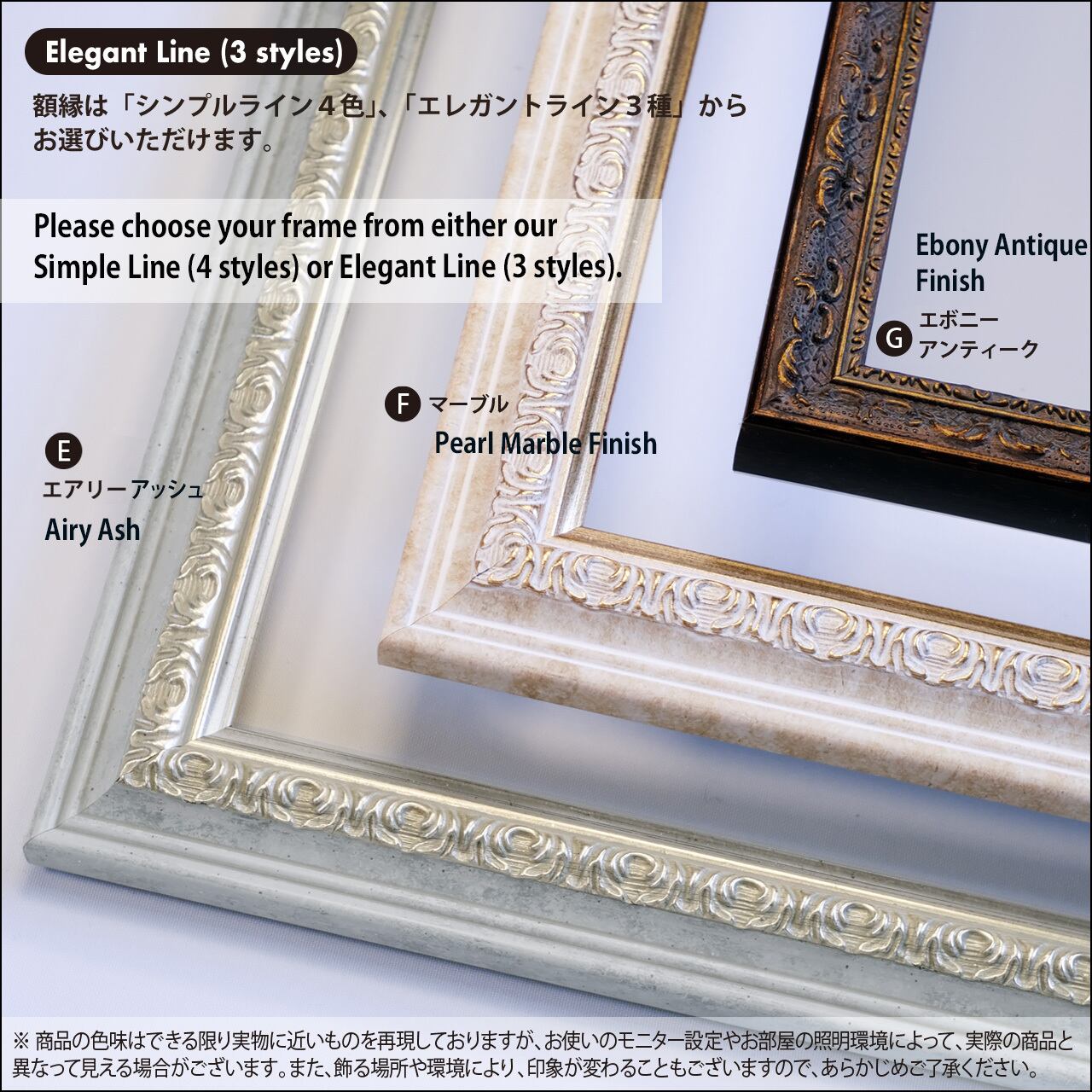
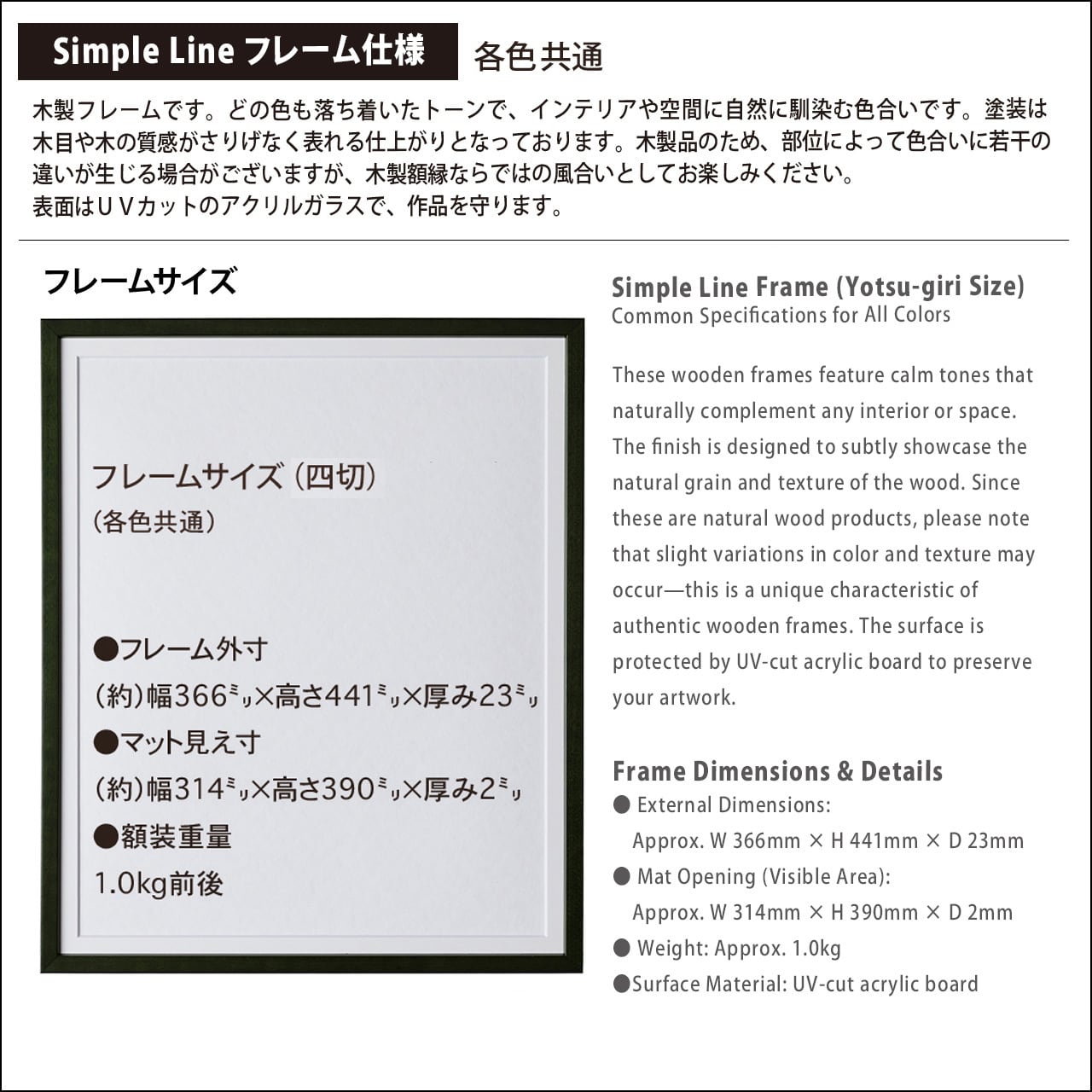
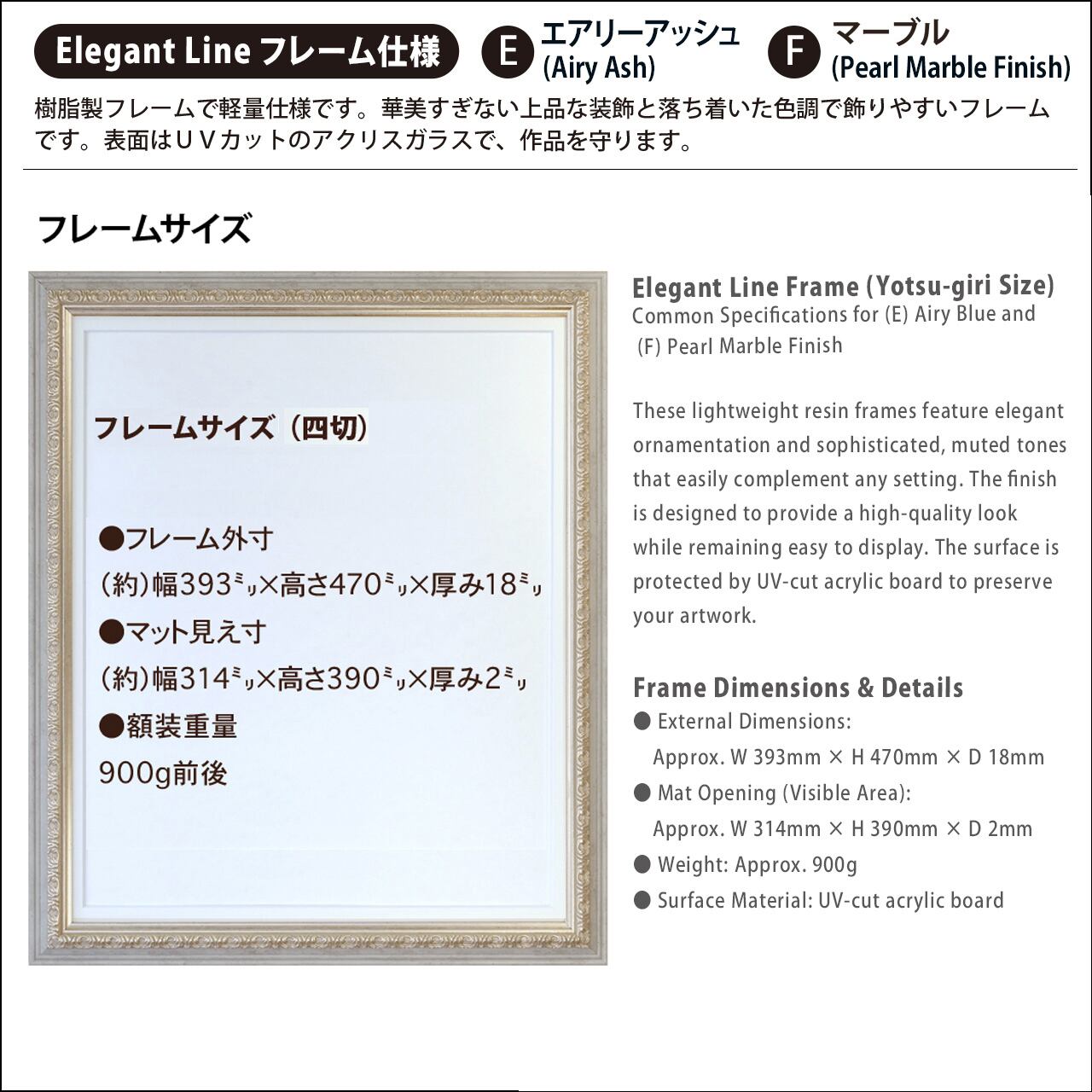
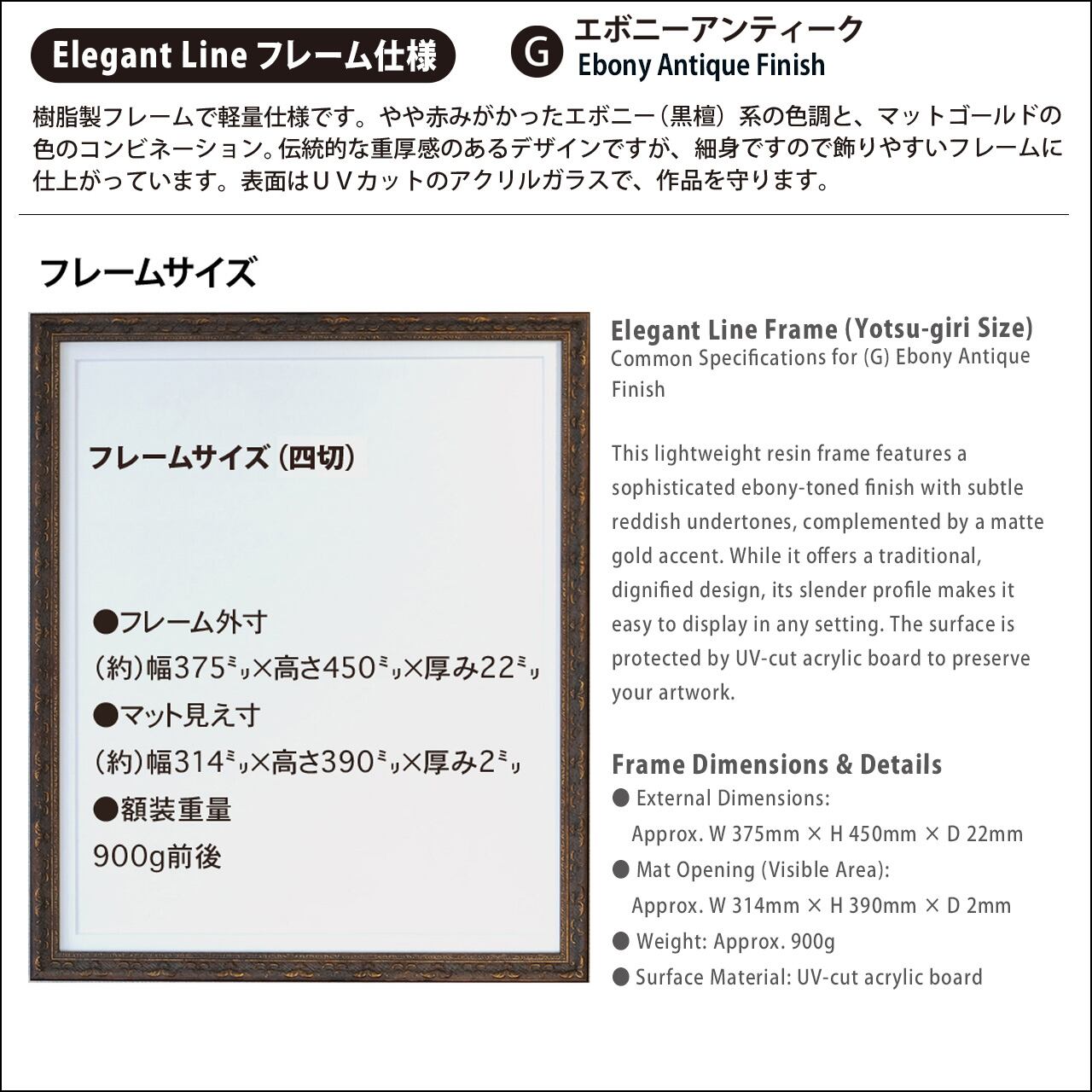
◉額縁/UVカットアクリルガラス、中性紙マット、吊元金具(額側)、吊紐、外箱
Framing: UV-protective acrylic and acid-free mat
Accessories: Hanging hardware (pre-installed), hanging cord
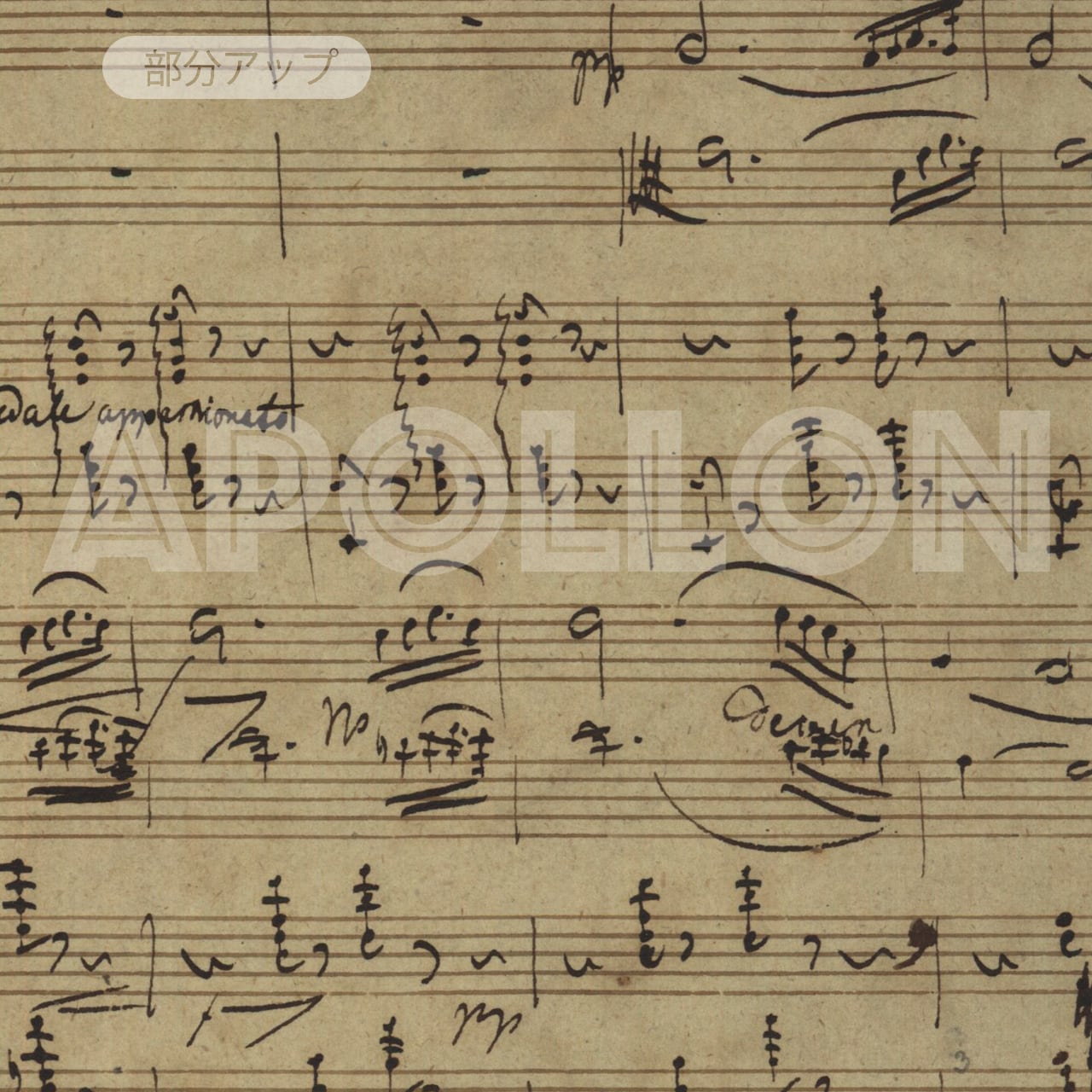
シューベルトの室内楽において、この曲はやや特異な位置にあります。自筆譜には明確なタイトルはなく、ただ「Adagio」とのみ書き留められており、今日、私たちが親しんでいる「Notturno(夜想曲)」という呼称は、後に出版や整理の過程で、他人の手により付け加えられたものと考えられています。
本作が書かれたのは1827年頃、シューベルトが30歳の時でした。31歳で没する直前の作品ですが、単独の小品か、あるいは三重奏曲の一部であったのか、その成り立ちについては今も議論が続いています。本来の姿が確定していないという事実が、かえってこの音楽の持つ掴みどころのない魅力を深めているのかもしれません。
静かに浮かび上がる冒頭の旋律や、ゆるやかに移ろう和声。そこには晩年のシューベルト作品に見られる、時間の流れが少し緩むような感覚がうかがえます。「Notturno(夜想曲)」という名は、こうした内省的な響きと重なり合い、いつしか広く定着していったのでしょう。
派手な展開はありませんが、聴き終えたあとに残る印象は強く、記憶の中で長く形を保ちます。今日、この曲が彼の室内楽の中でもとりわけ親しまれている背景には、音楽そのものの性質に加え、成立事情の不明瞭さがもたらす解釈の幅も関係しているのではないでしょうか。
Schubert: Adagio (“Notturno”)
Within the chamber music of Franz Schubert, this piece occupies a somewhat unusual position. The autograph manuscript bears no explicit title, marked simply as “Adagio.” The name “Notturno” (Nocturne), by which it is commonly known today, is considered to have been added later by another hand during the process of publication or archiving.
The work was composed around 1827, when Schubert was 30 years old. Written shortly before his death at the age of 31 the following year, its origins remain a subject of ongoing debate: was it intended as a standalone piece or as part of a larger piano trio? The fact that the work's original form remains unconfirmed may, in fact, enhance the elusive charm of this music.
The gently emerging opening melody and the softly shifting harmonies evoke a sense of time slowing down—a quality often observed in Schubert’s late works. The name “Notturno” likely became widely established over time, as it resonates with the introspective echoes of the music.
Though it lacks dramatic development, the piece leaves a profound impression that lingers long in the memory. The reason this work is so deeply cherished among his chamber pieces today may lie not only in its musical nature but also in the interpretive breadth allowed by its historical ambiguity.
※Pay IDからご覧の方は下記URL(当店サイト)に
額の色目、仕様等、詳しく載っていますので、ぜひご確認下さい。
https://apollon.kooki-museum.com
<商品画像と実物の色味について>
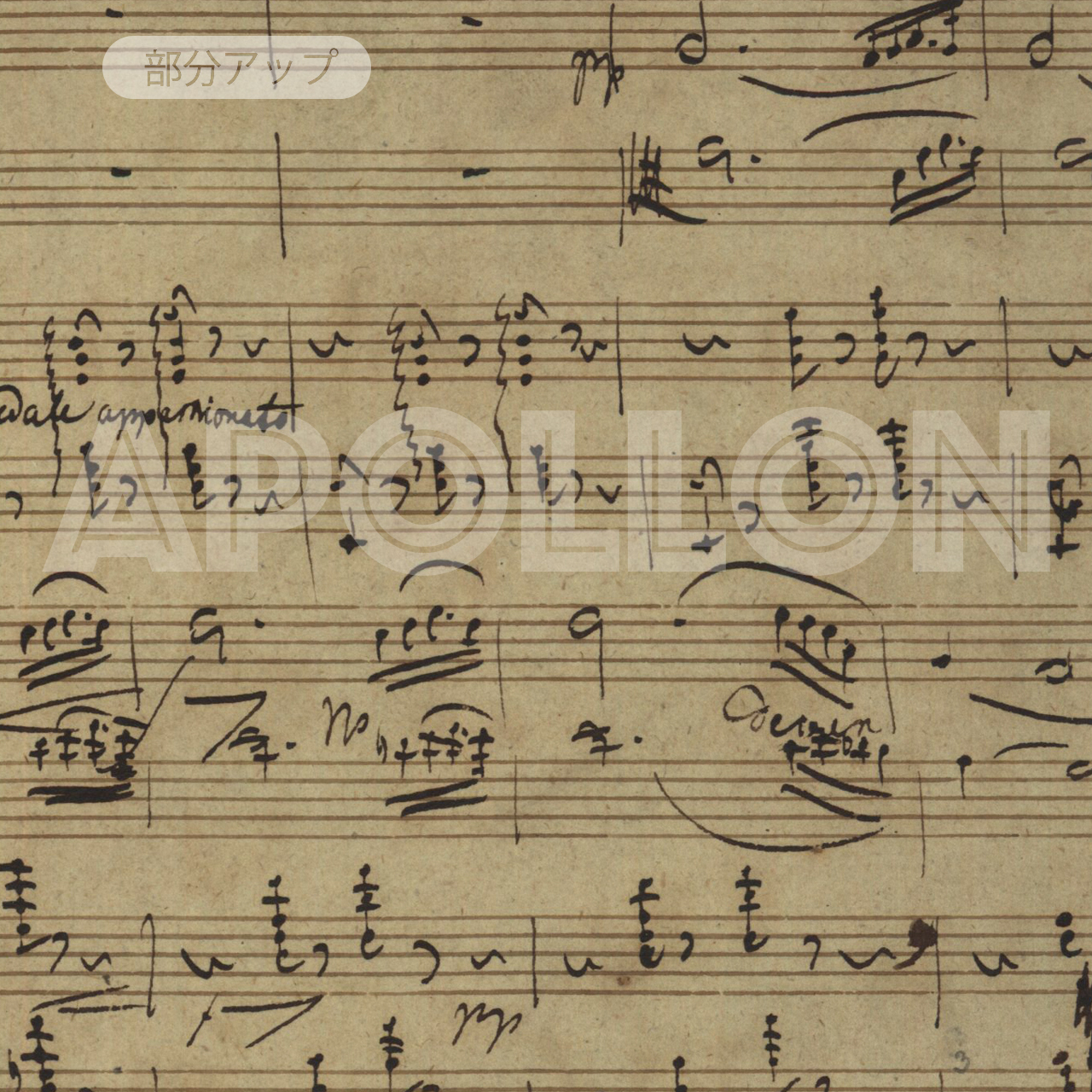
商品の色味については、できる限り実物に近づけるよう調整を行っておりますが、お使いのモニター設定や機種、お部屋の照明環境によっても、実際の商品と異なって見える場合がございます。また、所蔵機関のスキャニングデータに基づくため、オリジナルの自筆譜と色味が異なることもございます。あらかじめご理解いただきますようお願い申し上げます。なお、一部の作品には、裏写り(裏面の楽譜の透け)、経年によるシミ、または原資料の修復に由来する痕跡が見られる場合がありますが、これは所蔵先のスキャニングデータに起因するもので、原稿の忠実な再現です。
<Important Notes on Color & Appearance>
Color Consistency:The actual color may vary depending on your monitor settings or room lighting. As these prints are based on official institutional scans, minor color variations from the original manuscript may occur.
<Image Detail & Historical Authenticity>
Some prints may show "bleed-through" (musical notation from the reverse side), authentic age spots, or visible restoration marks from the original source. These are not defects, but a faithful reproduction of the original historical manuscript, preserved to maintain its archival character.
▼【Reference】
YouTube Channel:Nederlands Philharmonisch & Nederlands Kamerorkest
-
 クララ・シューマン:ピアノとヴァイオリンのための3つのロマンス 第1曲 Op.22-1/Schumann, Clara: Drei Romanzen, Op. 22, Nr. 1: Andante molto¥14,630 ($93.92)
 -
 クララ・シューマン:6つの歌 より「僕は暗い夢の中にいた」Op. 13, Nr. 1/Clara Schumann:6 Lieder, Op. 13, Nr. 1 „Ich stand in dunklen Träumen“¥14,630 ($93.92)
 -
 クララ・シューマン:ピアノのための3つのロマンス 第1曲 Op. 21-1/Clara Schumann:Drei Romanzen für Klavier Op. 21 Nr. 1 (Widmung an Robert Schumann)¥14,630 ($93.92)