


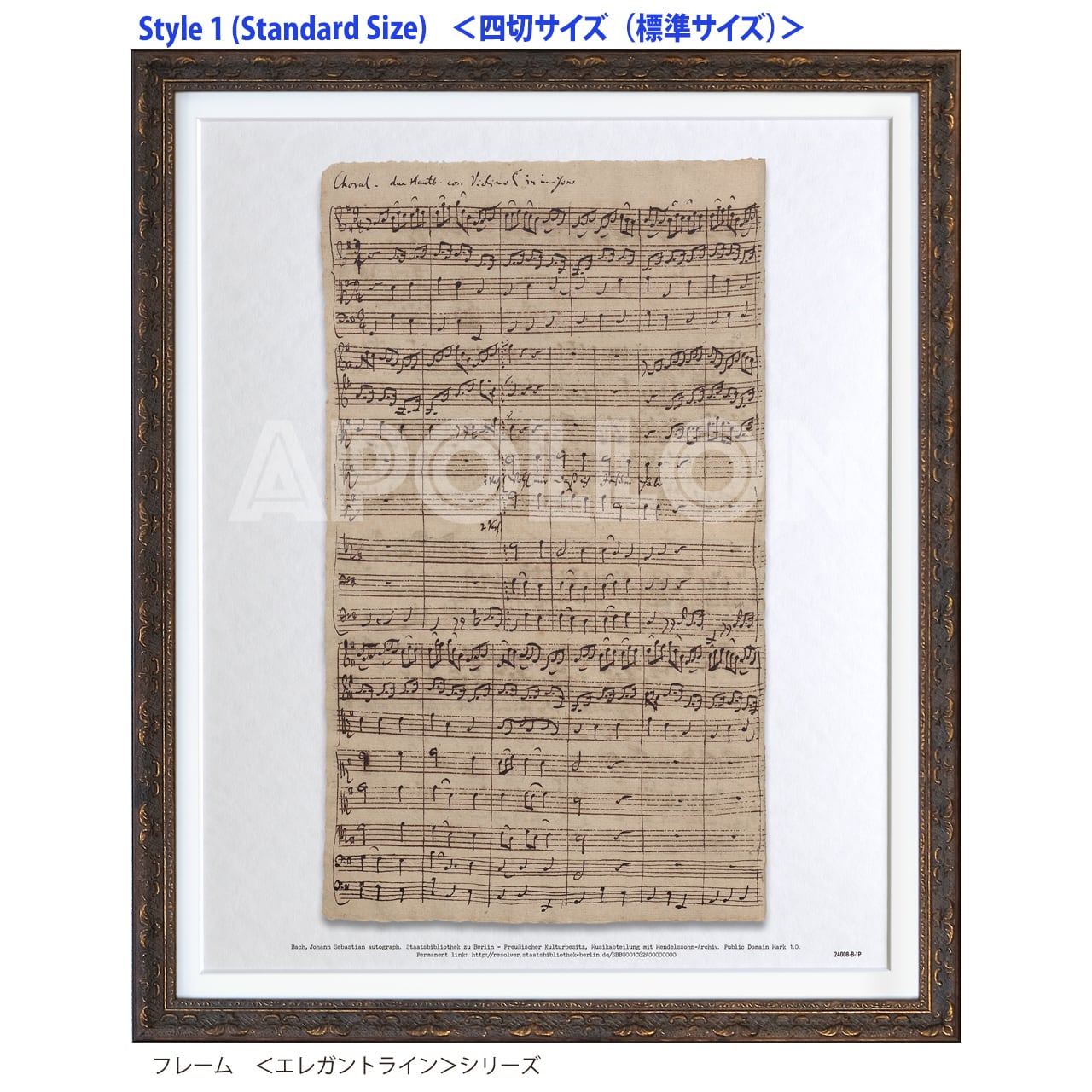
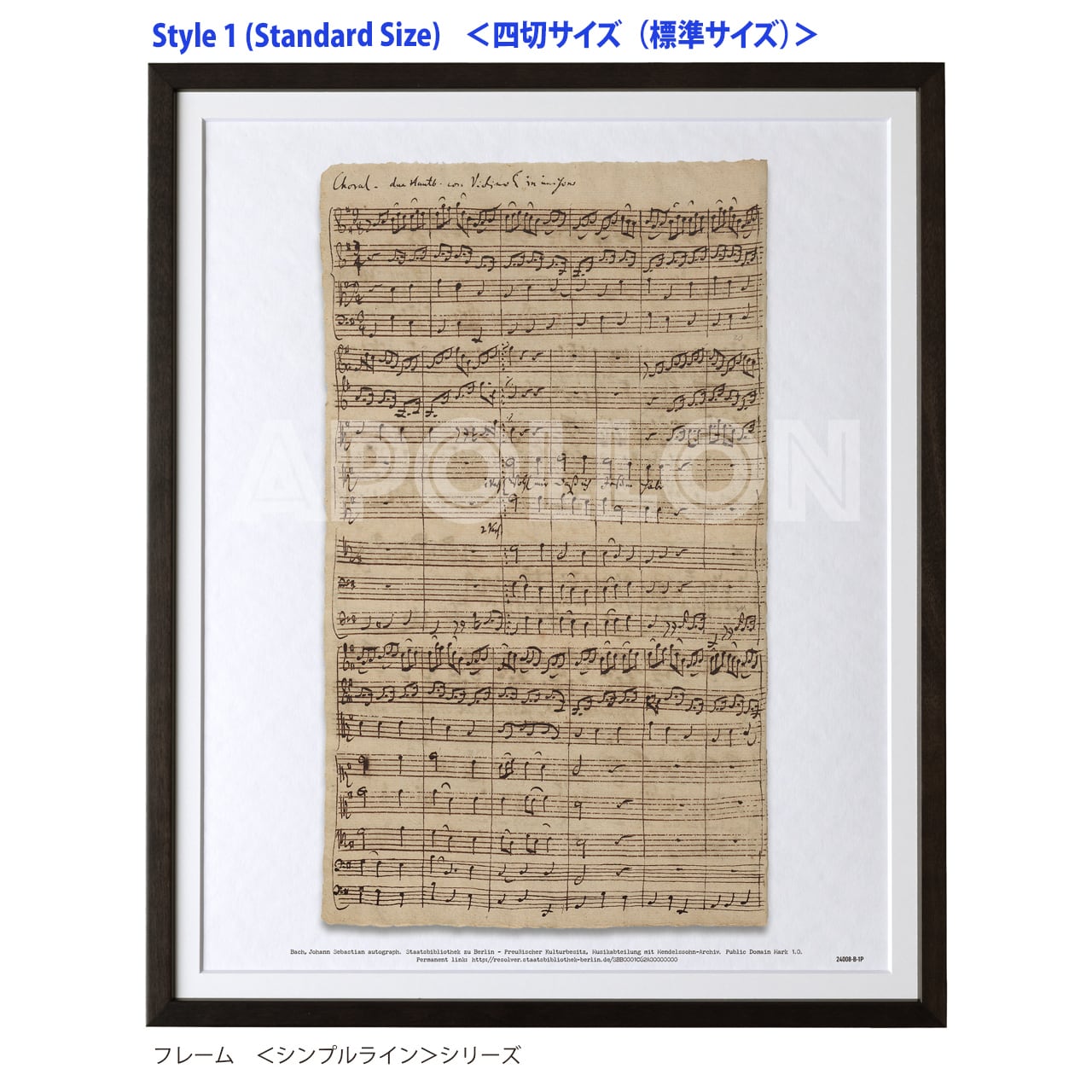


J.S.バッハ:「主よ、人の望みの喜びよ」で知られる旋律BWV 147, Nr.6より【額縁サイズ:四切版(別バリエーション有)】/J.S.Bach:BWV 147, Nr. 6 aus „Herz und Mund und Tat und Leben“ (Standard Size Version)
¥14,630 ($92.33)
Bach, Johann Sebastian (1685-1750)
BWV 147, Nr. 6
aus „Herz und Mund und Tat und Leben“
↓ 別サイズのバリエーションあり(Another variation of this artwork is available.)
https://apollon.kooki-museum.com/items/108309044
《商品説明》 Product Specifications
◉プリントタイプ/高精細ジークレープリント
Print Type: High-definition Giclée print
◉出力紙/ドイツ製ハーネミューレ ファイン・アート紙(アシッドフリー)
Paper: Hahnemühle Fine Art Paper (Made in Germany, Acid-free)
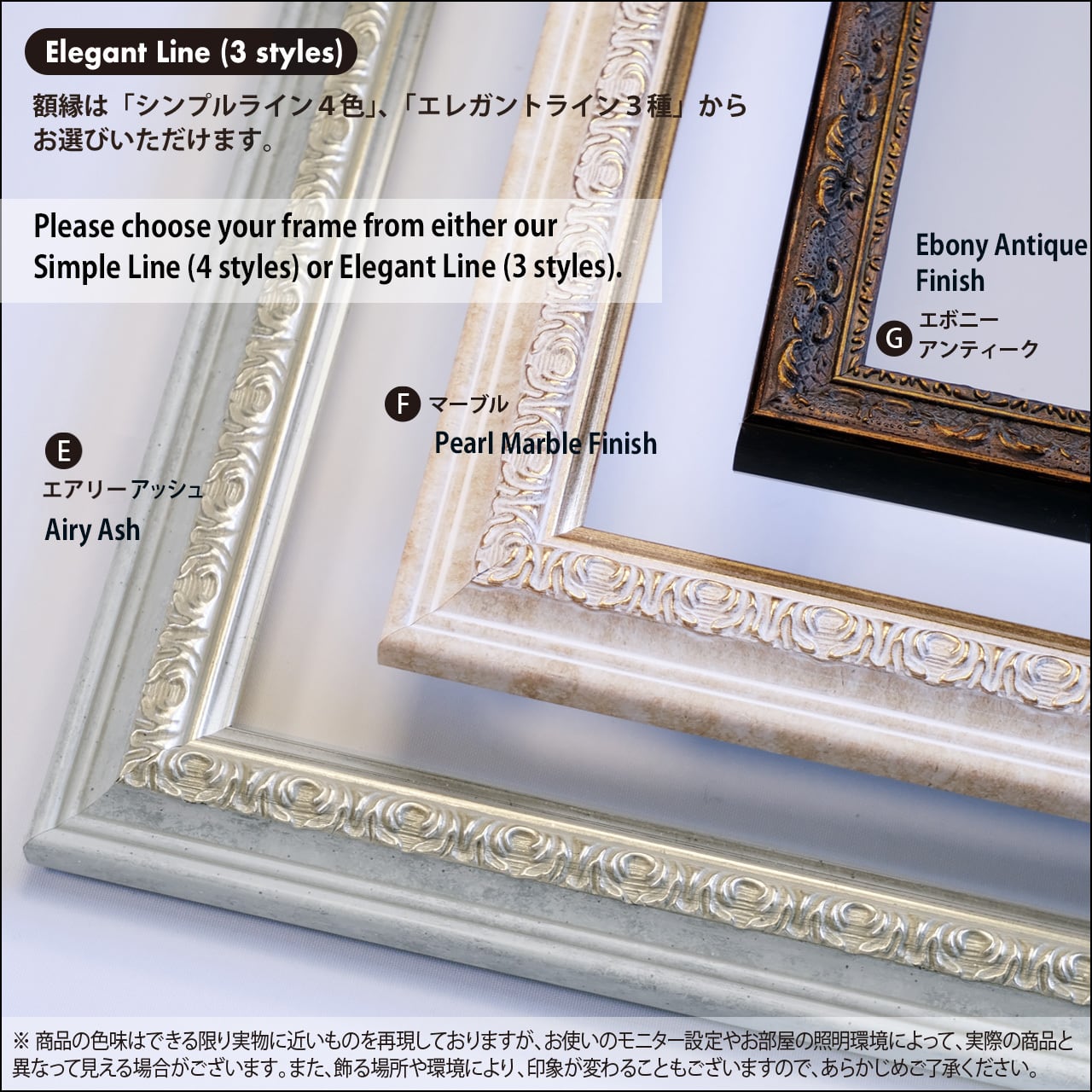
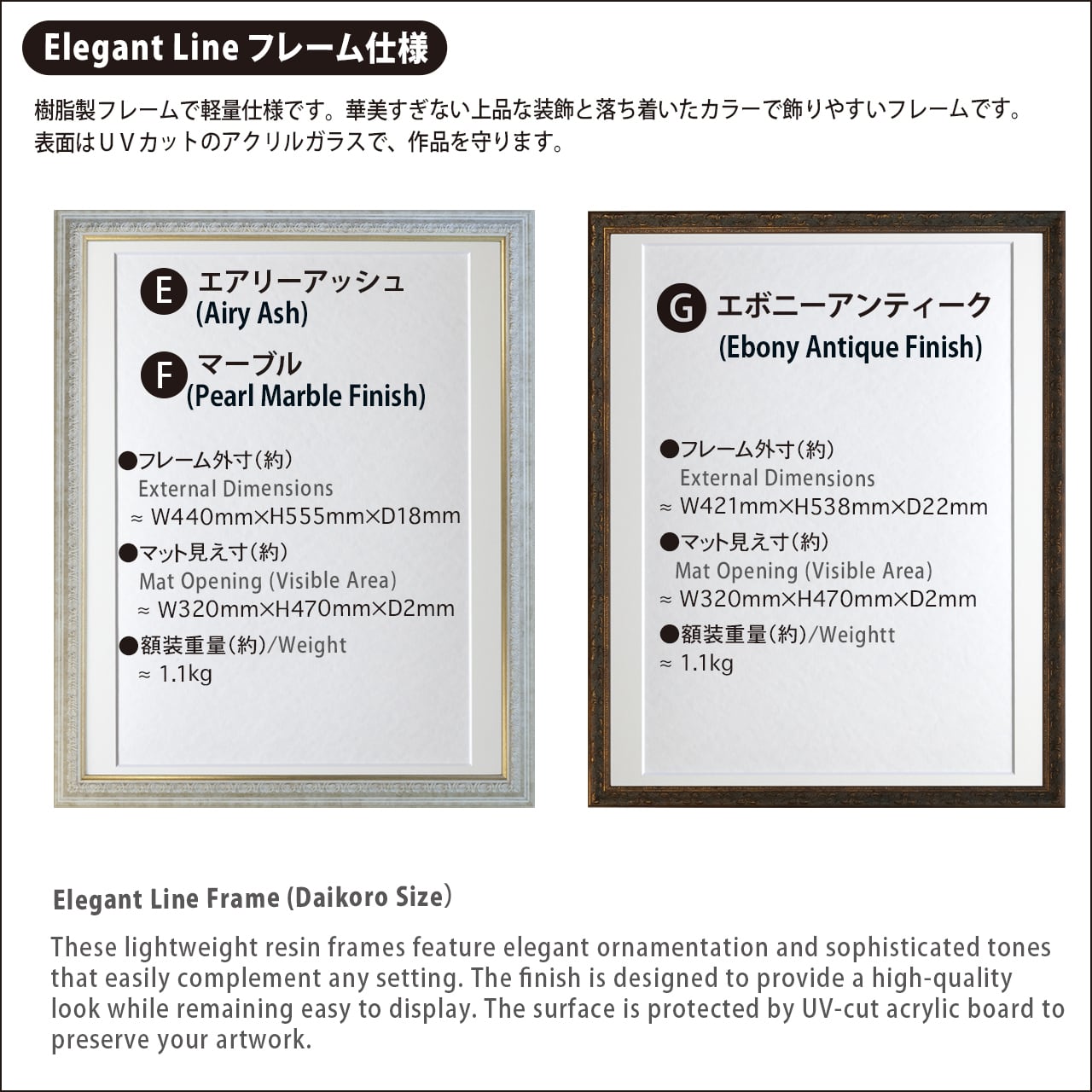
◉額縁/UVカットアクリルガラス、中性紙マット、吊元金具(額側)、吊紐、外箱
Framing: UV-protective acrylic glazing and acid-free mat
Accessories: Hanging hardware (pre-installed), hanging cord
〜時を架ける旋律 〜 BWV 147 自筆譜より
「主よ、人の望みの喜びよ」として広く知られる旋律は、300年以上の時を超えて、今も世界中の人々の心に響き続けています。
この旋律は、ヨハン・ゼバスティアン・バッハの教会カンタータ《Herz und Mund und Tat und Leben(心と口と行いと生活で)》BWV 147の第6曲《Wohl mir, dass ich Jesum habe》および第10曲《Jesus bleibet meine Freude》に登場します。
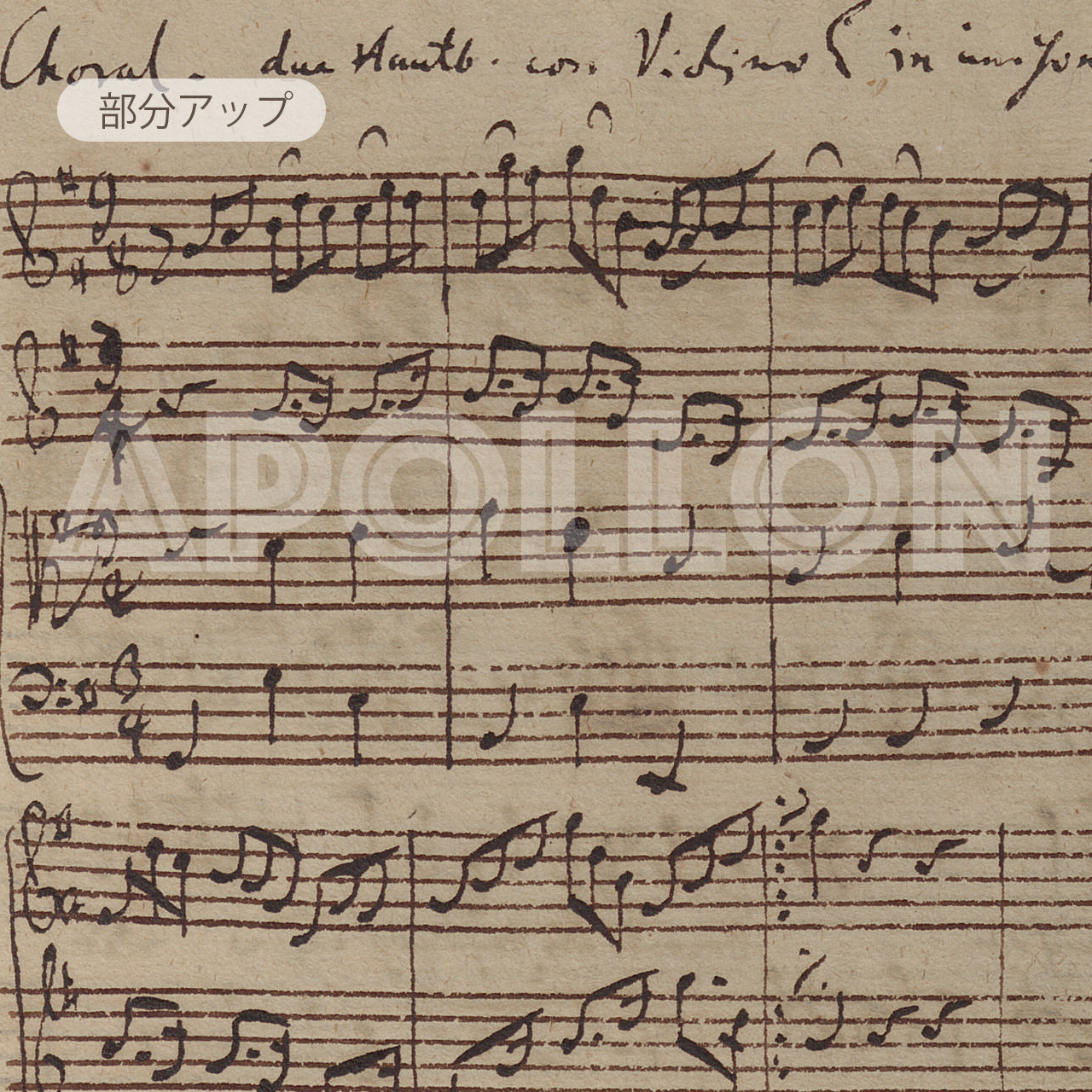
第10曲は「主よ、人の望みの喜びよ」として親しまれていますが、第6曲と同じコラール編曲を基にした楽曲で、歌詞が異なります。第10曲の自筆譜では繰り返し指示などによる簡潔な記載が見られ、より詳細な書き込みは第6曲の自筆譜に残されています。今回のジークレープリントでは、その第6曲のページを基に作品化しました。
このカンタータは、1716年にワイマールで作曲された初期稿を基に、1723年、ライプツィヒでの礼拝のために改訂され、現在知られる形へと整えられました。合唱、アリア、レチタティーヴォ、コラールなど多彩な形式で構成され、バッハのライプツィヒ時代を代表する作品の一つです。
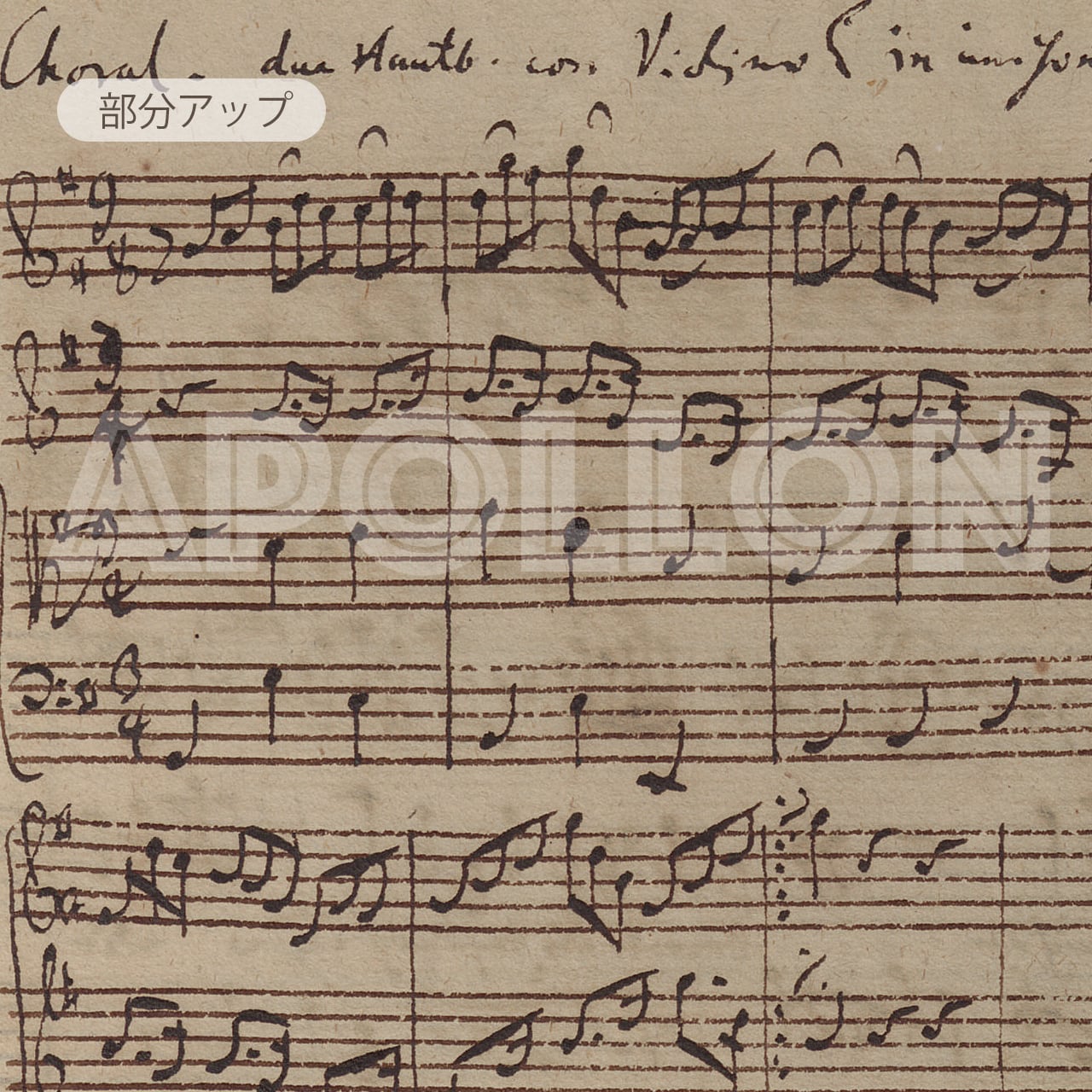
自筆譜には、バッハ自身の筆跡や訂正の跡が残され、音符の一つひとつから創作の過程と音楽への深い探求を感じ取ることができます。
何世紀もの時を経て守り伝えられたこの自筆譜には、バッハが音楽を書き記した瞬間の息づかいと、作品が持つ永遠の輝きが刻まれています。
このジークレープリントが、当時の創作の息吹へ思いを寄せ、J.S.バッハの音楽とつながる小さな橋渡しとなれば幸いです。
A Melody Spanning Time
The melody widely known as “Jesu, Joy of Man’s Desiring” has continued to touch hearts around the world, transcending more than three centuries of time.
This beloved melody appears in Johann Sebastian Bach’s church cantata Herz und Mund und Tat und Leben (Heart and Mouth and Deed and Life), BWV 147, in both the sixth movement, Wohl mir, dass ich Jesum habe, and the tenth movement, Jesus bleibet meine Freude.
The tenth movement, known worldwide as “Jesu, Joy of Man’s Desiring,” is based on the same chorale arrangement as the sixth movement, with different lyrics. In Bach’s autograph manuscript of the tenth movement, concise notation with repeat indications can be seen, while more detailed musical entries remain in the autograph manuscript of the sixth movement. This giclée print is based on the page from the sixth movement.
The cantata originated from an earlier version composed in Weimar in 1716 and was revised in 1723 for liturgical use in Leipzig, taking the form known today. With its combination of choruses, arias, recitatives, and chorales, it represents one of the significant works of Bach’s Leipzig period.
The autograph manuscript preserves Bach’s own handwriting and traces of corrections, revealing the creative process behind each carefully written note.
Passed down through centuries, this manuscript carries the presence of the moment when Bach committed his music to paper and the timeless brilliance of the work itself.
May this giclée print serve as a small bridge connecting us with the creative spirit of Bach and the enduring beauty of his music.
※Pay IDからご覧の方は下記URL(当店サイト)に
額の色目、仕様等、詳しく載っていますので、ぜひご確認下さい。
https://apollon.kooki-museum.com
<商品画像と実物の色味について>
商品の色味については、できる限り実物に近づけるよう調整を行っておりますが、お使いのモニター設定や機種、お部屋の照明環境によっても、実際の商品と異なって見える場合がございます。また、所蔵機関のスキャニングデータに基づくため、オリジナルの自筆譜と色味が異なることもございます。あらかじめご理解いただきますようお願い申し上げます。なお、一部の作品には、裏写り(裏面の楽譜の透け)、経年によるシミ、または原資料の修復に由来する痕跡が見られる場合がありますが、これは所蔵先のスキャニングデータに起因するもので、原稿の忠実な再現です。
<Important Notes on Color & Appearance>
Color Consistency:The actual color may vary depending on your monitor settings or room lighting. As these prints are based on official institutional scans, minor color variations from the original manuscript may occur.
<Image Detail & Historical Authenticity>
Some prints may show "bleed-through" (musical notation from the reverse side), authentic age spots, or visible restoration marks from the original source. These are not defects, but a faithful reproduction of the original historical manuscript, preserved to maintain its archival character.
▼【Reference】
YouTube Channel: bachakademie
-
 J.S.バッハ:《平均律クラヴィーア曲集 第1巻》第1番 プレリュードとフーガ ハ長調 BWV 846【額縁サイズ:四切版(別バリエーション有)】/J.S.Bach : Präludium und Fuge Nr. 1 in C-Dur, BWV 846 aus „Das Wohltemperierte Klavier“, Teil I (Standard Size Version)¥14,630 ($92.33)
 -
 J.S.Bach:ガヴォット〜無伴奏ヴァイオリン・パルティータ第3番より〜【額縁サイズ:四切版(別バリエーション有)】/J.S. Bach: Gavotte en Rondeau, BWV 1006 (Standard Size Version)¥14,630 ($92.33)
 -
 J.S.Bach:ガヴォット〜無伴奏ヴァイオリン・パルティータ第3番より〜【額縁サイズ:大衣版(別バリエーション有)】/J.S. Bach: Gavotte en Rondeau, BWV 1006 (Large Size Version)¥16,830 ($106.21)