


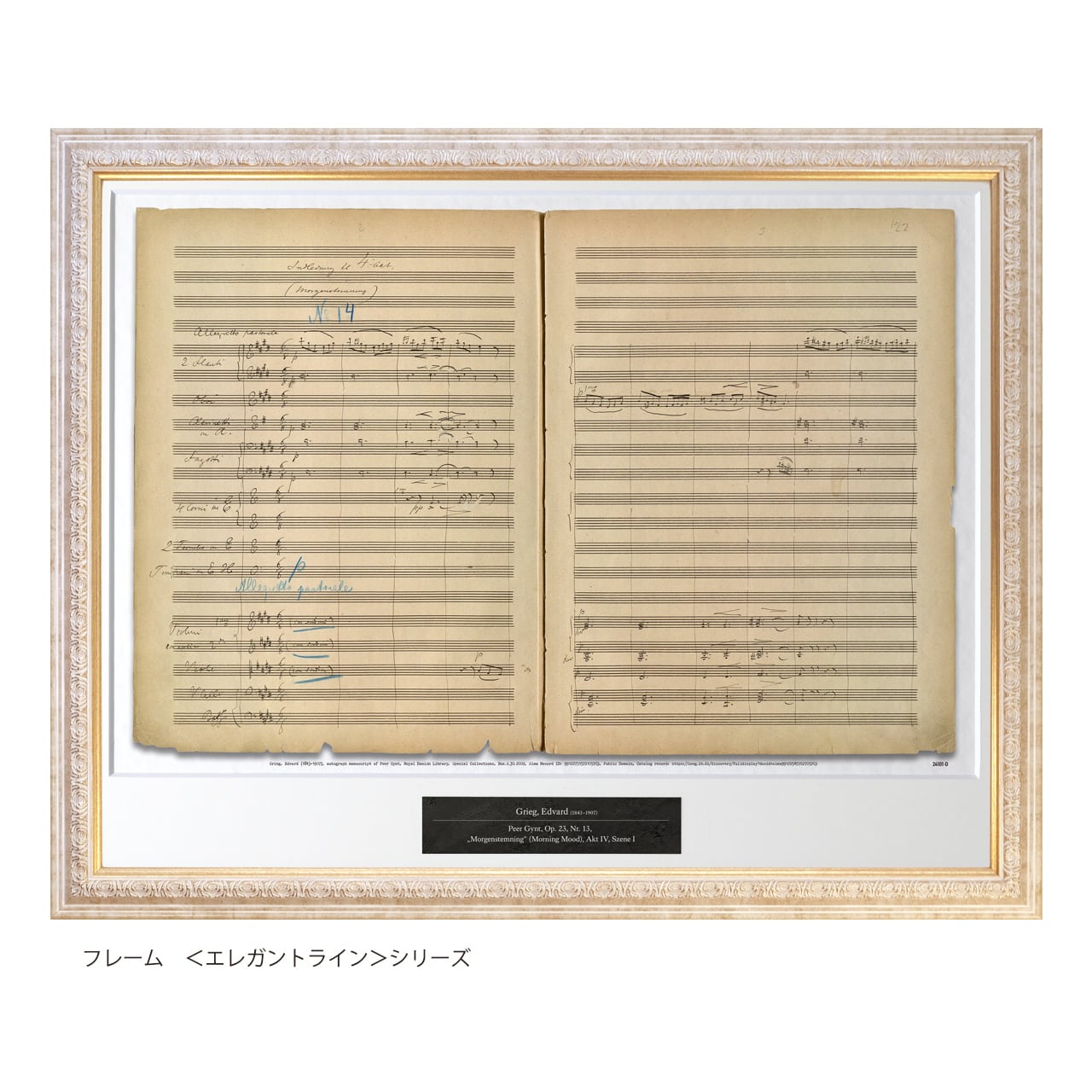


グリーグ:「朝」〜《ペール・ギュント》より(作品23 第13曲)/Grieg, Edvard:Peer Gynt, Op. 23, Nr. 13 “Morgenstemning” (Morning Mood) Akt IV, Szene I
¥16,830 ($106.62)
Grieg, Edvard (1843–1907)
Peer Gynt, Op. 23, Nr. 13
“Morgenstemning” (Morning Mood)
Akt IV, Szene I
《商品説明》 Product Specifications
◉プリントタイプ/高精細ジークレープリント
Print Type: High-definition Giclée print
◉出力紙/ドイツ製ハーネミューレ ファイン・アート紙(アシッドフリー)
Paper: Hahnemühle Fine Art Paper (Made in Germany, Acid-free)
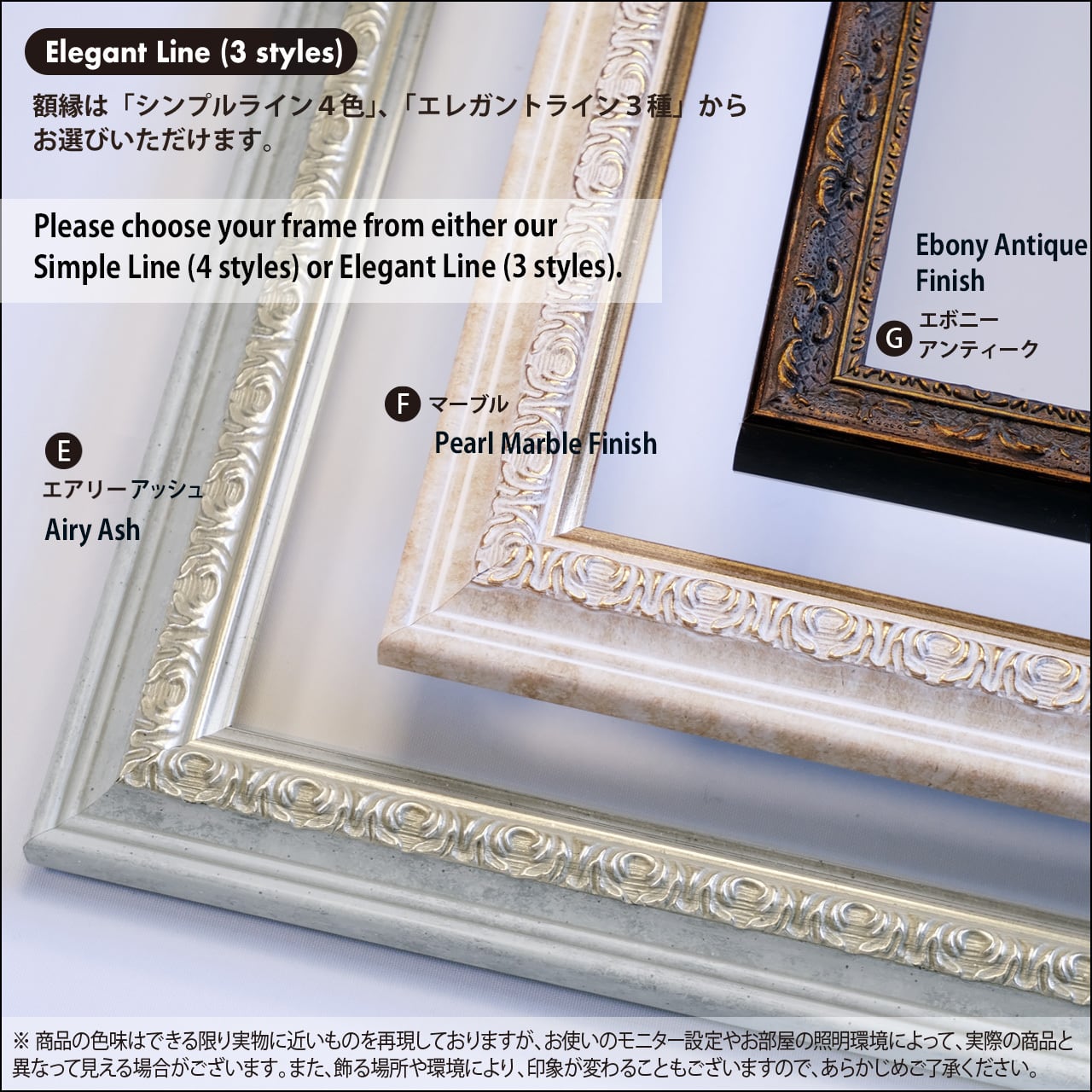
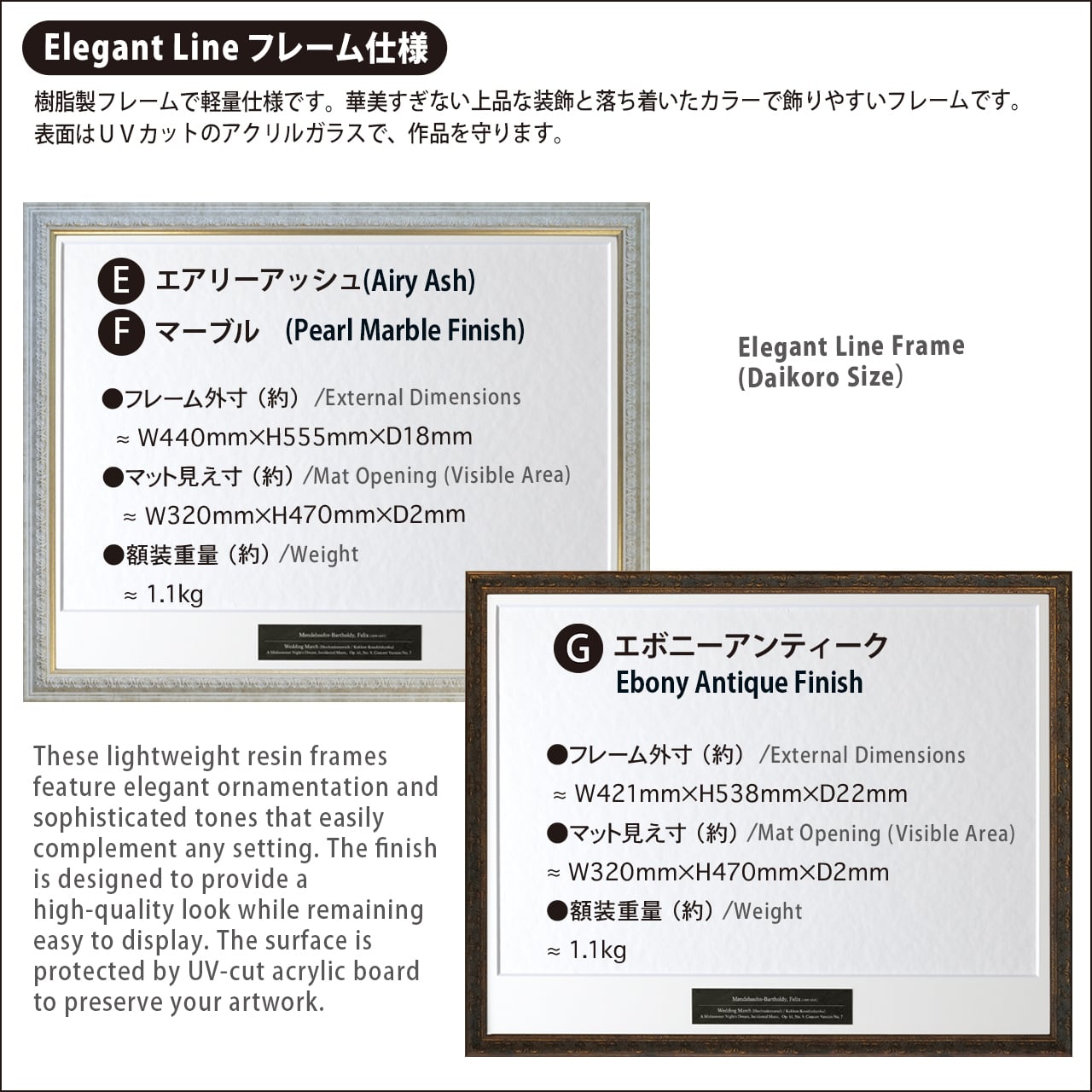
◉額縁/UVカットアクリルガラス、中性紙マット、吊元金具(額側)、吊紐、外箱
Framing: UV-protective acrylic glazing and acid-free mat
Accessories: Hanging hardware (pre-installed), hanging cord
〜自然の息づかいを音に託して〜
ノルウェーの作曲家エドヴァルド・グリーグ(Edvard Grieg)が手がけた劇付随音楽《ペール・ギュント》は、同国の劇作家ヘンリック・イプセンの同名戯曲の上演のために、1874年から1875年にかけて作曲されました。
物語のさまざまな場面に寄り添うこの音楽は、登場人物の心情や情景を、グリーグ独自の詩情豊かな響きによって描き出しています。
とりわけ広く知られているのが、第13曲《朝》(Morgenstemning/Morning Mood)です。
この曲は第4幕第1場の冒頭に登場し、主人公ペール・ギュントが北アフリカの地で迎える夜明けの情景を音楽で表現しています。
しかし、フルートとオーボエによる素朴で優しい旋律、そして静かに広がる響きは、グリーグの故郷ノルウェーの自然を思わせるものとしても長く親しまれてきました。
グリーグは特定の風景を描写するだけではなく、「朝」という時間が持つ普遍的な美しさと静けさを、音楽によって表現したのではないでしょうか。
フルートとオーボエによって奏でられる穏やかな旋律は、やがて弦楽器やホルンへと引き継がれ、夜明けの静寂から少しずつ光が満ちていくような情景を描いていきます。
技巧を誇示することなく、自然の息遣いそのものを映し出すような旋律は、現在に至るまで多くの人々に静かな感動と安らぎを与え続けています。
また、この《朝》は、1888年にグリーグ自身によって演奏会用に再構成された《ペール・ギュント 第1組曲》Op.46の第1曲として収められました。
劇付随音楽の一場面を超え、独立した作品として世界中で親しまれるようになったこの曲は、現在ではグリーグを代表する作品のひとつとして広く知られています。
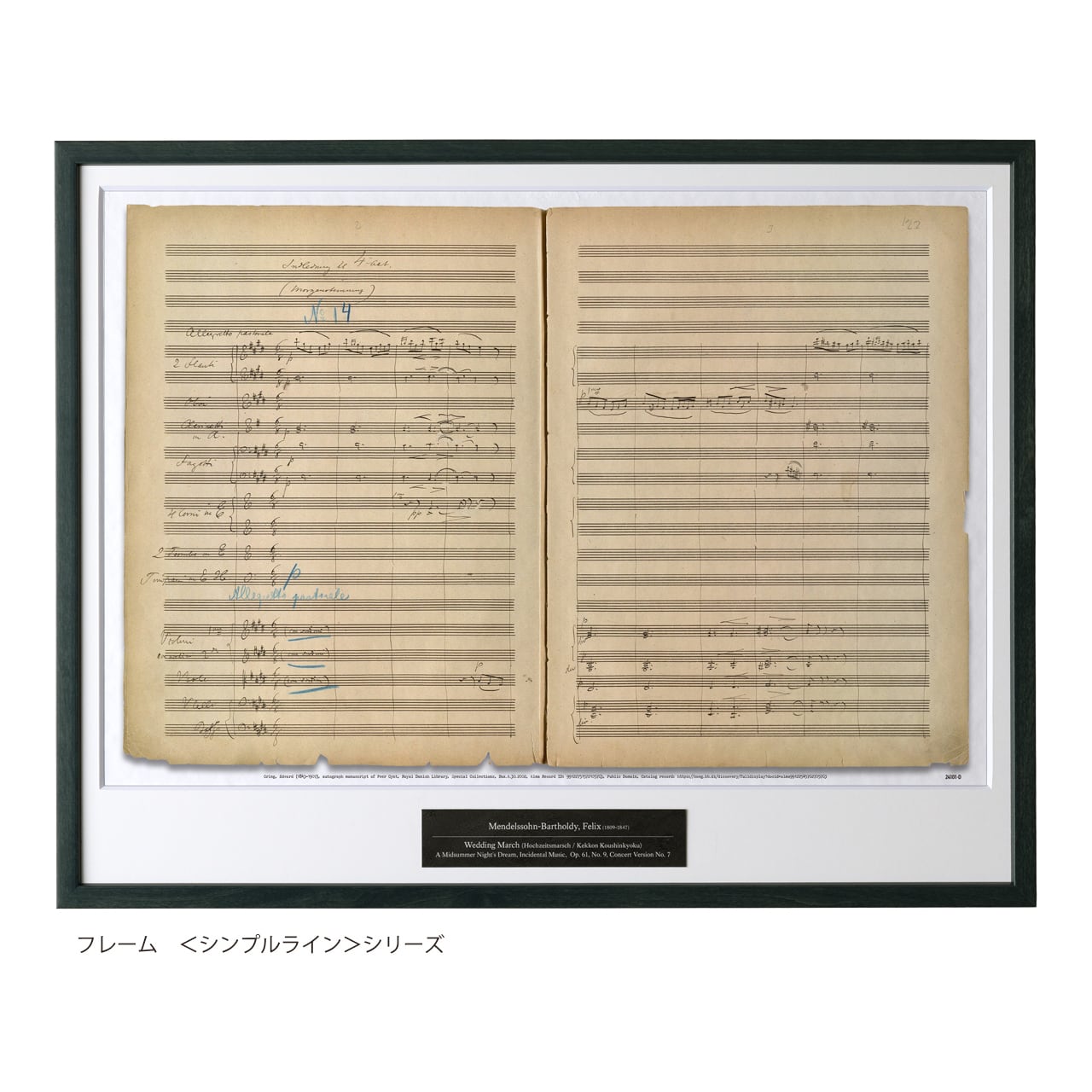
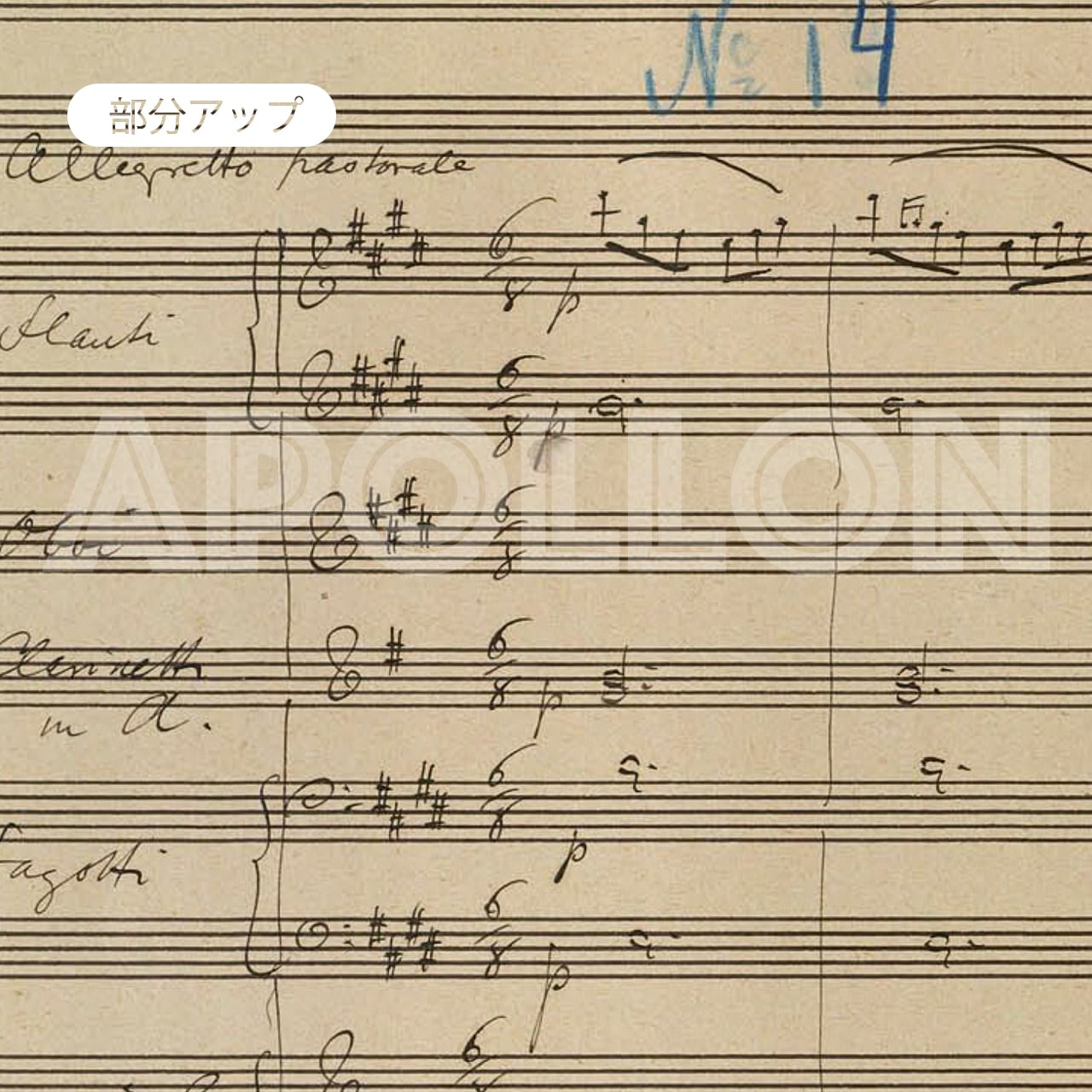
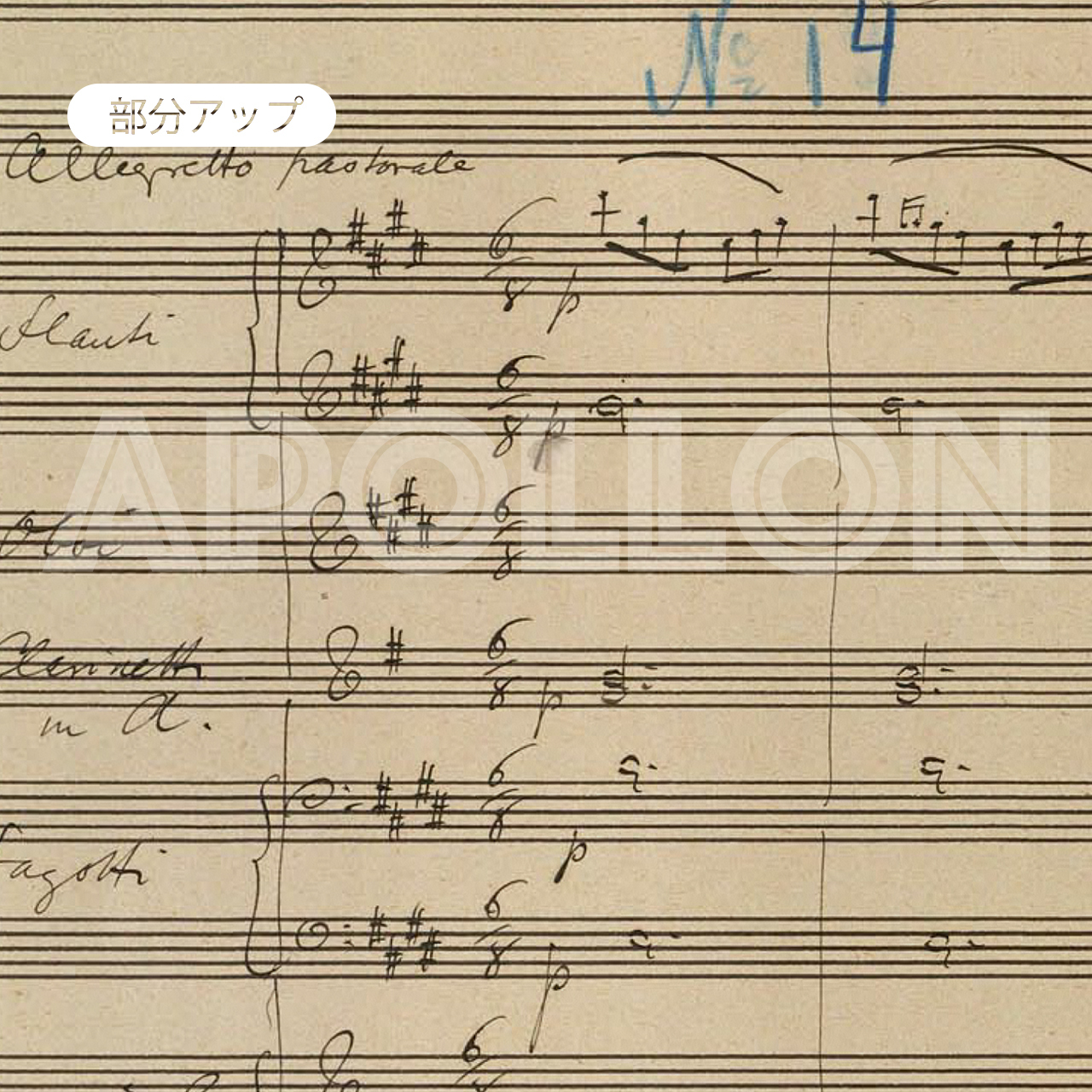
なお、この自筆譜には青色の筆記具による「No.14」の記載が残されています。現在一般的には《ペール・ギュント》Op.23の第13曲として扱われていますが、この番号表記の違いは、劇付随音楽として成立した本作の資料整理や各版における扱いの違いを示す、興味深い資料的特徴のひとつです。
〜Entrusting the Breath of Nature to Music〜
The incidental music Peer Gynt by the Norwegian composer Edvard Grieg was written between 1874 and 1875 for the stage production of the play of the same name by the Norwegian playwright Henrik Ibsen.
Accompanying the various scenes of the drama, this music portrays the emotions of the characters and the atmosphere of the story through Grieg’s distinctive poetic and expressive musical language.
Among the many pieces in the work, the most widely known is the 13th piece, “Morgenstemning” (Morning Mood).
The piece appears at the beginning of Act IV, Scene I, depicting the dawn encountered by the protagonist Peer Gynt in North Africa.
However, the simple and gentle melody played by the flute and oboe, together with its quietly expanding resonance, has long been associated with the natural landscapes of Grieg’s homeland, Norway.
Rather than depicting a specific landscape alone, Grieg seems to have captured through music the universal beauty and stillness of the morning itself.
The calm melody introduced by the flute and oboe is gradually taken up by the strings and horns, creating a delicate musical image of light slowly spreading through the silence of dawn.
Without displaying technical brilliance, the melody seems to reflect the very breath of nature, continuing to bring quiet emotion and comfort to listeners around the world.
In 1888, this “Morning Mood” was rearranged by Grieg himself as the first movement of Peer Gynt Suite No. 1, Op. 46, for concert performance.
Transcending its original role as part of incidental music, the piece became widely appreciated as an independent work and is now regarded as one of Grieg’s most celebrated compositions.
This autograph manuscript contains a blue-ink notation reading “No. 14.” Although the work is generally known today as the 13th piece of Peer Gynt, Op. 23, this difference in numbering is an intriguing documentary feature that reflects the complexities of manuscript organization and the various treatments of the work through its history.
※Pay IDからご覧の方は下記URL(当店サイト)に
額の色目、仕様等、詳しく載っていますので、ぜひご確認下さい。
https://apollon.kooki-museum.com
<商品画像と実物の色味について>
商品の色味については、できる限り実物に近づけるよう調整を行っておりますが、お使いのモニター設定や機種、お部屋の照明環境によっても、実際の商品と異なって見える場合がございます。また、所蔵機関のスキャニングデータに基づくため、オリジナルの自筆譜と色味が異なることもございます。あらかじめご理解いただきますようお願い申し上げます。なお、一部の作品には、裏写り(裏面の楽譜の透け)、経年によるシミ、または原資料の修復に由来する痕跡が見られる場合がありますが、これは所蔵先のスキャニングデータに起因するもので、原稿の忠実な再現です。
<Important Notes on Color & Appearance>
Color Consistency:The actual color may vary depending on your monitor settings or room lighting. As these prints are based on official institutional scans, minor color variations from the original manuscript may occur.
<Image Detail & Historical Authenticity>
Some prints may show "bleed-through" (musical notation from the reverse side), authentic age spots, or visible restoration marks from the original source. These are not defects, but a faithful reproduction of the original historical manuscript, preserved to maintain its archival character.
▼【Reference】
YouTube Channel:ネヴィル・マリナー - トピック
-
 マーラー:交響曲第2番ハ短調《復活》(スケッチ)/Mahler:Symphonie Nr. 2 c-moll. Skizzen "Resurrection"¥14,630 ($92.68)
 -
 グリーグ:『蝶々』 《抒情小品集》第3集 作品43 第1曲 《Windingiana》(Albumblad)/Grieg, Edvard:Lyriske Stykker, Op. 43, Nr. 1 „Sommerfugl“ (Butterfly) / 《Windingiana》(Albumblad)¥14,630 ($92.68)
 -
 フランシスコ・タレガ:「アルハンブラの思い出」/Tárrega, Francisco:Recuerdos de la Alhambra¥14,630 ($92.68)