


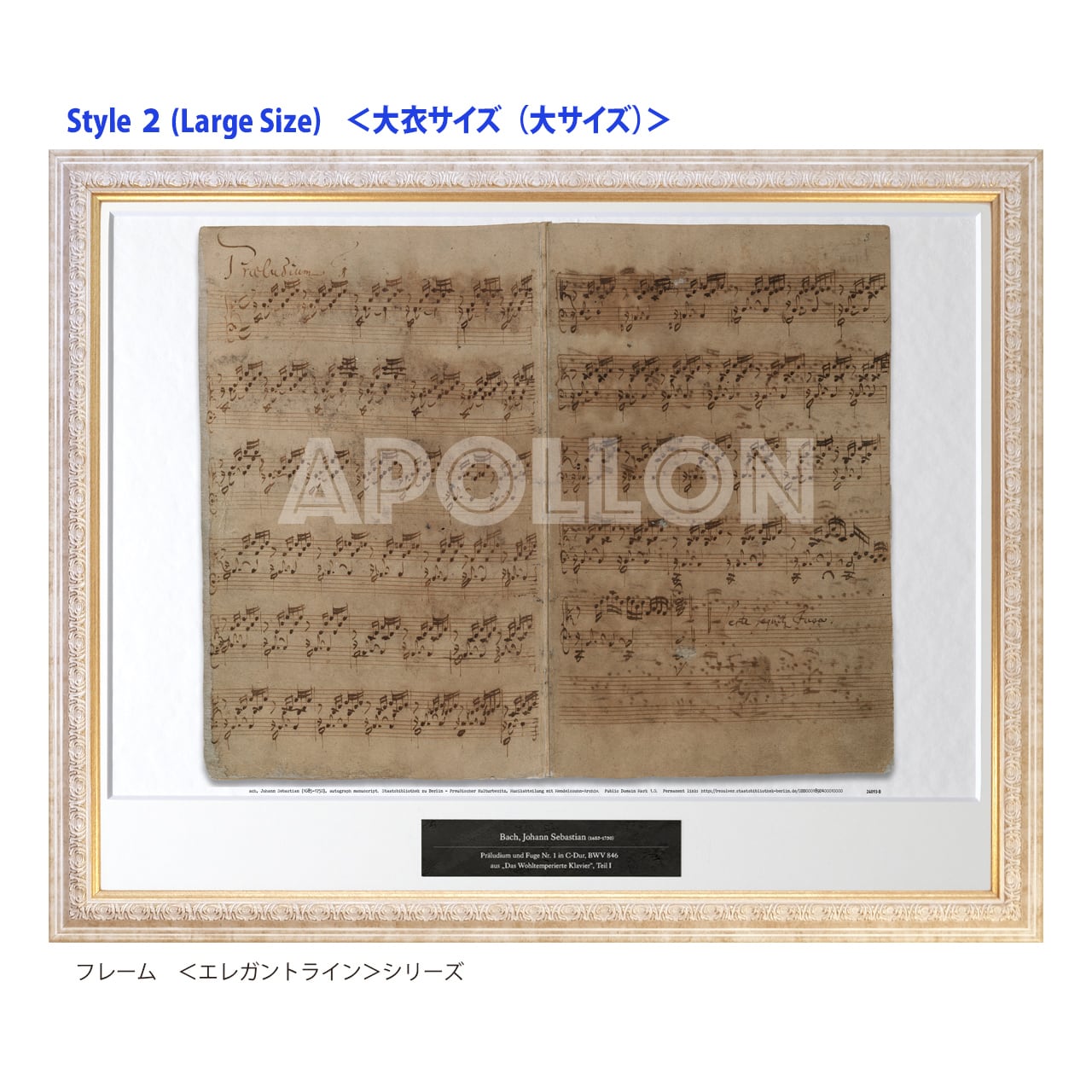
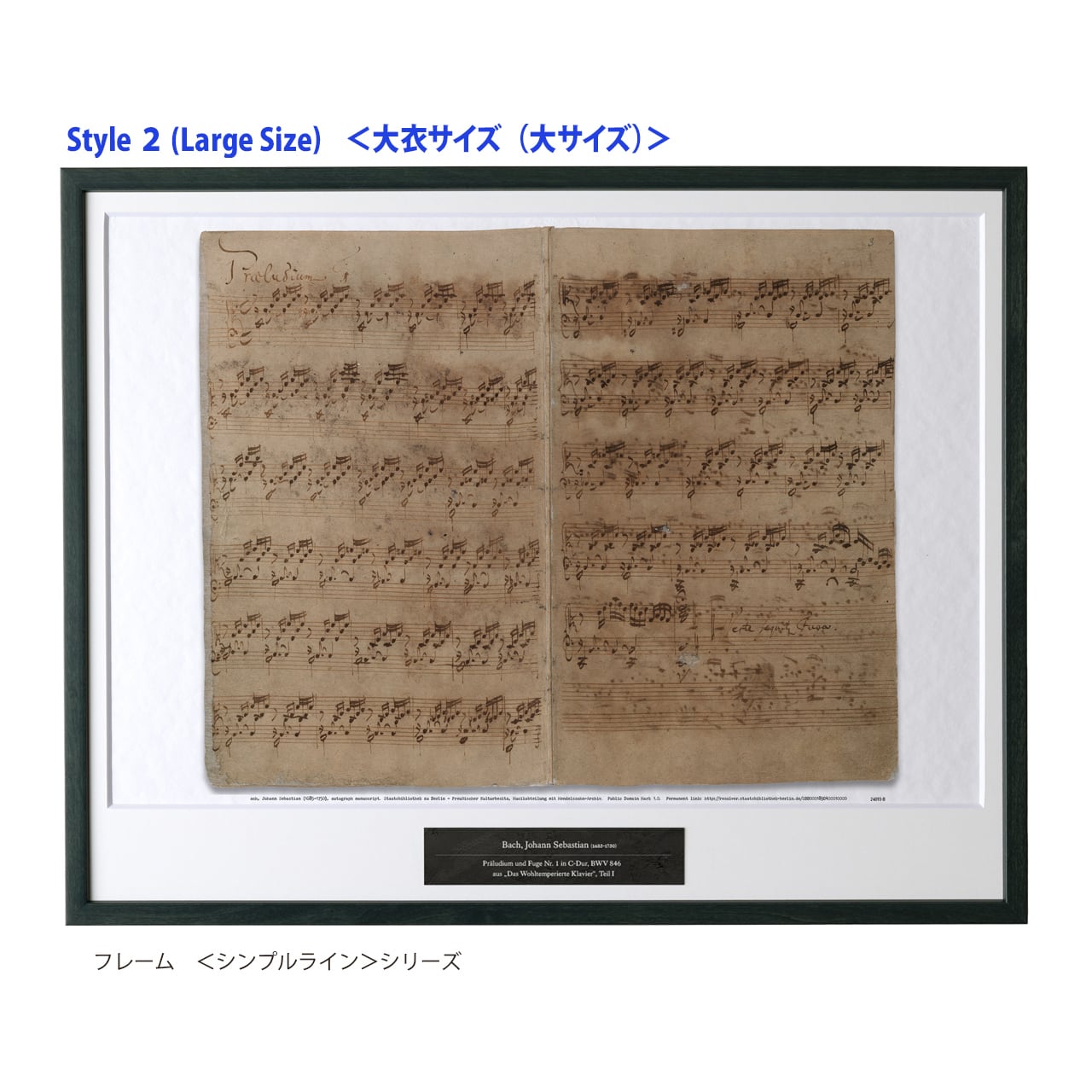


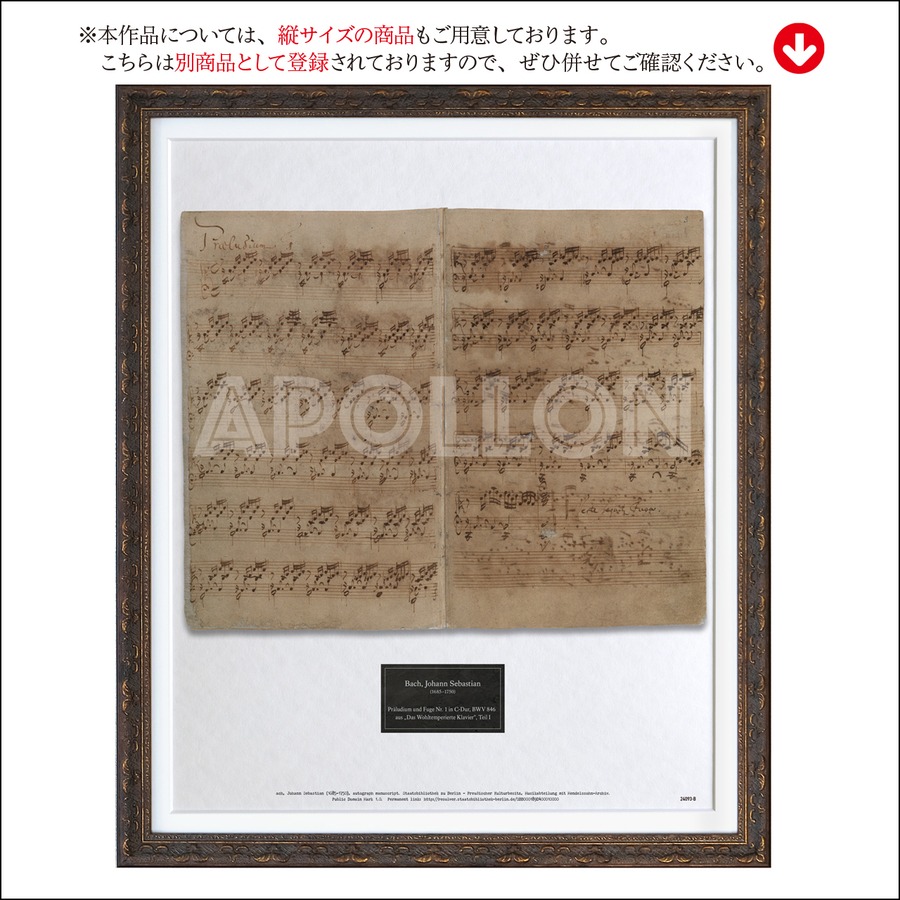
J.S.バッハ:《平均律クラヴィーア曲集 第1巻》第1番 プレリュードとフーガ ハ長調 BWV 846【額縁サイズ:大衣版(別バリエーション有)】/ J.S.Bach : Präludium und Fuge Nr. 1 in C-Dur, BWV 846 aus „Das Wohltemperierte Klavier“, Teil I (Large Size Version)
¥16,830 ($106.62)
Bach, Johann Sebastian (1685–1750)
Präludium und Fuge Nr. 1 in C-Dur, BWV 846
aus „Das Wohltemperierte Klavier“, Teil I
↓ 別サイズのバリエーションあり(Another variation of this artwork is available.)
https://apollon.kooki-museum.com/items/110768897
《商品説明》 Product Specifications
◉プリントタイプ/高精細ジークレープリント
Print Type: High-definition Giclée print
◉出力紙/ドイツ製ハーネミューレ ファイン・アート紙(アシッドフリー)
Paper: Hahnemühle Fine Art Paper (Made in Germany, Acid-free)
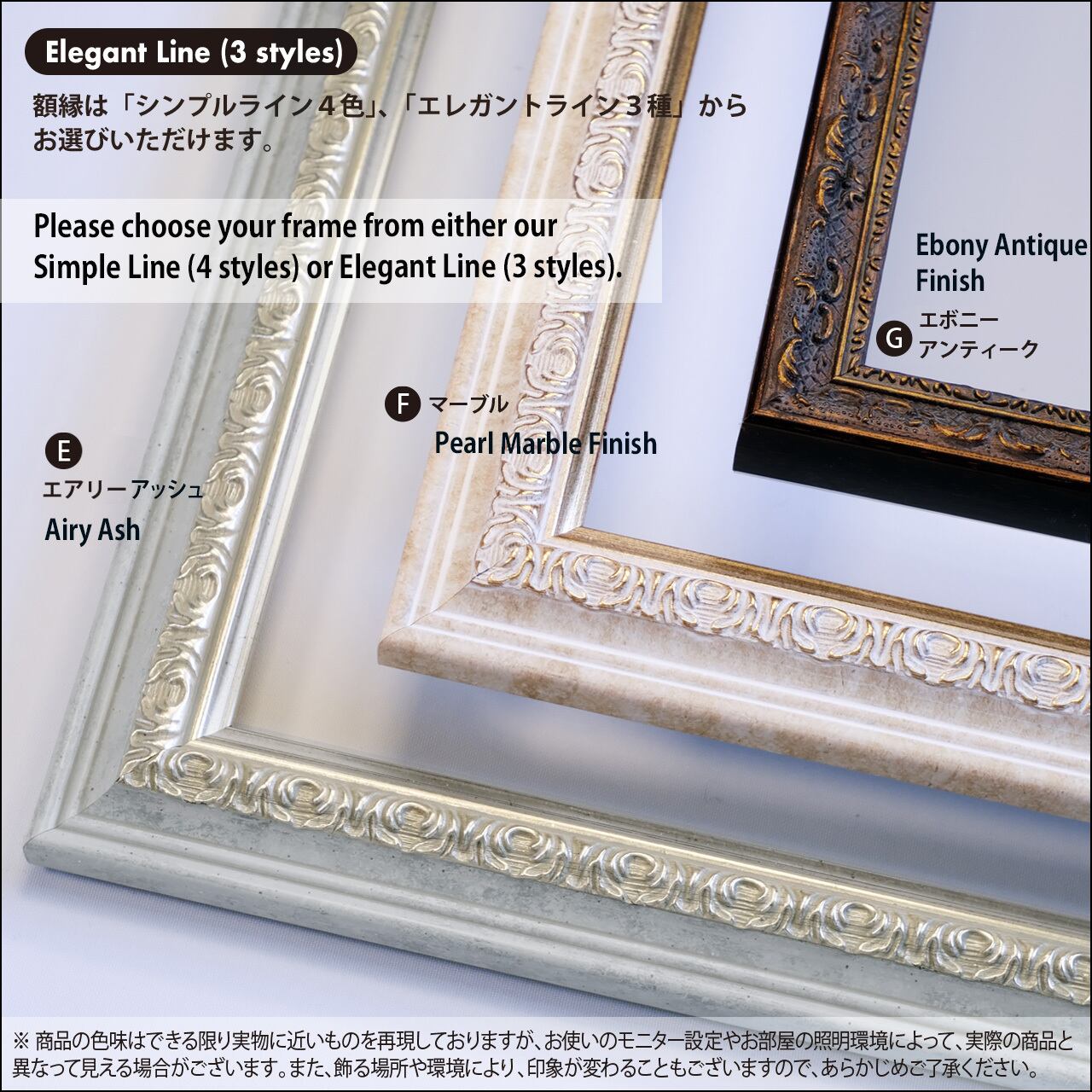
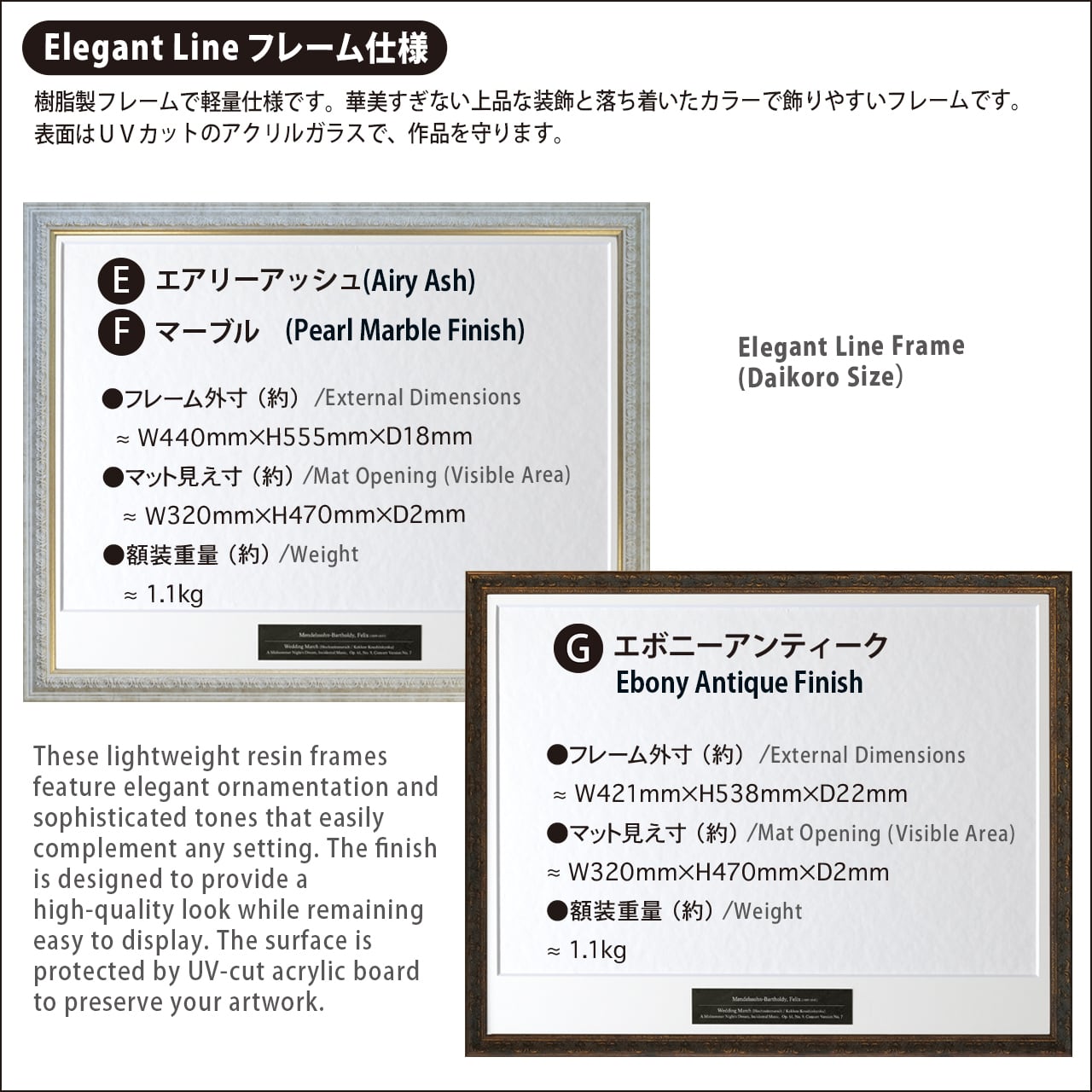
◉額縁/UVカットアクリルガラス、中性紙マット、吊元金具(額側)、吊紐、外箱
Framing: UV-protective acrylic glazing and acid-free mat
Accessories: Hanging hardware (pre-installed), hanging cord
〜音の秩序にひそむ自由… バッハと《平均律》がひらいた世界〜
《平均律クラヴィーア曲集 第1巻》は、ヨハン・セバスティアン・バッハ(1685–1750)が1722年にまとめた鍵盤音楽集です。長調と短調の各12調、全24の調性すべてにプレリュードとフーガを一対で収めるという、当時としては画期的な新しい発想で構成されています。この作品は、演奏技術の習得や調性理解を目的とした教育的な側面を持ちながら、同時にひとつひとつの曲が独立した芸術作品としても高い完成度を誇るものです。
第1番 ハ長調のプレリュードは、この曲集の扉を開くにふさわしい、明るく透明感のある響きに満ちています。シンプルな分散和音が連なる構成ながら、そこには静かに時を刻むような流れと、内に深い情感をたたえた音楽性が感じられます。演奏技術的には比較的平易なことから、多くのピアノ学習者にとって、この曲がバッハとの最初の出会いになっているかもしれません。一方で、熟練した演奏家にとっても、音楽の「間」や「呼吸」をどう表現するかといった、奥行きある探究の余地が残されています。
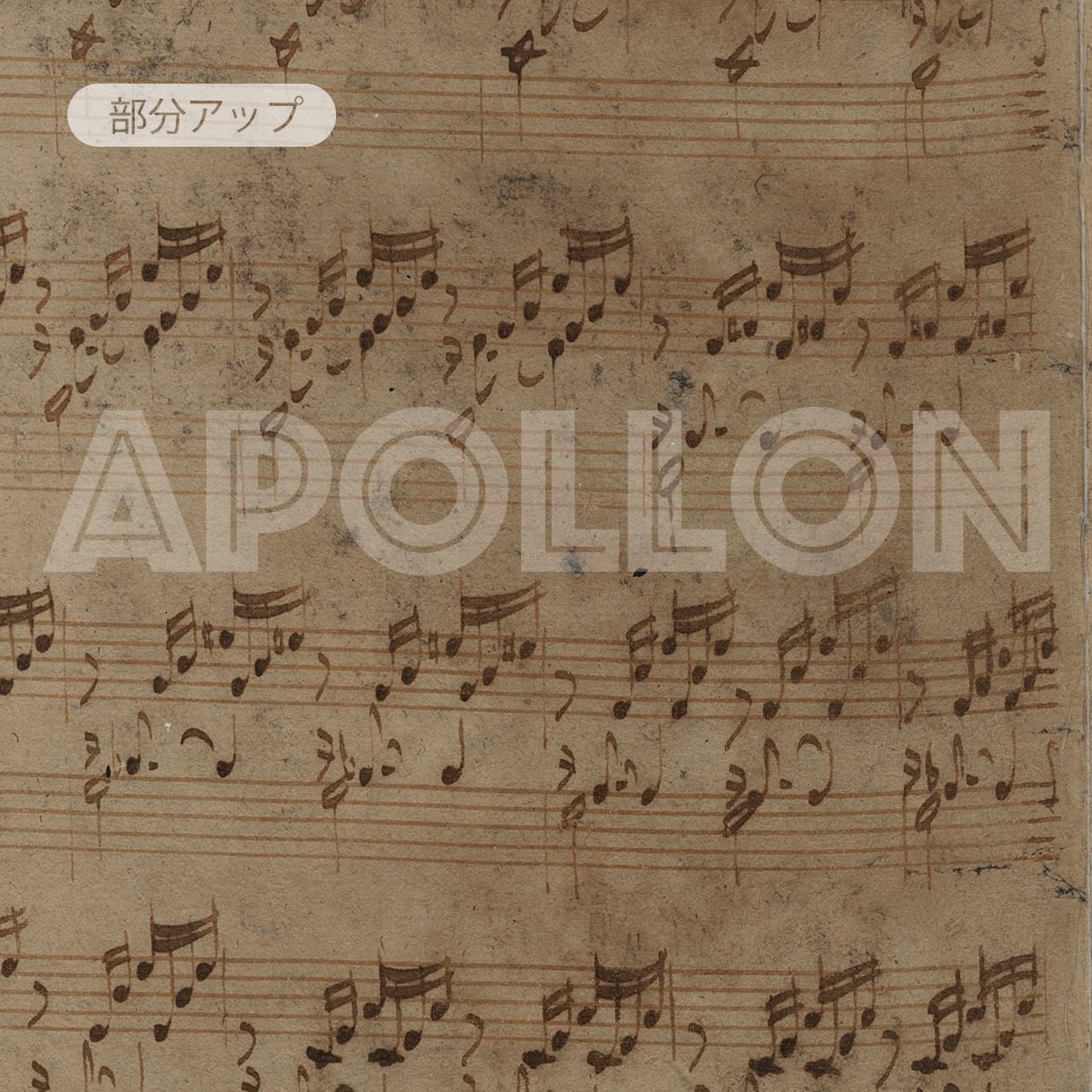
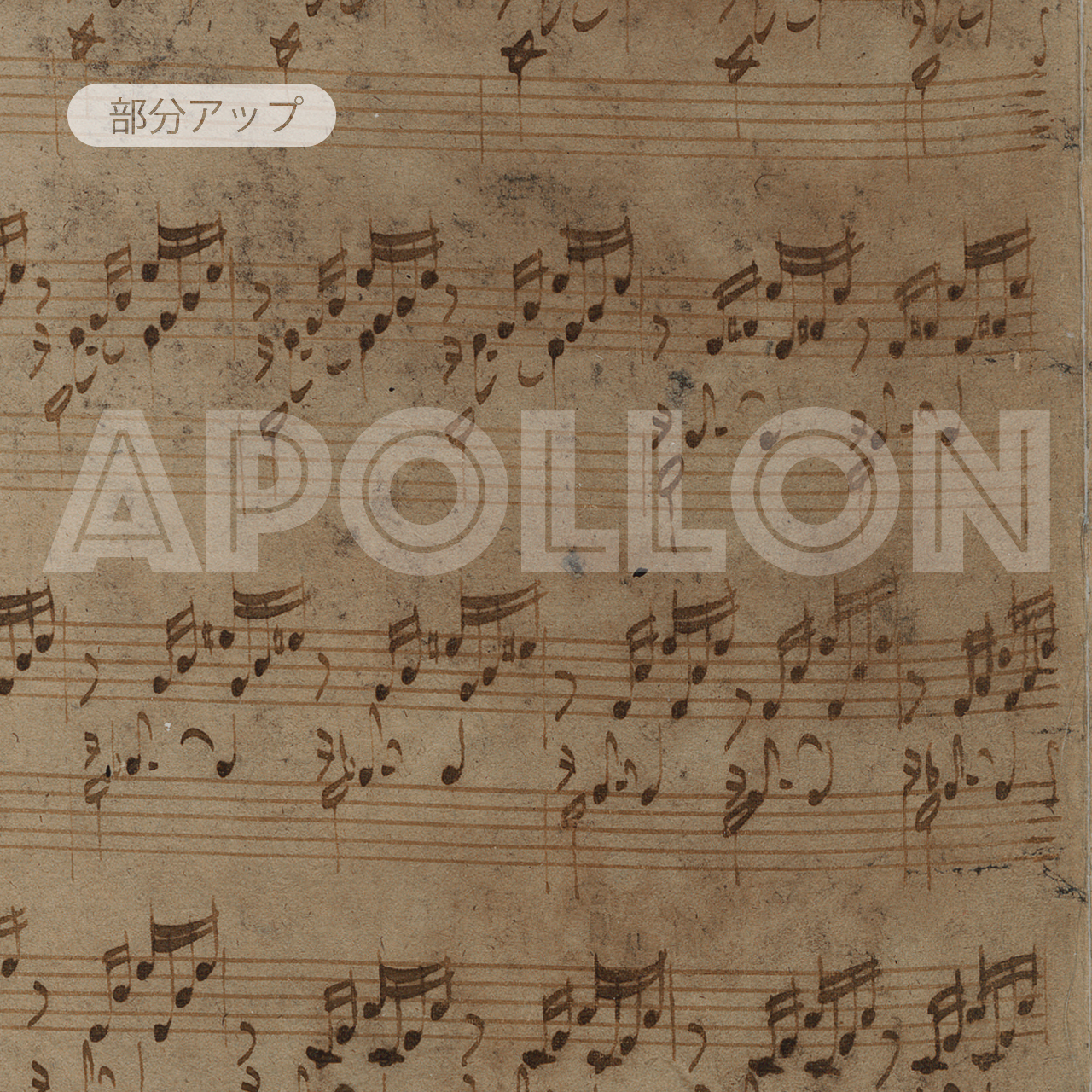
自筆譜を見てみると、整った筆致の中に、どこか柔らかな印象や温かみが感じられます。書かれた音符のひとつひとつからは、バッハが静かに紙と向き合い、音楽をかたちにしていった時間が、そっと伝わってくるようです。そこには、**単に音符を書き留めたという以上に、**音への繊細なまなざしや、静寂の中に漂う集中の気配が宿っているようにも思われます。印刷譜では見過ごしてしまいがちな、創作の息づかいにふれる機会となるかもしれません。
バッハは生前、オルガン奏者・作曲家・教育者として活動し、特にオルガン演奏や即興演奏の分野で高い評価を得ていました。ただし、作品出版の機会は限られており、バッハの音楽が国際的に広く普及し、広い層に親しまれるようになったのは、没後19世紀に入ってからのことです。
このハ長調のプレリュードは、19世紀にフランスの作曲家シャルル・グノーが《アヴェ・マリア》の伴奏に用いたことで、クラシック音楽に親しみのない人々の間にも知られる存在となりました。シンプルな素材の中に深い表現が潜むこの小品は、バッハの音楽の本質を象徴的に映し出す一曲と言えるでしょう。
ぜひ、自筆譜に刻まれた音のかけらに目を凝らし、約300年前の作曲家が紙とペンで音楽に向き合っていたその時間に、そっと思いを寄せてみるのはいかがでしょうか。
~ Freedom Hidden Within Musical Order — Bach and the World Opened by The Well-Tempered Clavier ~
The Well-Tempered Clavier, Book I is a collection of keyboard works compiled by Johann Sebastian Bach (1685–1750) in 1722. It presents a groundbreaking concept for its time: a Prelude and Fugue in each of the twenty-four major and minor keys, covering the complete range of tonalities. While the collection was intended in part as a study of keyboard technique and tonal understanding, each individual work also stands as a fully realized artistic creation of remarkable depth and refinement.
The Prelude in C major, the opening work of the collection, is filled with a bright and transparent beauty that perfectly introduces this musical journey. Although built upon a simple succession of arpeggiated chords, the piece carries a quiet sense of movement, like the gentle passage of time, together with a profound emotional richness beneath its apparent simplicity. Its relative technical accessibility has made it, for many piano students, a possible first encounter with Bach's music. Yet even for experienced performers, it continues to offer endless possibilities for exploring musical space, phrasing, and breath.
Looking at the autograph manuscript, one can sense a gentle warmth within Bach's precise and disciplined handwriting. Each carefully written note seems to convey the moment when Bach quietly faced the paper and gave musical form to his thoughts. Beyond merely setting down the notes, the manuscript appears to preserve Bach's delicate awareness of sound and the atmosphere of intense concentration within the silence of creation. It offers a glimpse of the creative process that can easily be overlooked in printed editions.
During his lifetime, Bach was active as an organist, composer, and educator, earning particular recognition for his exceptional abilities in organ performance and improvisation. However, opportunities for publishing his works were limited, and it was not until the 19th century after his death that Bach's music became widely known internationally and embraced by a broader audience.
The Prelude in C major gained further recognition when the French composer Charles Gounod used it as the accompaniment for his Ave Maria in the 19th century, bringing its beauty to listeners beyond the world of classical music. This small yet profound work, in which deep expression emerges from simple musical materials, can be regarded as a symbolic reflection of the essence of Bach's music.
May this autograph manuscript invite you to look closely at the fragments of sound preserved upon the page, and quietly reflect upon the moment, nearly three centuries ago, when Bach sat with paper and pen, bringing music into being.
※Pay IDからご覧の方は下記URL(当店サイト)に
額の色目、仕様等、詳しく載っていますので、ぜひご確認下さい。
https://apollon.kooki-museum.com
<商品画像と実物の色味について>
商品の色味については、できる限り実物に近づけるよう調整を行っておりますが、お使いのモニター設定や機種、お部屋の照明環境によっても、実際の商品と異なって見える場合がございます。また、所蔵機関のスキャニングデータに基づくため、オリジナルの自筆譜と色味が異なることもございます。あらかじめご理解いただきますようお願い申し上げます。なお、一部の作品には、裏写り(裏面の楽譜の透け)、経年によるシミ、または原資料の修復に由来する痕跡が見られる場合がありますが、これは所蔵先のスキャニングデータに起因するもので、原稿の忠実な再現です。
<Important Notes on Color & Appearance>
Color Consistency:The actual color may vary depending on your monitor settings or room lighting. As these prints are based on official institutional scans, minor color variations from the original manuscript may occur.
<Image Detail & Historical Authenticity>
Some prints may show "bleed-through" (musical notation from the reverse side), authentic age spots, or visible restoration marks from the original source. These are not defects, but a faithful reproduction of the original historical manuscript, preserved to maintain its archival character.
▼Other variations available
▼【Reference】
YouTube Channel:TzviErez
-
 J.S.バッハ:《平均律クラヴィーア曲集 第1巻》第1番 プレリュードとフーガ ハ長調 BWV 846【額縁サイズ:四切版(別バリエーション有)】/J.S.Bach : Präludium und Fuge Nr. 1 in C-Dur, BWV 846 aus „Das Wohltemperierte Klavier“, Teil I (Standard Size Version)¥14,630 ($92.68)
 -
 J.S.Bach:ガヴォット〜無伴奏ヴァイオリン・パルティータ第3番より〜【額縁サイズ:四切版(別バリエーション有)】/J.S. Bach: Gavotte en Rondeau, BWV 1006 (Standard Size Version)¥14,630 ($92.68)
 -
 J.S.Bach:ガヴォット〜無伴奏ヴァイオリン・パルティータ第3番より〜【額縁サイズ:大衣版(別バリエーション有)】/J.S. Bach: Gavotte en Rondeau, BWV 1006 (Large Size Version)¥16,830 ($106.62)